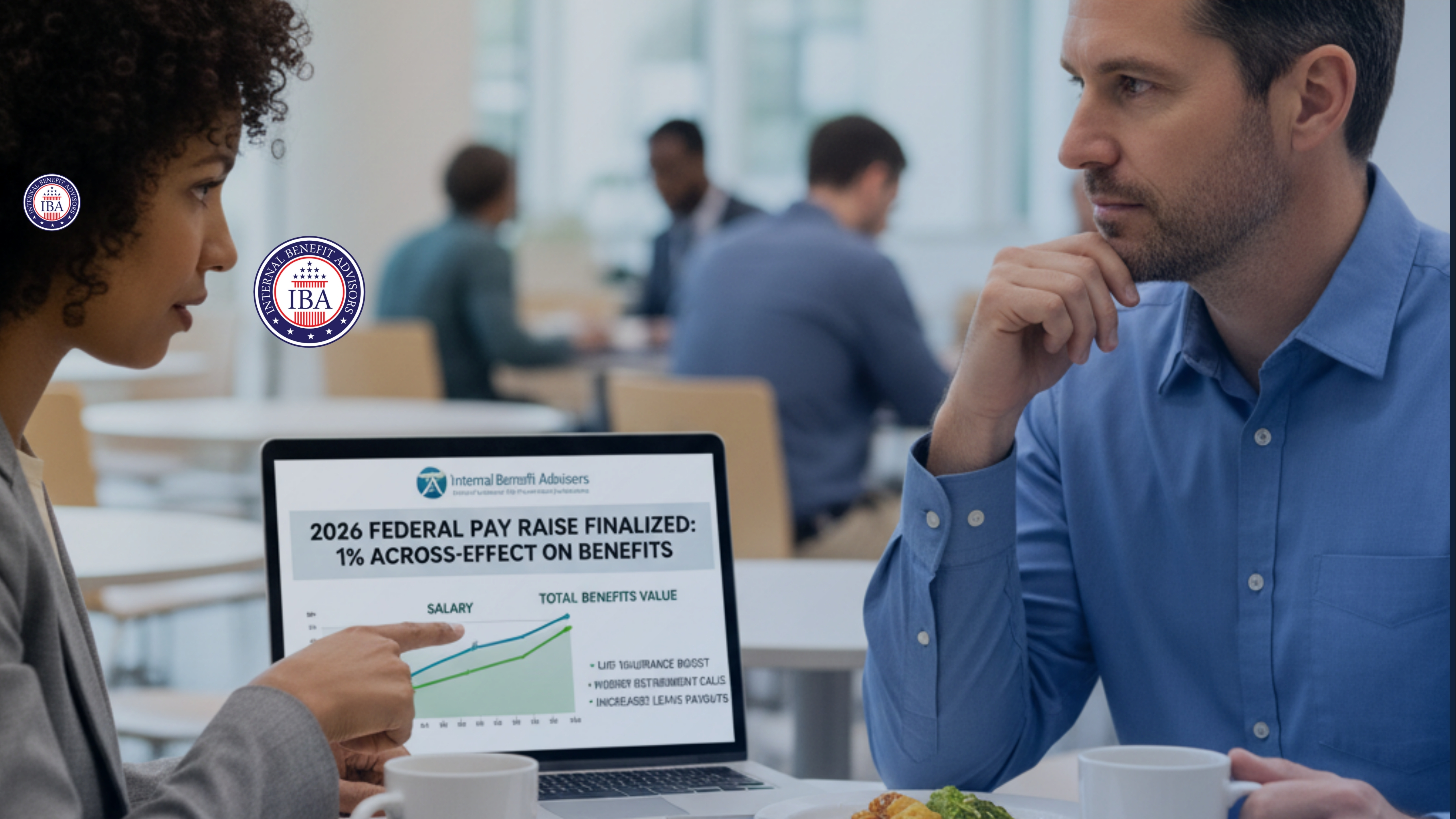

The 2026 federal pay raise has been finalized, but for most employees, the “boost” will feel more like a ripple than a wave. As reported by FEDweek and confirmed by recent Executive Orders, the 1% across-the-board increase for civilian employees is set to take effect in January. However, seeing that extra money in your bank account requires a bit of patience, and understanding how this change ripples through your benefits is critical for your 2026 financial planning.
While a 1% raise may seem negligible against inflation, it triggers automatic adjustments to your life insurance, retirement calculations, and leave payouts that can add up to significant value—if you know where to look.
🗓️ The Timeline: Effective Date vs. Payment Date
It is a common misconception that the raise applies to your first paycheck of the new year. In reality, the federal payroll calendar creates a delay.
- Effective Date: The 1% increase is effective the first full pay period of 2026, which begins on January 11, 2026.
- Payment Date: You will not see this increase in your paycheck until the pay period ends and is processed. For most agencies, this means the “raise” will first appear in the check received around January 30 or early February.
Sound Data: The “Split” Workforce This year’s pay adjustment creates a notable divergence in federal compensation:
- Civilian Workforce: Receives a 1.0% base increase with 0% additional locality pay.
- Military & LEOs: In contrast, military personnel and specific Law Enforcement Officers (LEOs) in critical front-line positions (e.g., CBP, ICE) will receive a total increase of roughly 3.8% to address recruitment and retention challenges.
- The Inflation Gap: With projected 2026 inflation hovering near 2.9%, a 1% raise represents a 1.9% loss in real purchasing power for the average civilian employee.
💼 The Hidden Benefit: Automatic Increases
While the net cash in your pocket might only increase by $30–$50 per pay period, the raise automatically boosts the value of several key benefits.
1. FEGLI Coverage Jump Your Federal Employees’ Group Life Insurance (FEGLI) Basic coverage is pegged to your salary.
- The Math: FEGLI Basic is your salary rounded up to the nearest $1,000, plus $2,000.
- The Impact: If your salary bumps from $99,500 to $100,495 due to the raise, your FEGLI coverage jumps from $102,000 to $103,000. This happens automatically, providing more protection for your family without a medical exam.
- Note: This also means your FEGLI premium deduction will increase slightly.
2. The High-3 Long Game For those nearing retirement, every raise matters.
- The Calculation: Your “High-3” average salary is the basis for your pension. This 1% raise replaces a lower salary year from three years ago in your average.
- The Result: Even a small raise permanently increases the floor of your lifetime annuity. However, you must work for three full years after this raise to feel its full 100% impact on your pension.
3. Annual Leave Payouts If you are retiring early in 2026, timing is everything.
- Lump Sum Strategy: If you retire after January 11, 2026, your lump-sum payment for unused annual leave will be calculated at the new, higher hourly rate, instantly adding 1% value to your entire leave bank.
🛡️ Maximize Your “Austerity” Raise
In a year where the raise doesn’t keep pace with inflation, passive acceptance isn’t a strategy. You must actively manage your benefits to recover the lost purchasing power.
This is where Internal Benefit Advisors steps in. We help you find the “hidden raises” in your benefits package.
How We Help You Optimize 2026:
- TSP Contribution Audit: If you contribute a flat dollar amount to the TSP, your savings rate effectively just dropped. We help you recalibrate your contributions to ensure you are capturing the full match on your new, higher salary.
- FEGLI vs. Private Insurance: With FEGLI costs rising alongside your salary, we can compare your new premium against private market rates to see if you can get more coverage for less money.
- Cash Flow Review: We analyze your withholding and deductions to ensure the small raise doesn’t inadvertently push you into a tax situation that reduces your take-home pay.
The raise is coming, but it won’t change your life. A better strategy will.
Contact Internal Benefit Advisors today for a 2026 compensation and benefits review.
References
- FEDweek. “Pay Raise Coming, but Not Immediately; Some Benefit Changes to Result.”
- U.S. Office of Personnel Management (OPM). Memo on January 2026 Pay Adjustments.
- The White House. Executive Order on Adjustments of Certain Rates of Pay (Dec 2025).
- Internal Benefit Advisors. Retrieved from https://internalbenefitadvisors.com