
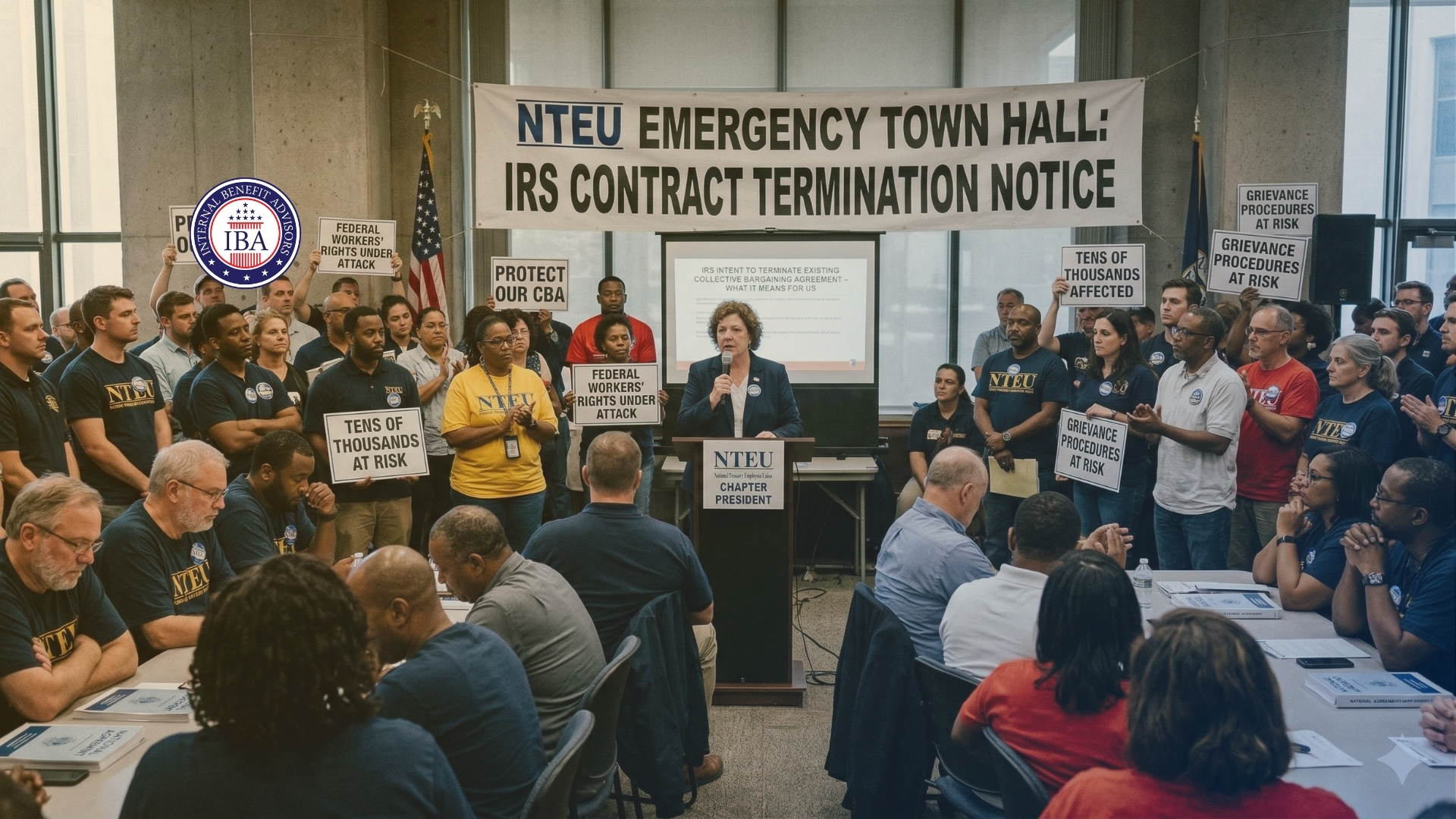

The landscape of federal labor relations is undergoing a significant transformation. In a recent and consequential move, the Internal Revenue Service (IRS) notified the National Treasury Employees Union (NTEU) of its intent to terminate the existing national collective bargaining agreement. This decision marks a pivotal shift for tens of thousands of federal employees who have long relied on union-represented frameworks for workplace guidance, grievance procedures, and benefits advocacy.
Understanding the Termination of Representation Rights
The IRS’s decision to cancel the NTEU’s representation rights stems from a broader shift in agency-level labor policy. Traditionally, these agreements have governed everything from “official time”—where union representatives handle labor-management business during work hours—to specific procedures for performance reviews and dispute resolutions.
For the approximately 70,000 IRS employees represented by the NTEU, this move introduces a period of administrative ambiguity. When national agreements are terminated or significantly altered, the direct line of communication between employees and specialized labor experts can become strained, leaving individuals to navigate the complexities of their federal benefits and workplace rights with less on-site support.
The Growing Need for Benefits Literacy
The timing of this labor shift coincides with a critical period for the federal workforce. According to data from the Office of Personnel Management (OPM), a significant percentage of the federal workforce is currently eligible for retirement or will be within the next five years. Furthermore, Government Accountability Office (GAO) reports have consistently highlighted that “benefits literacy”—the ability to understand and maximize retirement systems—remains a primary concern for federal staff.
Sound data suggests that without the buffer of a robust union agreement, the responsibility of benefits management shifts more heavily onto the individual. Key areas of concern include:
- TSP Optimization: Managing Thrift Savings Plan allocations during market volatility.
- FEGLI Evaluations: Determining if Federal Employees’ Group Life Insurance is still the most cost-effective option.
- Retirement Timing: Calculating the high-3 average and credible service years accurately to avoid processing delays.
Bridging the Gap with Internal Benefit Advisors
As agency-provided support structures evolve, seeking independent, professional guidance becomes a necessity rather than an option. Internal Benefit Advisors specializes in providing the clarity that federal employees need during times of institutional change.
When internal resources are in flux, Internal Benefit Advisors offers a stable platform for comprehensive benefits education. Their services are designed to address the exact gaps left by changing labor agreements:
- Professional Counseling Sessions: Personalized assessments that go beyond general HR brochures to look at an individual’s specific financial goals.
- Retirement Paperwork Assistance: Navigating the “maze” of FERS and CSRS paperwork is daunting; IBA provides expert support to ensure forms are filled out correctly the first time, preventing costly delays in annuity payments.
- Thrift Savings Program (TSP) Education: Offering insights into how to leverage the TSP as a core pillar of a retirement strategy, especially when traditional workplace guidance is unavailable.
- Special Provisions Expertise: For those under special categories (such as law enforcement or air traffic controllers), IBA understands the caveats that generic agency briefings often overlook.
Securing a Stable Retirement Future
The recent developments between the IRS and the NTEU serve as a reminder that the only constant in federal service is change. While labor agreements and agency policies may shift, your retirement security should remain on firm ground.
By partnering with Internal Benefit Advisors, federal employees can move forward with confidence, knowing they have access to a dedicated team of planners and advisors who prioritize “Benefits Simplified, Retirement Maximized.” Whether you are nearing your retirement date or just beginning to plan, having a trusted advocate is the best way to ensure your hard-earned benefits are protected.
References
- FedWeek. (2024). IRS Cancels NTEU Union Representation Rights. https://www.fedweek.com/fedweek/irs-cancels-nteu-union-representation-rights/
- Internal Benefit Advisors. Federal Employee Benefits & Retirement Planning Services. https://internalbenefitadvisors.com
- U.S. Government Accountability Office (GAO). Federal Workforce: Improved Benefit Literacy Enhances Retirement Readiness.
- U.S. Office of Personnel Management (OPM). Federal Employee Outlook and Retirement Statistics.