
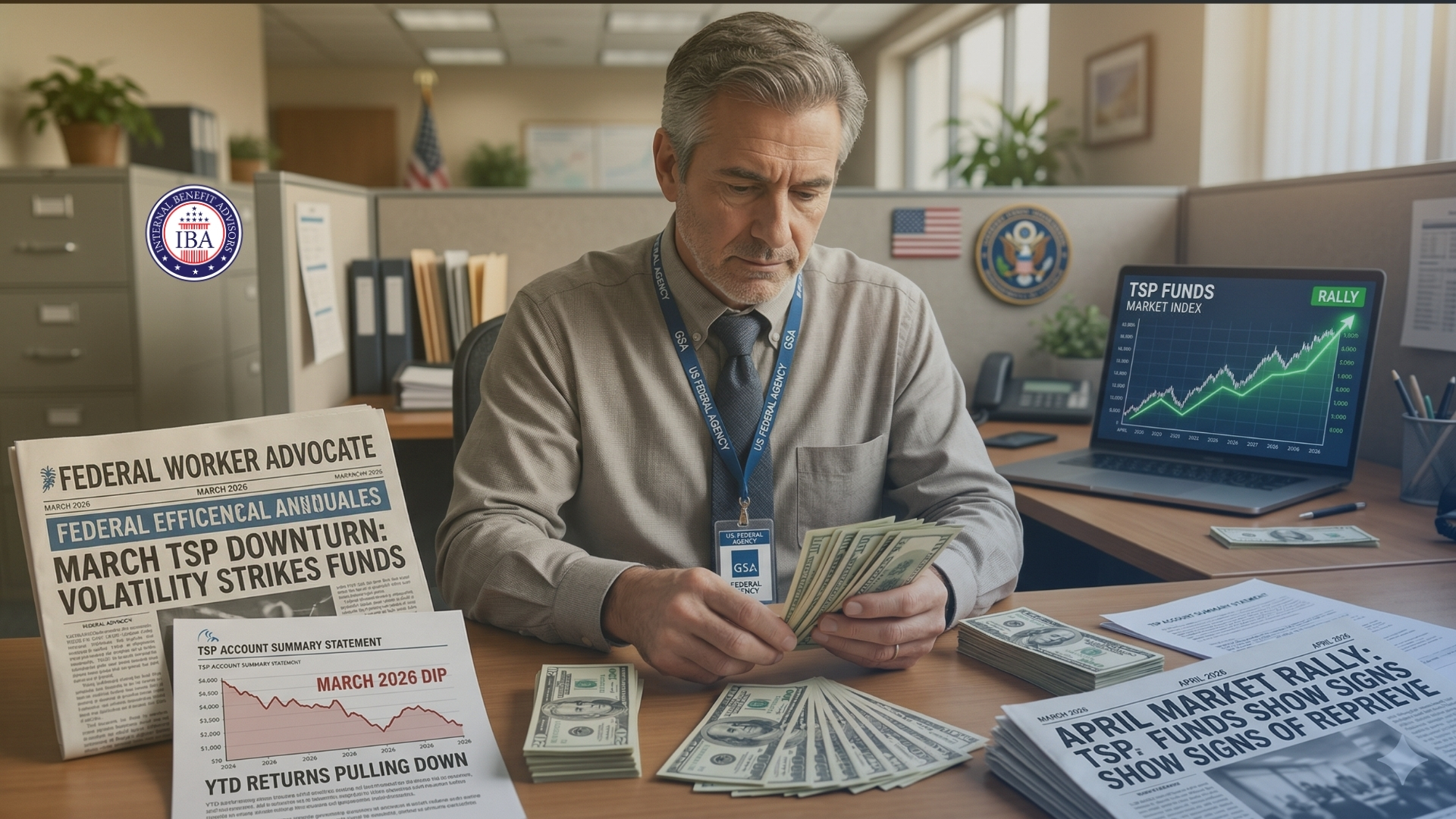

The first quarter of 2026 has delivered a stark reminder to federal employees: market volatility is an inevitable part of building a retirement nest egg. Following a period of record highs, the Thrift Savings Plan (TSP) experienced a significant downturn in March, pulling year-to-date (YTD) returns down for almost all funds. However, as the calendar turned to April, early signs of a market reprieve and subsequent rally have begun to emerge.
Understanding the mechanics of this market shift—and knowing how to respond without compromising your long-term goals—is critical for protecting your federal retirement strategy.
The Mechanics of the March Plunge
According to recent reporting by FEDweek, all three stock-based TSP funds—the large-company C Fund, the small-company S Fund, and the international I Fund—took a sharp dive in March. This plunge was severe enough to erase much of the early-year progress, leaving most stock-heavy portfolios in the red or flat for the year.
The drop did not occur in a vacuum. Sound economic data points to a confluence of several major factors that spooked institutional investors and triggered the sell-off:
- The February Peak: Following a post-election surge where markets climbed approximately 10% to hit all-time highs in February 2026, a natural market correction was anticipated by financial analysts.
- Geopolitical and Policy Shifts: Mid-March saw a severe market adjustment driven by uncertainty surrounding new federal tariff policies and ongoing global conflicts.
- Domestic Economic Pressures: Evolving federal workforce restructuring (including widespread administrative layoffs) and emerging health concerns contributed to sudden consumer and investor apprehension.
Together, these factors resulted in a broad market dip of roughly 10% by the middle of March, triggering widespread anxiety among TSP investors who watched their account balances shrink.
The Danger of Panic Selling
During a market plunge, the natural instinct for many federal employees is to seek the safe harbor of the G Fund (Government Securities). While the G Fund offers capital preservation and shielding from stock market losses, moving assets after a drop effectively locks in those losses.
Important Note: Moving your balance to the G Fund during a dip means you are selling your C, S, and I Fund shares at a discount. When the market inevitably recovers—as it began to do in early April—you miss out on the rebound and permanently damage your portfolio’s compound growth potential.
Instead of panicking, savvy investors often view these market contractions as “fire sales.” Continuing to contribute to stock-based funds during a downturn leverages the power of dollar-cost averaging, allowing you to purchase more shares at a lower price point. When the April rally gains momentum, those newly acquired, cheaper shares will accelerate your portfolio’s overall recovery.
Securing Your Strategy with Internal Benefit Advisors
Market whiplash highlights the danger of a “set it and forget it” approach to your Thrift Savings Plan. Whether you are actively accumulating wealth or nearing your retirement date, having a proactive, resilient financial strategy is non-negotiable.
At Internal Benefit Advisors, we specialize in helping federal employees navigate the complexities of market volatility without losing sight of their long-term objectives. Our team provides the fiduciary-level guidance necessary to build a durable retirement plan:
- TSP Portfolio Stress Testing: We help you evaluate your current fund allocations to ensure they align with your actual risk tolerance and time horizon, preventing panic-driven decisions during turbulent months.
- Market Rebound Strategies: If you moved your funds to the G Fund out of fear, we can help you strategically re-enter the market to capture the upside of the April rally without exposing yourself to undue risk.
- Comprehensive Retirement Planning: Market drops are particularly stressful for those within five years of retirement. We provide detailed analyses of your FERS or CSRS pension, Social Security, and TSP withdrawals to ensure your income stream is insulated from short-term market shocks.
- Free Retirement Paperwork Assistance: If workplace uncertainty is prompting you to consider an early exit, we assist you in completing your OPM retirement paperwork for free, preventing costly processing delays.
Stay the Course
The transition from a March plunge to an April rally is a textbook example of cyclical stock market behavior. Do not let short-term economic headlines derail a career’s worth of careful saving.
Take command of your financial future by consulting with professionals who understand the unique landscape of federal benefits. Contact Internal Benefit Advisors today for a Free Benefit Assessment and ensure your retirement strategy is built to weather any economic storm.
References
- FEDweek. (2026, April 1). “Almost All TSP Funds Down Year-to-Date after March Plunge; Reprieve to Start April.”
- FEDweek. (2026, March). “TSP Fire Sale Buying Opportunities.”
- Internal Benefit Advisors. “Information you need, Support you can trust.” Services & Planning