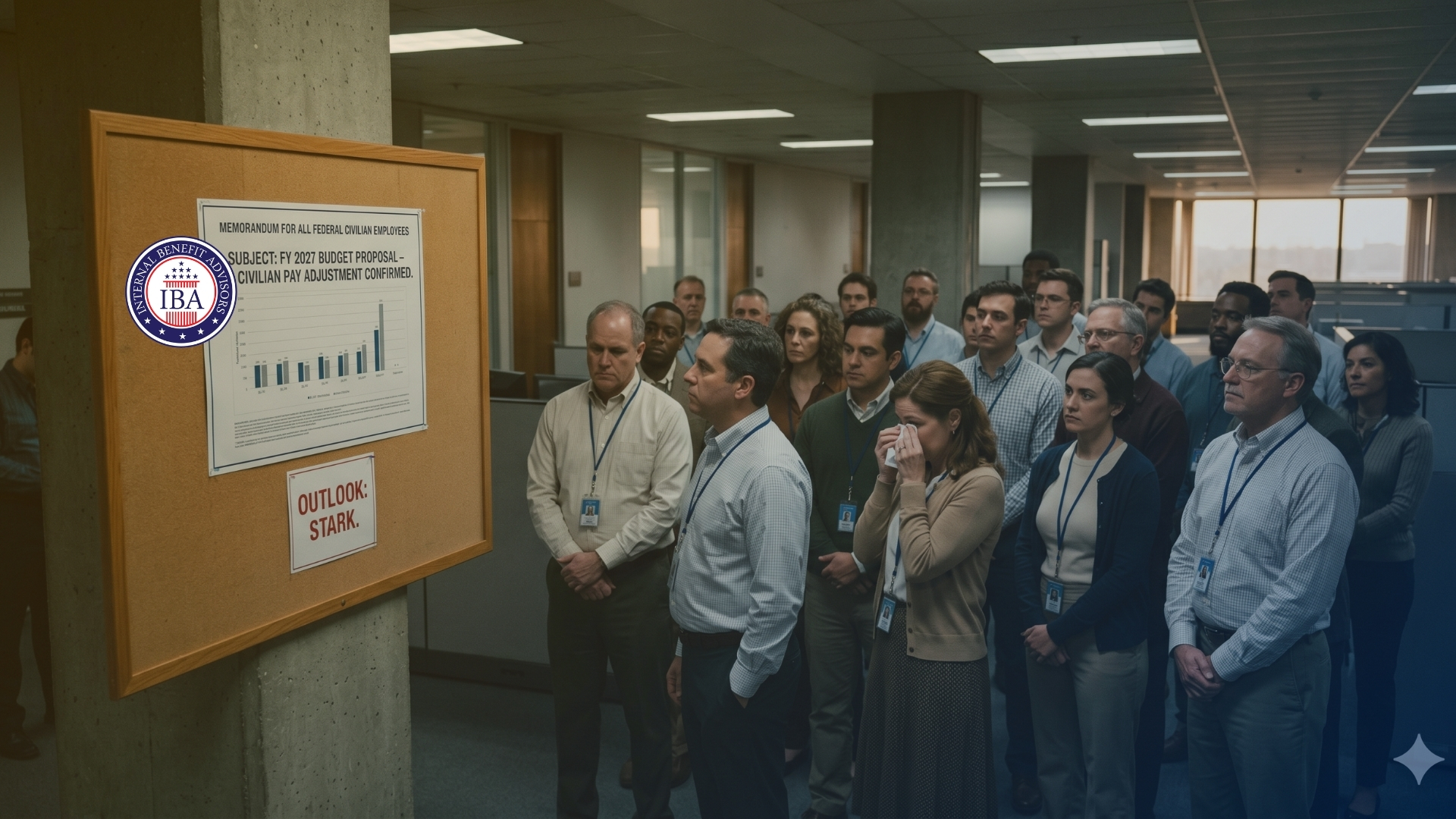

The pathway to the 2027 federal pay adjustment has taken a definitive turn, and the outlook for civilian employees is stark. Following the release of the administration’s initial fiscal year (FY) 2027 budget proposal, a critical reality has been confirmed: the blueprint omits any pay raise for the federal civilian workforce.
While budget proposals are the opening salvos in a lengthy legislative process, this deliberate omission is the crucial “next step” toward implementing a comprehensive civilian pay freeze. For federal professionals, relying on the political process to protect their purchasing power is increasingly risky. Understanding the mechanics of this proposed freeze and taking proactive control of your financial strategy is essential.
Sound Data: The 2027 Compensation Landscape
To understand the full impact of this budget proposal, it is necessary to examine the broader economic and legislative data surrounding federal compensation:
- The Widening Disparity: While the budget proposes a 0% baseline for civilian feds, it actively requests a massive 5% to 7% pay raise for military personnel, depending on their rank. This deepens the compensation gap between civilian workers and their uniformed counterparts.
- The FEPCA Mechanism: The omission in the budget does not finalize the freeze. Under the 1990 Federal Employees Pay Comparability Act (FEPCA), the administration must submit an “alternative pay plan” to Congress by the end of August. If this alternative plan is submitted and Congress fails to pass an overriding spending bill, the pay freeze (or a severely reduced increase) will become law, overriding any automatic across-the-board and locality adjustments.
- The 27% Private Sector Gap: According to the most recent data from the Federal Salary Council, federal employees already earn roughly 27% less on average than employees in equivalent private-sector roles. A pay freeze in 2027 will aggressively widen this gap, further eroding the workforce’s ability to keep pace with the cost of living.
- The Legislative Counter-Push: In response to the freeze, advocates in Congress have introduced the Federal Adjustment of Income Rates (FAIR) Act, which seeks a 4.1% pay increase for 2027. However, passing this legislation requires overcoming intense partisan gridlock, making it an uncertain lifeline for employees.
The Compounding Cost of a Pay Freeze
A 0% adjustment during a period of persistent inflation is a functional pay cut. Beyond the immediate impact on your monthly budget, a pay freeze inflicts long-term damage on your retirement infrastructure:
- High-3 Stagnation: Your FERS or CSRS pension is calculated using your “High-3” average salary. If your pay is frozen during your peak earning years, the baseline for your lifelong retirement annuity is permanently stunted.
- TSP Contribution Strain: Without an annual cost-of-living adjustment to your salary, maintaining or increasing your Thrift Savings Plan (TSP) contributions becomes significantly more difficult as daily expenses rise.
Shielding Your Wealth with Internal Benefit Advisors
When the administration signals a tightening of the financial belt, you must actively optimize your own. You cannot control congressional appropriations, but you have absolute control over how you manage the benefits you have already earned.
At Internal Benefit Advisors, we specialize in providing the fiduciary-level defense that federal employees need during periods of legislative austerity. Our experts help you counteract the effects of frozen pay through specialized strategies:
- Tax-Smart Cash Flow Strategies: If your gross pay is stagnant, we help you maximize your net pay. Through strategic tax planning and evaluating TSP allocations, we ensure you keep more of the money you earn.
- Retirement Timing and Exit Analysis: If the prospect of a pay freeze triggers your decision to retire early, we provide the exact mathematical analysis you need. We help you sequence your departure to maximize leave payouts and secure your highest possible High-3 average before the freeze takes full effect.
- Complimentary Retirement Paperwork Assistance: If the shifting fiscal climate prompts you to retire, we navigate the Office of Personnel Management (OPM) backlog for you. We provide FREE assistance with your FERS or CSRS retirement paperwork, ensuring a flawless application that prevents costly payment delays.
- Comprehensive Benefit Optimization: We evaluate your entire portfolio—from FEGLI coverage to Social Security timing—ensuring your financial house is entirely insulated from Washington’s budget battles.
Proactive Planning is Your Best Defense
A budget proposal lacking a civilian pay raise is a clear warning sign. The days of relying on automatic, generous annual adjustments to float your retirement strategy are over.
Empower yourself with an independent, optimized financial plan. Contact the experts at Internal Benefit Advisors today for a Free Benefit Assessment and ensure your retirement timeline remains entirely in your control, regardless of the fiscal climate in Washington.
References
- FEDweek & FedManager News. Pay Raise Omitted from Initial Budget Proposal / Next Steps for 2027. 2. Internal Benefit Advisors. Information you need, Support you can trust. InternalBenefitAdvisors.com
- Government Executive. Trump’s budget calls for 2027 pay freeze. (April 2026).
- Federal Salary Council. Annual Report on the Federal-Private Sector Pay Gap.
This video breaks down the specific signals behind the administration’s 0% budget proposal and analyzes the widening gap between civilian and military pay. The Shocking 0% Proposal for 2027