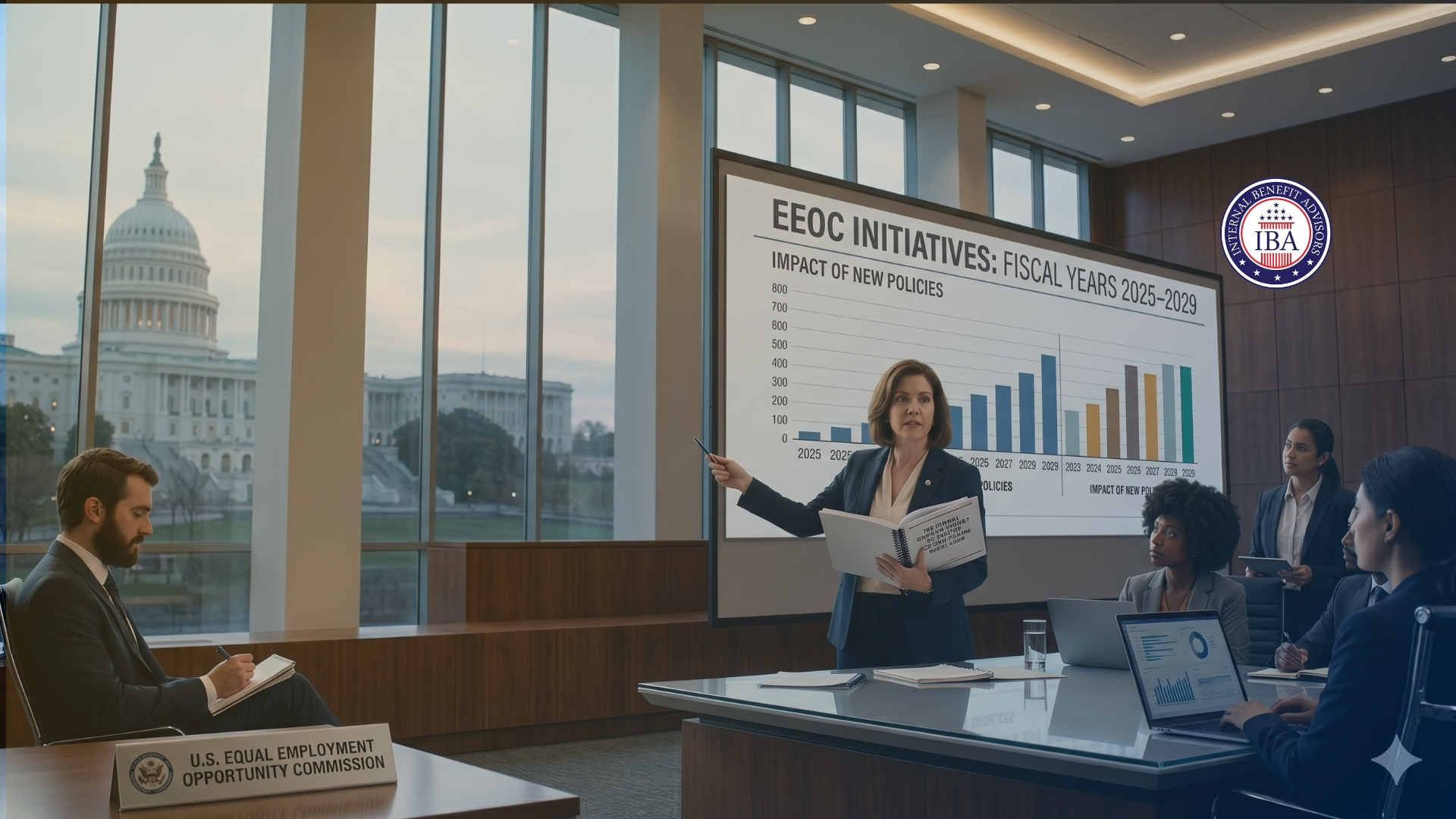

The legal and administrative boundaries governing workplace civil rights have officially undergone a profound transformation. Under the leadership of Chair Andrea Lucas, the Equal Employment Opportunity Commission (EEOC) approved its comprehensive National Enforcement Plan (NEP) for Fiscal Years 2025–2029.
Formally replacing the agency’s previous Strategic Enforcement Plan, the newly finalized roadmap explicitly affirms the EEOC’s commitment to advancing the administration’s overarching policy objectives and enforcing presidential Executive Orders. For career civil servants, federal managers, and agency human resources professionals, this is not merely a background administrative update. It represents a complete operational and philosophical overhaul of how workplace discrimination claims are investigated, litigated, and resolved across the federal government and the private sector.
The Core Pillars of the 2026 Realignment
To understand the practical impact on federal agencies, employees must examine the concrete directives and prosecutorial shifts defining the new NEP. The data reveals a decisive departure from the EEOC’s prior regulatory posture:
- Elimination of Disparate Impact Liability: In direct coordination with Executive Order 14281, the EEOC is curtailing the use of disparate impact (legal claims alleging that neutral, broad-based policies unintentionally harm a protected demographic) to the maximum allowable extent. Instead, prosecutorial resources are being overwhelmingly redirected toward disparate treatment (claims requiring explicit proof of intentional discrimination). This pivot was fortified by a Department of Justice Office of Legal Counsel memorandum arguing that disparate impact enforcement frequently conflicts with equal protection principles.
- Heightened Scrutiny of DEI Programs: The NEP explicitly identifies corporate and federal Diversity, Equity, and Inclusion (DEI) initiatives as potential vehicles for intentional race and sex discrimination. Investigators are mandated to scrutinize diverse candidate slates, demographic quotas, specialized hiring panels, and managerial compensation tied to diversity metrics. The agency demonstrated its willingness to act on this mandate by securing a $500,000 settlement against a major technology vendor over allegations that qualified applicants were bypassed for lacking “diverse” status.
- Elevating Religious Accommodations: Protecting workplace religious freedom post-Groff v. DeJoy has been elevated to a top standalone priority. The EEOC recently showcased its enforcement capabilities in this arena by securing a landmark $15 million public conciliation settlement for workers denied religious exemptions from institutional vaccine mandates, alongside aggressive litigation against federal contractors for failing to accommodate Sabbath schedules.
- Defending Single-Sex Spaces: The plan establishes a rigorous enforcement pillar defending women’s rights to single-sex workplace facilities and protecting employees’ statutory rights to express the binary nature of sex, signaling a formal narrowing of how gender identity claims are handled administratively.
- Combating Anti-American Bias: The NEP prioritizes shielding domestic workers from national origin discrimination, specifically targeting employment policies or hiring practices that overtly favor foreign guest-worker visa holders over qualified domestic citizens.
A Tale of Two Enforcement Regimes
The shift from the previous administration’s mandates to the 2026 National Enforcement Plan alters the fundamental mechanics of federal equal employment evaluations:
| Enforcement Category | Previous Strategic Enforcement Plan | New National Enforcement Plan (2025–2029) |
| Primary Legal Theory | Systemic disparate impact and neutral policy scrutiny | Intentional disparate treatment and direct bias |
| Corporate/Agency DEI | Encouraged demographic representation goals | Targeted scrutiny for reverse discrimination risks |
| Religious Accommodations | Standard balancing against agency undue hardship | Aggressive standalone priority post-Groff v. DeJoy |
| Facility Access Standards | Broad gender identity access based on Bostock | Strict defense of single-sex spaces and binary sex |
Explore how the Equal Employment Opportunity Commission’s strategic resource allocation and enforcement priorities have shifted dynamically between these two distinct administrative regimes:
Key insight: The vast majority of the EEOC’s new litigation budget is targeted at protecting individual statutory liberties rather than dismantling systemic, broad-based institutional disparities.
Operational Impact on Federal Agencies and Civil Servants
For career civil servants, this rapid regulatory whiplash introduces immediate workplace complexities. Federal managers, Equal Employment Opportunity (EEO) counselors, and human resources specialists must rapidly adjust their internal compliance scorecards. Management practices that were actively encouraged or mandated just a few years ago now carry an acute risk of triggering an intentional discrimination investigation.
Conversely, federal employees seeking EEO remedies will find that the administrative apparatus evaluating their grievances is operating under a fundamentally altered standard of proof. Relying passively on the stability of federal workplace culture or legacy dispute mechanisms is no longer a predictable career strategy.
Securing Your Financial Perimeter with Internal Benefit Advisors
When the institutional guidelines governing your daily working environment undergo such dramatic ideological shifts, workplace volatility inevitably rises. Whether shifting agency priorities create professional friction, introduce unexpected management liabilities, or push you to consider an early exit, you must build an independent, impenetrable financial perimeter.
You cannot afford to let administrative turbulence dictate your retirement timeline. At Internal Benefit Advisors, we specialize in providing the fiduciary-level stability that federal professionals require during periods of institutional restructuring:
- Strategic VERA/VSIP Projections: If evolving workplace policies and broader civil service reshaping prompt your agency to offer Voluntary Early Retirement Authority (VERA) or buyout incentives (VSIP), we provide the exact mathematical analysis you need. We calculate precisely how an accelerated exit will impact your High-3 average salary and your lifetime FERS or CSRS annuity check.
- Defensive TSP Optimization: A shifting workplace requires a highly defensive financial posture. We offer expert counseling on your Thrift Savings Plan (TSP) allocations to shield your accumulated capital from market volatility, ensuring your funds remain completely secure, liquid, and growing independently of your agency’s operating status.
- Complimentary Retirement Paperwork Processing: If you decide to accelerate your retirement timeline to bypass an evolving workplace culture, do not face the notoriously backlogged Office of Personnel Management (OPM) system alone. Our team audits and completes your retirement paperwork for FREE, ensuring a pristine application that prevents costly processing delays in your interim pay.
- Comprehensive Benefit Synchronization: We evaluate your entire portfolio to ensure your vital safety nets—including your Federal Employees Health Benefits (FEHB) and life insurance (FEGLI)—remain securely intact and transition with you seamlessly into civilian life or retirement.
Take Command of Your Trajectory
The EEOC’s National Enforcement Plan makes one reality undeniably clear: the administrative policies governing the federal workplace are never permanent. While you cannot control agency enforcement priorities or executive mandates in Washington, you have absolute authority over your personal financial readiness.
Take command of your career transition today. Contact the experts at Internal Benefit Advisors for a Free Benefit Assessment and ensure your hard-earned wealth remains entirely secure, no matter which way the regulatory winds blow.
References
- FEDweek. EEOC Announces Focus on Enforcing Trump Priorities. View Article
- Internal Benefit Advisors. Information you need, Support you can trust. InternalBenefitAdvisors.com
- U.S. Equal Employment Opportunity Commission (EEOC). (2026, June 4). EEOC Releases New National Enforcement Plan Fiscal Years 2025-2029.
- Department of Justice (DOJ), Office of Legal Counsel. (2026, June 9). Memorandum Opinion on the Application of Disparate Impact Standards Across Executive Agencies.