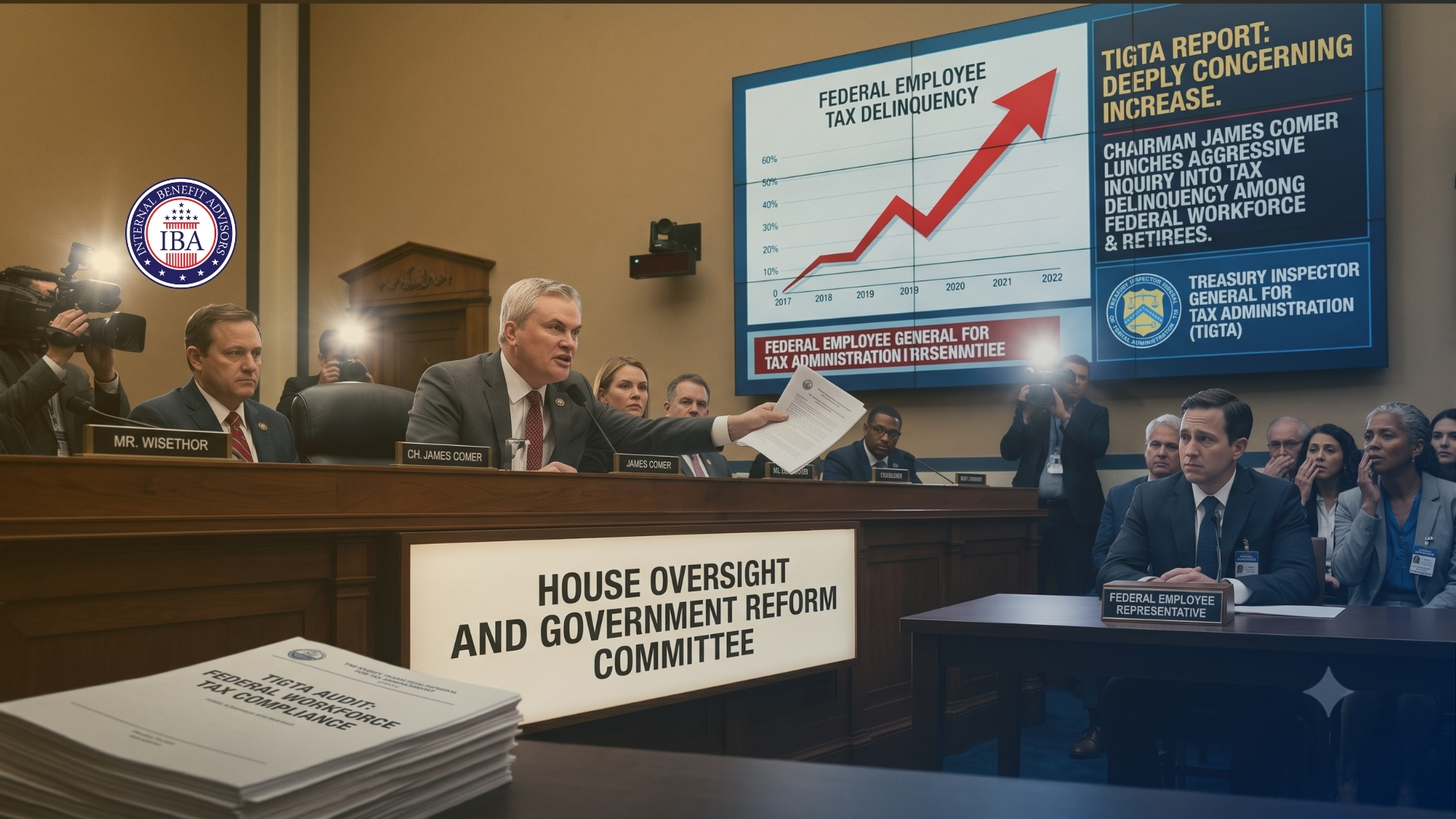

The financial accountability of the federal workforce is currently under intense, high-level scrutiny. Following a deeply concerning report from the Treasury Inspector General for Tax Administration (TIGTA), House Oversight and Government Reform Chairman James Comer has launched an aggressive investigation into the rapid rise of tax delinquency among federal employees and retirees.
For career civil servants, this legislative push is more than just political theater—it signals a renewed era of strict financial enforcement. As the IRS moves to reinstate and expand its levy programs, federal employees must understand the potential consequences of tax noncompliance on their paychecks, security clearances, and overall career stability.
Sound Data: The Multi-Billion Dollar Accountability Gap
To grasp why the House Oversight Committee is stepping in, we must look at the hard data highlighted in Chairman Comer’s June 2026 letter to the IRS. The statistics reveal a severe, systemic increase in federal tax delinquency:
- A $6.3 Billion Liability: As of Fiscal Year 2024, the TIGTA report revealed that more than 571,000 current and retired federal employees owed a combined outstanding tax obligation of approximately $6.3 billion. This translates to an average debt of more than $11,000 per delinquent individual.
- The 43 Percent Surge: The volume of the problem is accelerating. From FY 2021 to FY 2024, the number of delinquent federal employees grew by an alarming 43 percent, while the total obligation spiked by 32 percent ($1.5 billion).
- The Non-Filer Crisis: Most critically, investigators found that approximately 50,000 current federal civilian employees failed to file a tax return for multiple years. This includes nearly 14,000 high-income employees (earning over $100,000 annually) and at least 122 individuals who failed to file for eight or more years while continuing to collect taxpayer-funded salaries.
- The Threat of Levies: In his letter, Chairman Comer explicitly pressed the IRS for data regarding the number of federal employees and annuitants who have had their “federal payments or salaries levied.” The IRS is actively phasing back in the Federal Payment Levy Program, an automated mechanism designed to continuously garnish federal wages and pensions until a tax debt is satisfied.
The Career Threat: Beyond the Wage Garnishment
While the immediate financial pain of an IRS wage levy is severe, the secondary consequences for a federal career can be devastating.
Federal employment standards hold civil servants to a uniquely high bar of financial responsibility. Failing to pay “just financial obligations”—which explicitly includes federal, state, and local taxes—is actionable misconduct under standard federal ethics regulations. For employees holding security clearances, unresolved tax debt or a pattern of failing to file returns is a direct violation of Adjudicative Guideline F (Financial Considerations), making it one of the leading causes of security clearance revocations and subsequent job termination.
Securing Your Financial Perimeter with Internal Benefit Advisors
When Congressional oversight committees and the IRS align to crack down on federal tax delinquency, the margin for financial error shrinks to zero. A simple misunderstanding of your retirement tax liabilities or an unexpected financial hardship can quickly spiral into a career-threatening crisis.
At Internal Benefit Advisors, we specialize in providing the fiduciary-level guidance federal professionals need to ensure their wealth management strategies remain compliant, secure, and fully optimized:
- Tax-Smart Retirement and TSP Planning: The federal tax code is uniquely complex for civil servants. We help you map out the exact tax implications of your FERS or CSRS annuity, your Social Security benefits, and your Thrift Savings Plan (TSP) withdrawals. Proper sequencing prevents you from making heavily penalized early withdrawals that artificially inflate your taxable income and create unexpected IRS liabilities.
- Cash Flow and Debt Management: We provide comprehensive cash flow analysis to ensure you maintain the liquidity needed to handle your financial obligations, insulating you from the conditions that trigger tax delinquencies in the first place.
- Complimentary Retirement Paperwork Processing: If financial friction or workplace stress is prompting you to consider an early transition, do not navigate the notoriously backlogged Office of Personnel Management (OPM) system alone. Our team audits and completes your retirement paperwork for FREE, ensuring a pristine application that prevents costly processing delays in your interim pay.
- Benefit Synchronization: We evaluate your entire portfolio to ensure your vital safety nets—including your Federal Employees Health Benefits (FEHB) and life insurance (FEGLI)—remain securely intact and transition with you seamlessly, without creating hidden tax burdens.
Take Command of Your Financial Readiness
The launch of the House Oversight investigation and the resumption of IRS levy programs signal that financial noncompliance is no longer flying under the radar. Do not let disorganized finances or tax confusion dismantle the career and the retirement you have spent decades building.
Take command of your trajectory today. Contact the experts at Internal Benefit Advisors for a Free Benefit Assessment and ensure your financial house is entirely in order.
References
- FEDweek. Comer presses IRS for info on tax delinquent feds and retirees; says pay could be levied. FEDweek.com
- Internal Benefit Advisors. Information you need, Support you can trust. InternalBenefitAdvisors.com
- U.S. House Committee on Oversight and Government Reform. (2026, June 25). Letter to IRS Chief Executive Officer Frank Bisignano regarding federal employee tax noncompliance.
- Treasury Inspector General for Tax Administration (TIGTA). (2026, May 6). Federal Employee and Retiree Trends Show Increased Tax Noncompliance. (Report Number: 2026-3S0-023).