
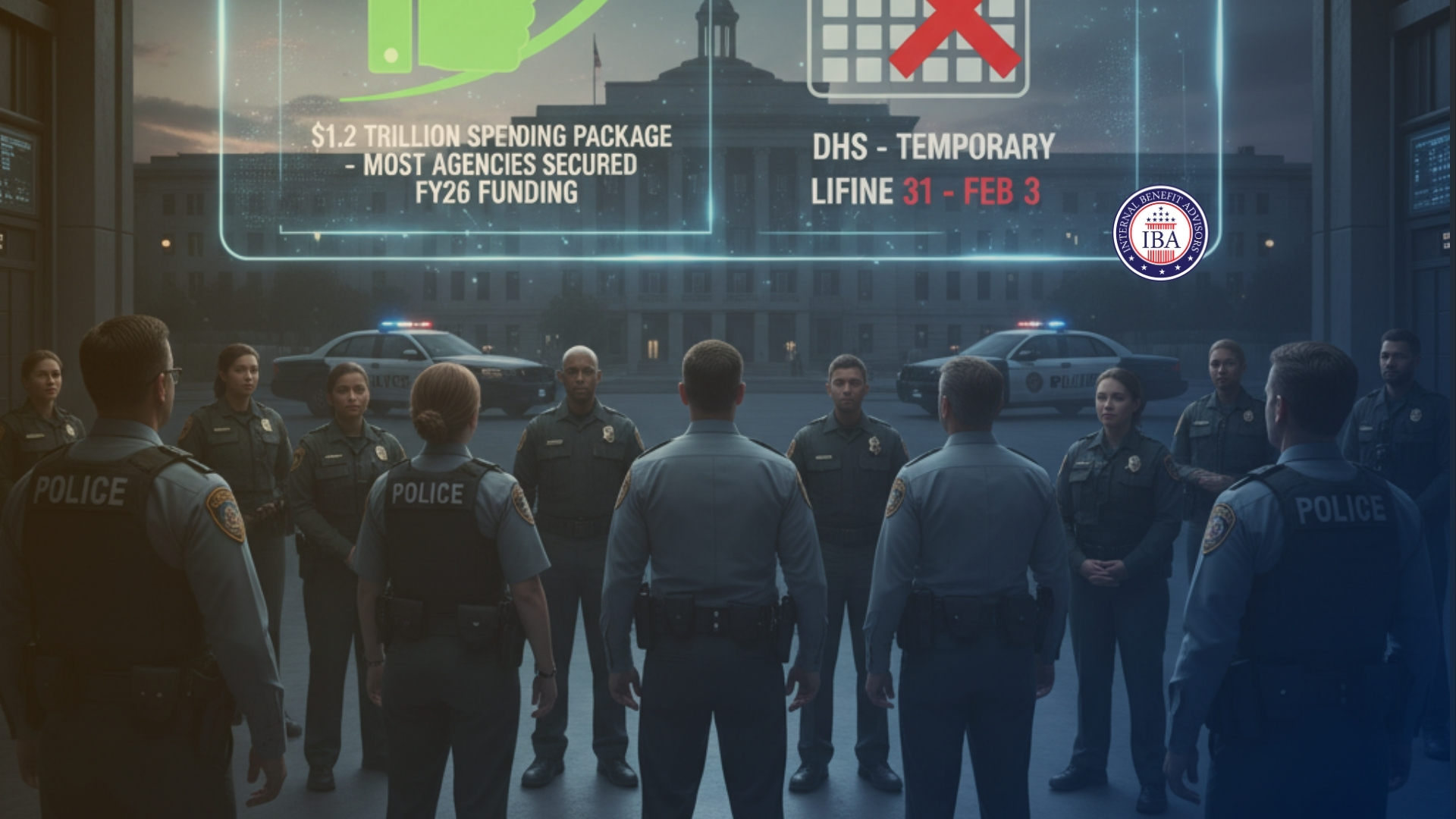

The threat of a government-wide shutdown has effectively ended for the majority of the federal workforce, but the relief is incomplete. As reported by FEDweek and other sources, Congress has passed and the President has signed a massive $1.2 trillion spending package, securing full-year funding for most agencies through September 30, 2026.
However, the victory was marred by a procedural gap that triggered a partial weekend shutdown from January 31 to February 3, leaving the Department of Homeland Security (DHS) with only a temporary lifeline. For federal employees, this legislative “fix” solves one problem while reigniting another: the return of job insecurity.
🏛️ The “Weekend Shutdown” and the New Status Quo
The Senate voted 71-29 to approve the package, but because the House did not reconvene to pass the measure until early this week (by a narrow 217-214 vote), a technical funding lapse occurred over the weekend. While most agencies reopened promptly, the disruption highlights the fragility of the current legislative process.
What is Funded (Through Sept 30, 2026):
- Department of Defense (DoD)
- Department of Labor
- Department of Health and Human Services (HHS)
- Department of Education
- Department of State
- Department of the Treasury
What is NOT Fully Funded:
- Department of Homeland Security (DHS): Funding is extended only through February 13, 2026.
- The Conflict: Lawmakers remain deadlocked over immigration enforcement policies following high-profile incidents in Minneapolis. Without a deal in the next few days, DHS faces another potential shutdown that could impact TSA, FEMA, and Customs and Border Protection.
📉 Sound Data: The Cost of “CR” Governance
While this weekend’s lapse was short, the cumulative effect of stopgap governance is expensive and destabilizing.
- The “43-Day” Hangover: This latest near-miss comes on the heels of the historic 43-day shutdown in late 2025. Data from that period estimated a permanent economic loss of over $3 billion and delayed paychecks for 800,000 workers.
- The 10-Day Cliff: For DHS employees, the “Feb 13” deadline creates a unique financial risk. With only a short runway, “essential” employees at DHS effectively remain in a state of indefinite uncertainty, unable to plan their finances beyond the next pay period.
⚠️ The Hidden Danger: RIF Moratorium Expires
The most critical detail for federal employees is not what is in the bill, but what was left out.
The previous Continuing Resolution (CR) included a strict moratorium on Reductions in Force (RIFs), preventing agencies from laying off staff during the budget fight. That moratorium has expired.
- The New Rule: The new funding package does not renew the ban on layoffs. Instead, it replaces the ban with “notification requirements,” compelling agencies to alert Congress 30 days in advance if they plan to reduce staff or funding by 5% or more.
- The Risk: Agencies that had paused restructuring plans in late 2025 are now legally free to resume them. This is particularly dangerous for employees in programs identified as “low priority” during the recent budget negotiations.
🛡️ Stabilization Strategy: Protect Your Career Now
With the RIF shield gone and DHS still on the chopping block, your career strategy needs to shift from “waiting” to “preparing.”
Internal Benefit Advisors specializes in navigating these exact transition periods.
How We Help You Manage the Post-Shutdown Landscape:
- RIF Preparedness Audit: With the moratorium lifted, we audit your Service Computation Date (SCD) and Veterans’ Preference status to ensure your retention standing is accurate before any notices are issued.
- DHS Contingency Planning: For DHS employees facing the Feb 13 cliff, we help structure emergency cash flow plans to withstand potential pay delays without raiding retirement savings.
- Early Exit Analysis: If the return of RIF threats signals it is time to go, we analyze your eligibility for Voluntary Early Retirement Authority (VERA) or Discontinued Service Retirement, ensuring you don’t leave money on the table.
The budget is signed, but the safety net is gone. Make sure you have a plan to replace it.
Contact Internal Benefit Advisors today for a RIF defense and benefits review.
References
- FEDweek. “Full Year Funding Approved for All but DHS, Ending Partial Shutdown.” February 3, 2026.
- CBS News. “Trump signs funding bill to end shutdown after package clears House.” February 3, 2026.
- The Conference Board. “Partial Government Shutdown Ends.” February 2026.
- Internal Benefit Advisors. Retrieved from https://internalbenefitadvisors.com