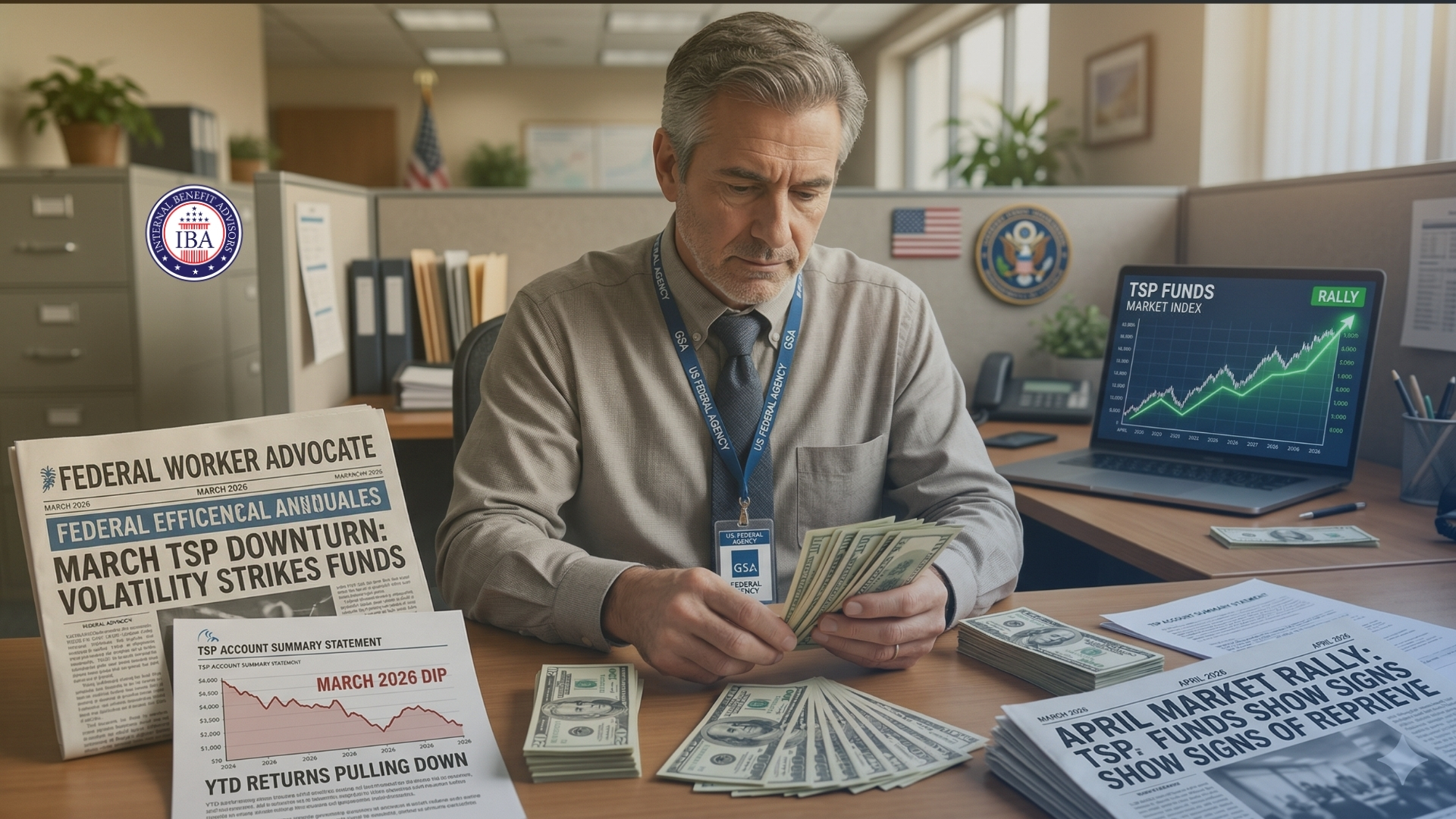
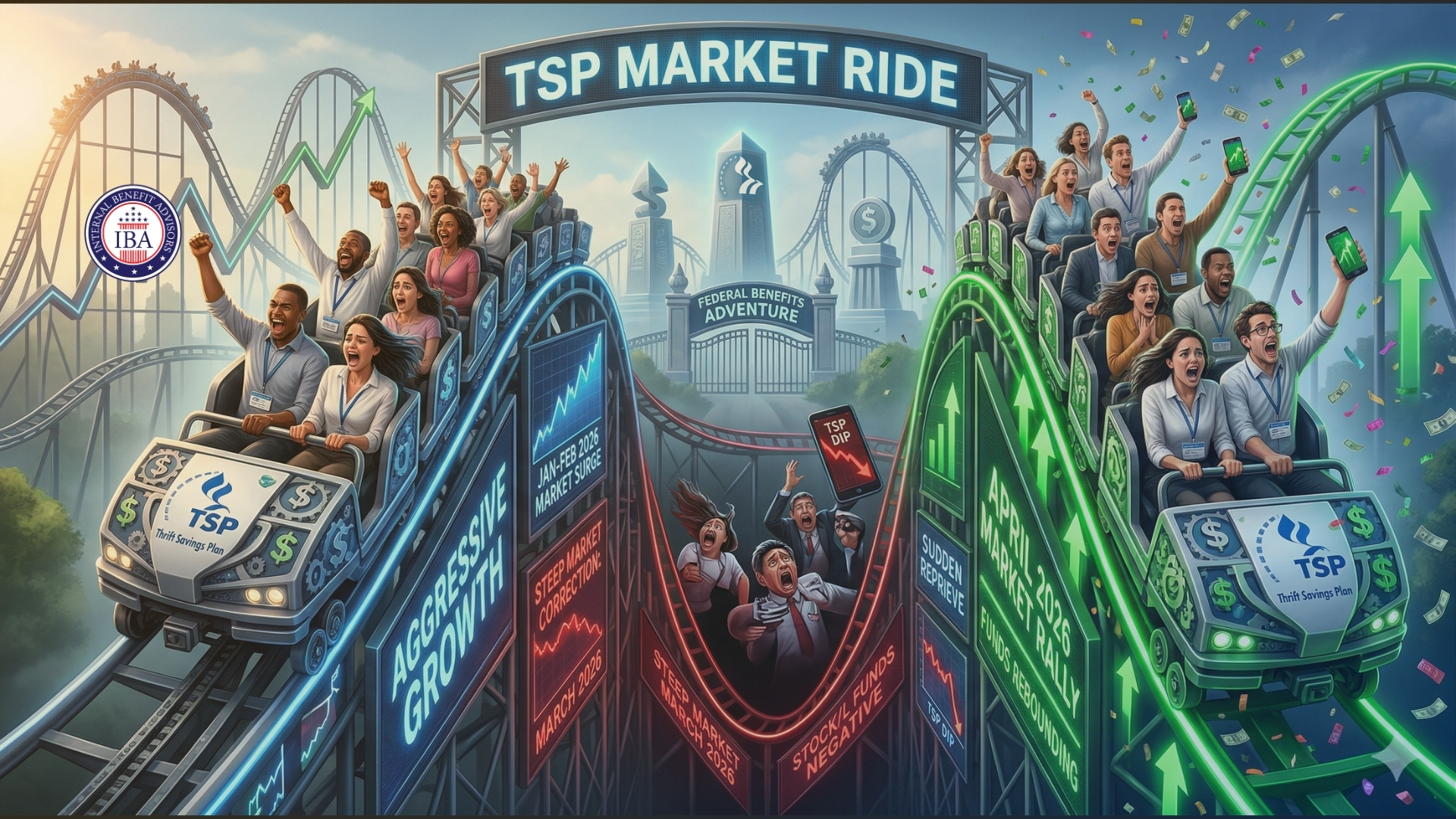

For federal employees tracking their Thrift Savings Plan (TSP) balances, the first quarter of 2026 has been a rollercoaster. Following a period of aggressive growth, the TSP experienced a steep market correction in March, leaving nearly all stock-based and Lifecycle (L) funds in negative territory for the year. However, as the calendar turned to April, a sudden market rally provided a much-needed reprieve.
Understanding the data behind this volatility—and resisting the urge to make panic-driven emotional decisions—is critical to maintaining a healthy retirement trajectory.
The March Plunge: By the Numbers
The recent market downturn was largely attributed to global economic disruptions stemming from the geopolitical conflict in Iran. The uncertainty triggered a massive sell-off that dragged down domestic and international equities alike.
Here is the sound data reflecting the March 2026 performance and Year-to-Date (YTD) returns across the core TSP funds:
| Fund | Asset Class | March 2026 Return | Year-to-Date (YTD) Return |
| G Fund | Government Securities | +0.34% | +1.04% |
| F Fund | Fixed Income (Bonds) | -1.77% | +0.04% |
| C Fund | Large-Cap Stocks | -4.98% | -4.34% |
| S Fund | Small/Mid-Cap Stocks | -4.58% | -1.22% |
| I Fund | International Stocks | -9.35% | +1.84% |
Key Takeaways from the Data:
- The I Fund Paradox: The International (I) Fund suffered the steepest loss in March, plummeting 9.35%. However, because it had produced the strongest gains in January and February, it is the only stock fund to remain in positive territory for the year (+1.84%).
- The G Fund Safe Haven: As expected during times of global crisis, the G Fund was the only offering to generate positive returns in March, increasing by its statutorily mandated rate.
- Lifecycle (L) Funds: The losses in the stock funds dragged all L Funds into negative territory for the month. Every L fund—except for the highly conservative L Income Fund (+0.26% YTD)—is now negative for the year. The further out the target date, the more severe the drop (e.g., the L 2055 through L 2075 funds dropped 6.40% in March alone).
Why the March Drop Felt So Severe
The impact of this market correction was magnified because of how federal employees were positioned going into it. Over the last few years of strong market performance, participants steadily tilted their allocations toward aggressive equities.
By the end of February 2026, 67.4% of the $1.094 trillion in total TSP investments was held in the three stock-based funds. This is a massive shift from just a few years ago, when stock allocations sat at 56.9% at year-end 2022.
Furthermore, investors had been “chasing the rally” by shifting billions of dollars into the I Fund just before the crash—including $4.4 billion in January and a staggering $9.6 billion in February. Those who bought in at the absolute peak felt the brunt of the 9.35% March decline.
A Note on Averages: Despite the volatility, the baseline stability of the federal workforce remains strong. As of late February, the average TSP account balance for FERS investors was approximately $222,000, while the average for CSRS investors (who are mostly retired) stood at roughly $244,000.
Weathering the Storm with Internal Benefit Advisors
While a late-March rally—fueled by speculation of an impending resolution to the conflict—helped soften the final numbers, the whiplash serves as a vital reminder: market timing is a dangerous game.
Moving large sums of money into the G Fund after a market plunge locks in your losses and ensures you miss the eventual rebound. Conversely, holding an overly aggressive portfolio as you approach retirement can jeopardize your financial independence.
At Internal Benefit Advisors, our mission is to provide the steady, fiduciary-level guidance required to navigate these economic crosscurrents. We help federal employees replace panic with preparation:
- Portfolio Risk Alignment: We analyze your current TSP allocations to ensure they match your actual risk tolerance and time horizon, preventing the “allocation drift” that caught many investors off-guard in March.
- Retirement Bridge Planning: If the recent volatility has you rethinking your retirement timeline, we help you stress-test your numbers. We calculate your FERS or CSRS annuity and determine exactly how much income your TSP will need to generate.
- Complimentary Retirement Paperwork Assistance: During periods of administrative and economic uncertainty, transitioning out of federal service can be stressful. We provide free assistance with your retirement paperwork to ensure your application is flawless and your annuity payments begin on time.
Secure Your Capital Today
Market plunges are inevitable, but financial anxiety doesn’t have to be. Do not let short-term geopolitical volatility derail a lifetime of civil service savings.
Contact Internal Benefit Advisors today for a Free Benefit Assessment and ensure your TSP strategy is built to weather the storms and capture the rallies.
References
- FedWeek. (2026, April 1). “Almost All TSP Funds Down Year-to-Date after March Plunge; Reprieve to Start April.” Link
- Internal Benefit Advisors. “Benefits Simplified, Retirement Maximized.” Services & Counseling
- Government Executive. (2026, April). “Most TSP funds tumbled in March.”
- Thrift Savings Plan (TSP.gov). Monthly Performance and Assets Report – March 2026.