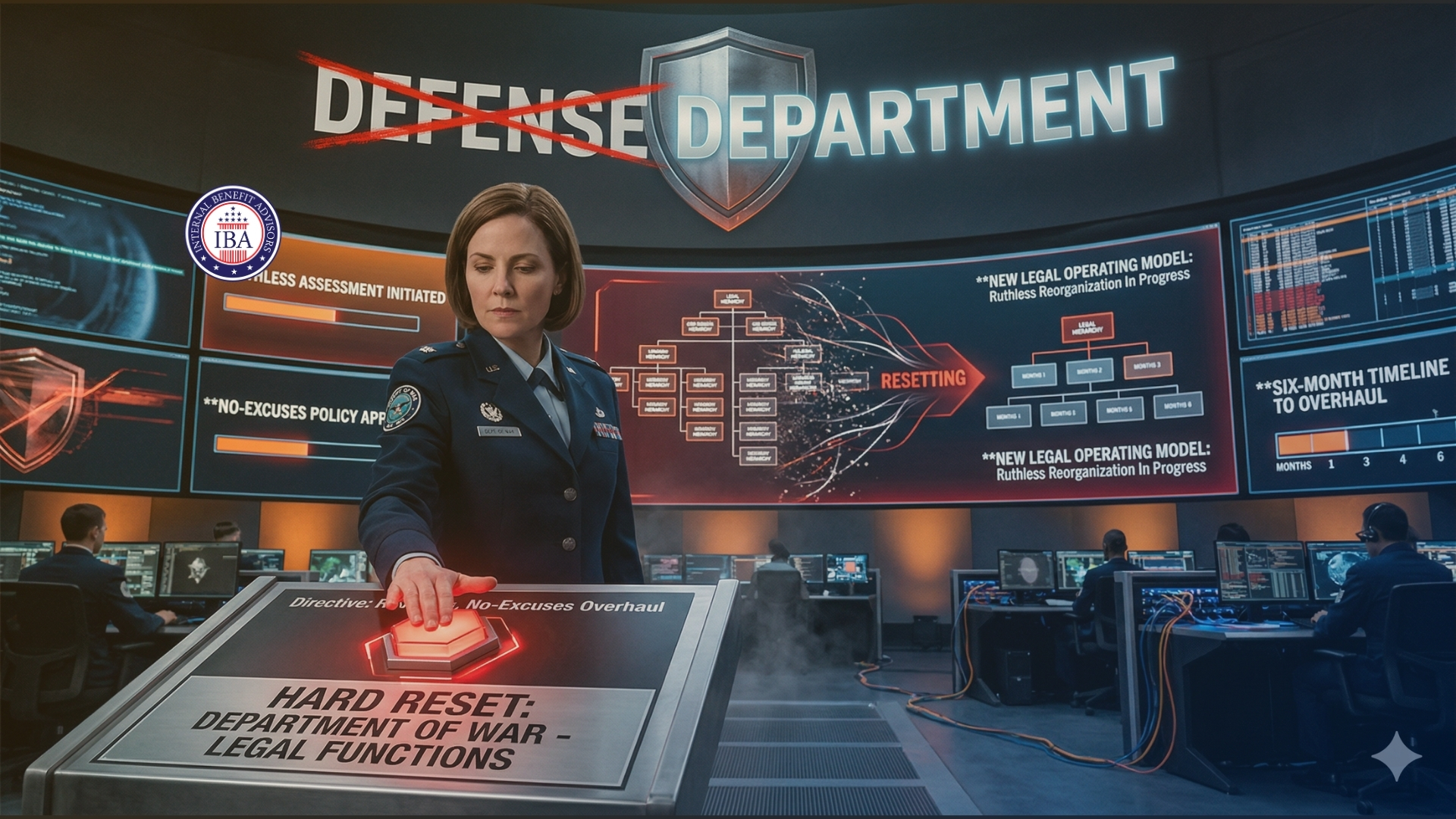


The firewall between career civil servants and political appointees has officially been breached. As reported by FEDweek, the Office of Personnel Management (OPM) has issued final regulations establishing the “Schedule Policy/Career” (Schedule P/C), the successor to the controversial “Schedule F” initiative.
Effective March 2026, this rule creates a new excepted service category for career employees in “policy-influencing” roles, stripping them of standard civil service protections and effectively converting them to at-will status. Simultaneously, the administration has formalized “Schedule G,” a new category for temporary political appointees, closing what it calls a “hiring gap” in the executive branch.
For federal employees in mid-to-senior levels, the rules of engagement have just changed. If you hold a role that touches policy, grants, or regulations, your tenure is no longer guaranteed by Title 5.
🏛️ The New Landscape: Schedule P/C and Schedule G
The final rule introduces a dual-track system that reshapes the upper echelons of the federal workforce.
1. Schedule Policy/Career (The “At-Will” Career Service) This schedule is designed for career employees (not political appointees) whose work is of a “confidential, policy-determining, policy-making, or policy-advocating character.”
- The Change: While these positions remain “career” and must be filled through merit-based hiring, employees placed in this schedule lose their right to appeal adverse actions (such as removal or suspension) to the Merit Systems Protection Board (MSPB).
- The Criteria: You are at risk if your job involves:
- Drafting regulations or guidance.
- Substantive discretion in grant-making or funding decisions.
- Advocating agency policies to Congress or the media.
- Exercising “delegated discretionary authority” from an agency head.
2. Schedule G (The “Political” Surge Force) The rule also formalizes Schedule G, a new category for non-career (political) appointees.
- The Purpose: Unlike Schedule C (which is for confidential support staff), Schedule G is designed to bring in temporary political appointees to serve in substantive policy roles to “add horsepower” to the President’s agenda.
- The Impact: This creates a new layer of political leadership that can be deployed rapidly into agencies, potentially bypassing traditional vacancy backlogs.
📉 Sound Data: The Scale of the Shift
To understand the risk, you must look at the scope of the OPM directive. This is not a surgical removal of a few bad apples; it is a systemic reclassification.
- The “50,000” Baseline: The administration estimates that approximately 50,000 federal positions will be reclassified under Schedule P/C. This represents roughly 2.2% of the total civilian workforce.
- The “Broad Interpretation” Risk: Federal unions warn that the definition of “policy-influencing” is intentionally vague. A GS-13 scientist who writes a report used for policy could theoretically be swept into this category.
- The 30-Day Clock: The rule was published on February 5, 2026, and takes effect in 30 days. Agencies have already submitted preliminary lists of positions to be converted, meaning reclassification notices could arrive as early as mid-March.
⚠️ What You Lose (And What You Keep)
If your position is converted to Schedule P/C, your employment rights change overnight.
- LOST:
- MSPB Appeal Rights: You cannot appeal a termination based on performance or conduct to an independent board. The agency head’s decision is essentially final.
- Union Representation: Most policy-making positions are excluded from bargaining units.
- Adverse Action Procedures: The standard 30-day notice and opportunity to respond to a firing are no longer statutory requirements.
- KEPT:
- Whistleblower Protections: OPM asserts that Whistleblower Protection Act rights remain intact (though enforcement without the MSPB is more complex).
- Veterans’ Preference: Hiring for these roles must still honor veterans’ preference points.
- Benefits: Your FERS pension, TSP, and FEHB eligibility remain unchanged—provided you are not fired.
🛡️ From “Career” to “At-Will”: Your Survival Strategy
If you are a GS-13, GS-14, or GS-15 in a policy-adjacent role, you must now plan as if you are a private sector employee with no contract. Job security is no longer a given.
Internal Benefit Advisors helps you build a financial safety net that functions independently of your tenure.
How We Help You “At-Will” Proof Your Future:
- Severance vs. Immediate Retirement: If you are removed under Schedule P/C, are you eligible for Discontinued Service Retirement (DSR)? We analyze your age and service years to see if an involuntary separation triggers an immediate pension or if you are stuck with a deferred one.
- FERS Deferred Analysis: If you are fired before MRA, we calculate the inflation-adjusted value of your Deferred Annuity to ensure you don’t cash out a pension worth hundreds of thousands of dollars out of panic.
- TSP Preservation: “At-will” status increases the risk of sudden income loss. We help you structure your TSP and emergency funds to bridge the gap between a potential federal exit and your next career move.
The rules have changed. Your strategy must change with them.
Contact Internal Benefit Advisors today for a Schedule P/C risk assessment and retirement contingency plan.
References
- FEDweek. “Final Rules Issued for New At-Will ‘Schedule Policy/Career’ that Could Affect 50K Positions.” February 5, 2026.
- U.S. Office of Personnel Management (OPM). Final Rule: Upholding Civil Service Protections and Merit System Principles (Schedule Policy/Career). February 2026.
- Government Executive. Trump Admin Moves to Finalize Return of Schedule F. February 5, 2026.
- Internal Benefit Advisors. Retrieved from https://internalbenefitadvisors.com