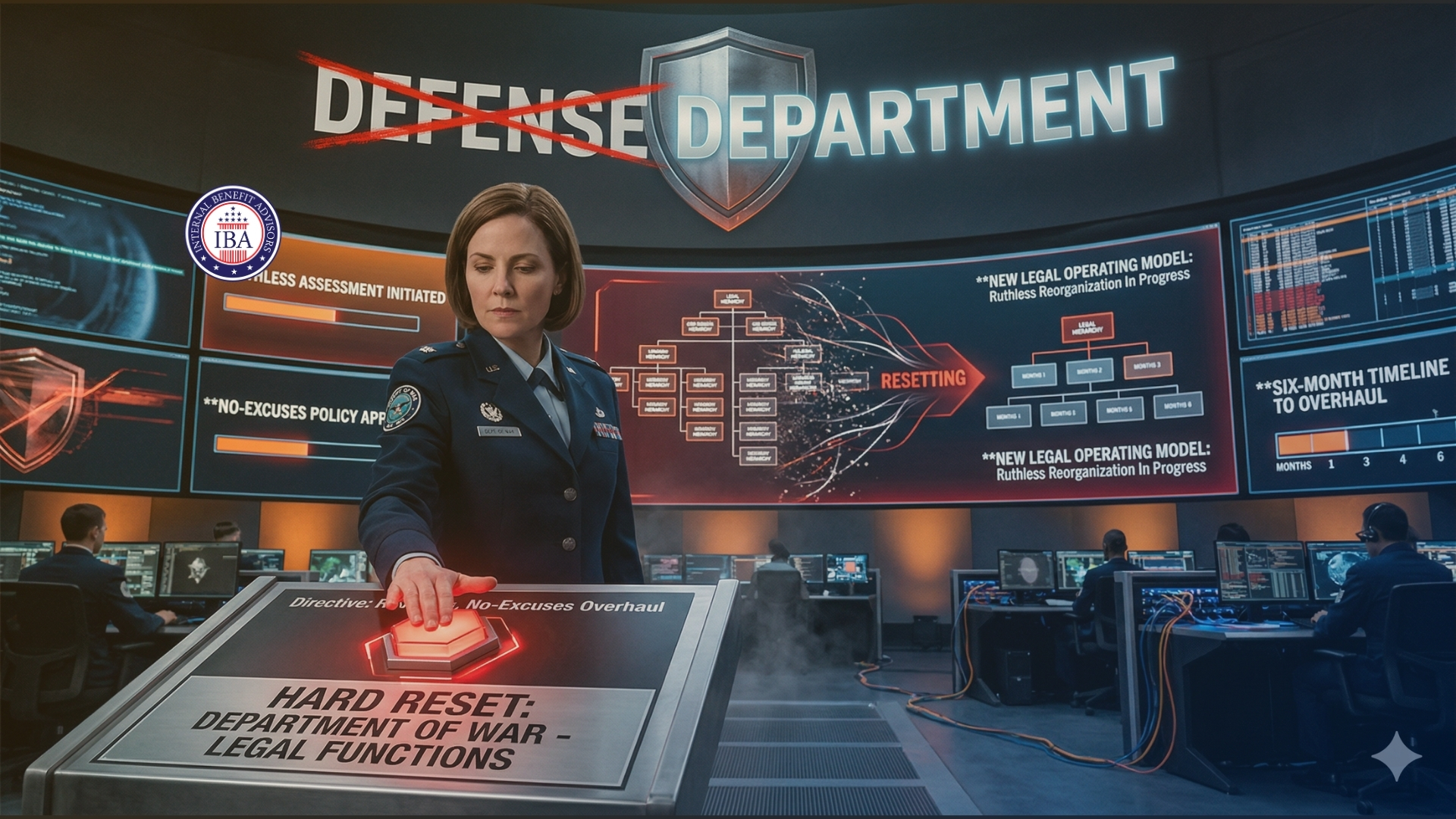


The era of “everyone is outstanding” has officially ended for the federal workforce. As reported by FEDweek, OPM Director Scott Kupor has confirmed that the strict “forced distribution” model—previously reserved for the Senior Executive Service (SES)—will be expanded to cover all federal employees for the current 2026 rating cycle.
This is not a proposal for the distant future; it is a directive that fundamentally alters how your performance is measured, rewarded, and protected right now. By capping the number of top ratings available, OPM is effectively forcing agencies to grade on a curve, a move that will have immediate financial and career stability consequences for the General Schedule (GS) workforce.
📉 The “New Math” of Federal Performance
For decades, federal performance management has been characterized by “ratings inflation.” The new directive aims to correct this by imposing a mathematical limit on high scores.
Sound Data: The Shift form “Inflation” to “Distribution” To understand the severity of this change, one must look at the historical data OPM is seeking to dismantle:
- The Current Reality: According to Government Accountability Office (GAO) and MSPB data, historically over 70% of federal employees receive a rating of “Outstanding” (Level 5) or “Exceeds Fully Successful” (Level 4).
- The New Cap: The proposed model mirrors the SES system, which typically caps top-tier ratings at 30-35% of the workforce.
- The Consequence: To meet this new mathematical distribution, agencies will be forced to downgrade approximately half of their high performers from a Level 4/5 to a Level 3 (“Fully Successful”), regardless of their actual work output.
⚠️ The Hidden Danger: RIF Retention Standing
While Director Kupor stated there is “no shame” in a Level 3 rating, the regulations governing Reductions in Force (RIF) tell a different story. In a downsizing scenario, your performance rating is a critical survival tool.
The “Years of Service” Penalty: When an agency runs a RIF, they calculate your retention standing by adding “credit” years to your actual service time based on your last three performance ratings.
- Level 5 (Outstanding): Typically adds 20 years of service credit.
- Level 3 (Fully Successful): Typically adds 12 years of service credit.
- The Impact: By forcing a high-performing employee down to a Level 3, the agency effectively strips them of 8 years of retention seniority. If a RIF occurs in 2027, thousands of employees will be far more vulnerable than they realize due to this 2026 ratings shift.
💸 The Bonus Blackout
The financial impact is immediate. Performance awards (cash bonuses and time-off awards) are almost exclusively tied to rating levels.
- The Allocation: Agencies are often directed to spend the majority of their awards budget on Level 4 and 5 employees.
- The Loss: If you are part of the ~40% of the workforce that gets mathematically pushed down to Level 3, you are likely facing a 0% performance bonus for 2026, effectively resulting in a pay freeze relative to inflation.
🛡️ Strategy: Protect Your Record and Your Wallet
The rules of the game have changed mid-year. You can no longer rely on a guaranteed “5” to secure your bonus or bolster your job security.
Internal Benefit Advisors helps you navigate this tighter, more competitive landscape.
How We Help You Adapt to the New Standard:
- RIF Retention Audit: We calculate your “adjusted” retention standing based on a projected Level 3 rating. If this new math puts you in the “danger zone” for a layoff, we help you evaluate proactive exit strategies like Voluntary Early Retirement Authority (VERA).
- Financial Resilience Planning: With performance bonuses likely drying up for the majority of staff, we help you adjust your TSP contributions and household budget to ensure your retirement goals remain on track without that extra annual income.
- Rebuttal & Grievance Support: If you believe your downgrade was purely mathematical rather than performance-based, we help you understand the documentation required to challenge the rating—though with a government-wide mandate, the bar for success is higher than ever.
The bell curve is coming. Make sure you are prepared for where you fall.
Contact Internal Benefit Advisors today for a performance impact analysis and benefits review.
References
- FEDweek. “Forced Distributions for All Coming for Current Ratings Cycle, Kupor Says.” February 10, 2026.
- U.S. Government Accountability Office (GAO). Federal Workforce: Distribution of Performance Ratings Across the Federal Government.
- Code of Federal Regulations (CFR). 5 CFR § 351.504 – Credit for Performance.
- Internal Benefit Advisors. Retrieved from https://internalbenefitadvisors.com