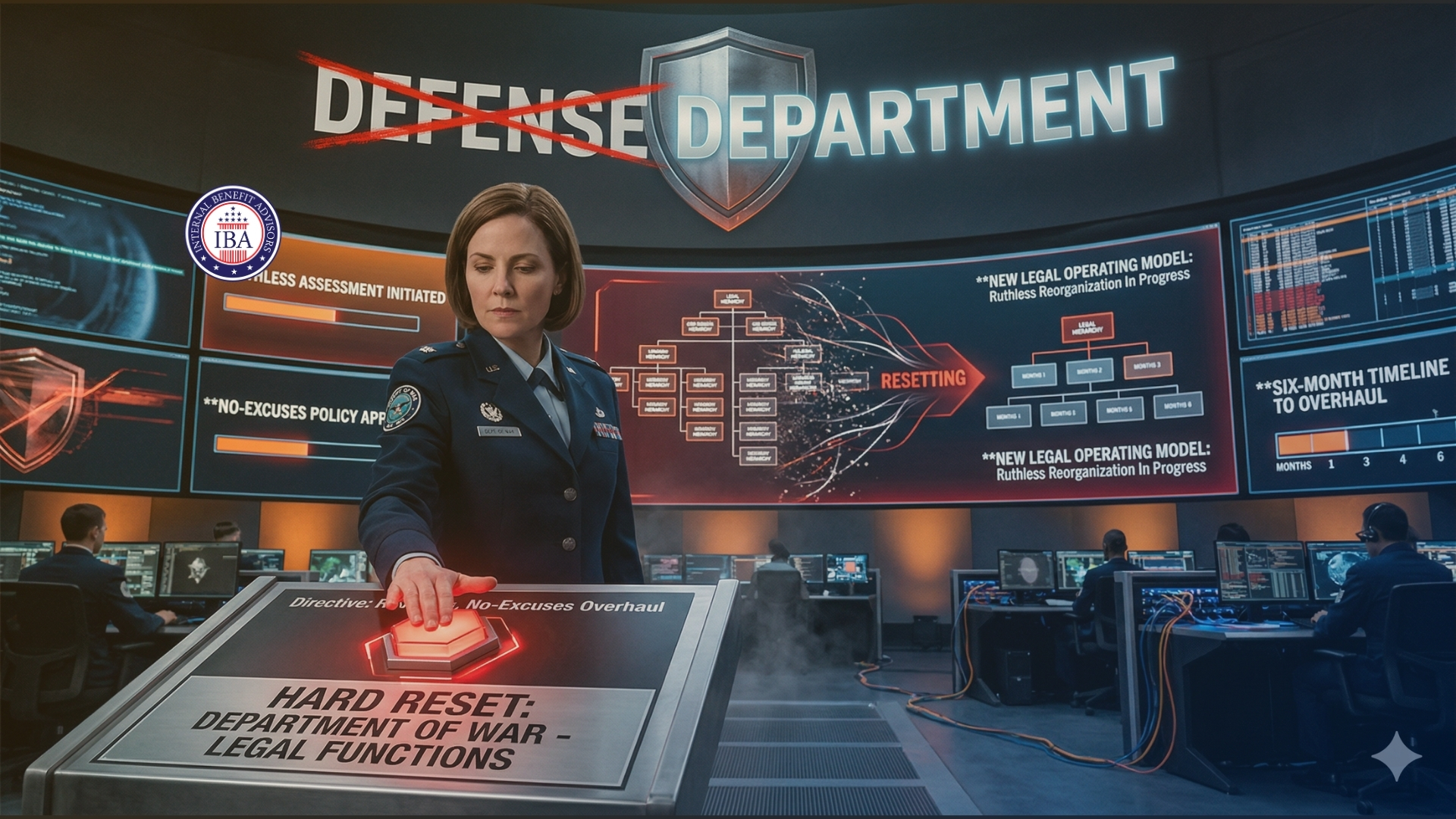


The days of routine “Outstanding” performance ratings may be numbered. In a significant shift that could redefine federal careers, the Office of Personnel Management (OPM) has previewed plans to implement a forced ratings distribution system across the entire federal workforce.
As reported by FEDweek, OPM Director Scott Kupor argues that the government suffers from “rampant ratings inflation,” where nearly everyone is rated above average, making it impossible to distinguish true high performers. To fix this, OPM plans to impose strict caps on top ratings—a move that brings the controversial “bell curve” model to your annual review.
📉 The “Lake Wobegon” Effect vs. The Bell Curve
OPM’s primary argument is based on data showing that federal performance ratings have become statistically meaningless.
Sound Data: The Current Reality
- The 99% Problem: Historically, OPM data has shown that more than 99% of federal employees are rated as “Fully Successful” or higher.
- Top-Heavy Ratings: In fiscal year 2025, OPM found that within its own agency, nearly 70% of employees received one of the top two ratings (Level 4 or 5).
- The SES Precedent: This move follows a similar policy recently implemented for the Senior Executive Service (SES), which capped the number of executives receiving top ratings at 30%. OPM now explicitly plans to “propose similar distribution guidelines to cover the rest of the federal employee base.”
The Proposed Reality: If the SES model is applied government-wide, agencies would be forced to limit “Outstanding” and “Exceeds Fully Successful” ratings to roughly the top 30-35% of staff. This means that mathematically, two-thirds of the workforce—regardless of how hard they work—will be pushed down into the “Fully Successful” (Level 3) category.
⚠️ Why “Fully Successful” Might Feel Like a Demotion
While being rated “Fully Successful” sounds acceptable on paper, in the current federal culture, it often carries significant financial and career penalties.
1. The Bonus Cliff: Currently, many agencies reserve cash awards and Quality Step Increases (QSIs) almost exclusively for Level 4 and Level 5 performers. If you are forced into Level 3 to satisfy a quota, you could lose thousands of dollars in annual performance bonuses.
- Note: OPM has suggested that Level 3 employees should be eligible for bonuses, but with a finite awards budget, spreading the wealth likely means smaller checks for everyone.
2. The RIF Risk: Performance ratings are a primary factor in Retention Standing during a Reduction in Force (RIF). An employee with a “Level 3” average has a lower retention score than someone with a “Level 5” average. If ratings are artificially suppressed, your years of service might not be enough to protect you during a downsizing.
3. The Private Sector Warning: This “stack ranking” system is not new; it was popularized by companies like GE and Microsoft in the 1980s and 90s. However, Microsoft abandoned it in 2013 after finding it decimated morale and killed collaboration, as employees were incentivized to compete against their teammates rather than work together.
🛡️ Your Career is Shifting. Is Your Financial Plan Ready?
This proposal signals a harsher, more competitive future for federal employment. When your annual bonus is no longer a “given” and your performance rating is subject to a quota, your financial stability cannot rely on best-case scenarios.
This is where Internal Benefit Advisors becomes your strategic partner. We help you build a financial plan that works regardless of what number is on your performance appraisal.
How We Help You Adapt:
- Bonus-Independent Planning: We help you build a retirement and savings strategy that doesn’t rely on variable income like performance awards, ensuring your long-term goals are secure even if your bonus disappears.
- “RIF-Proofing” Your Future: With ratings becoming a scarcer commodity, retention standing is more volatile. We provide comprehensive separation analysis to show you exactly where you stand if a RIF occurs.
- Financial Resilience: If your agency adopts a “pay for performance” model that leaves the majority behind, we help you optimize your TSP and other assets to bridge the gap.
The rules of the game are changing. Don’t play with an outdated strategy.
Contact Internal Benefit Advisors today for a comprehensive career and benefits review.
References
- FEDweek. “OPM Previews Plans to Seek Forced Ratings Distribution for All Federal Employees.”
- Office of Personnel Management (OPM). Federal Employee Viewpoint Survey (FEVS) Results.
- Society for Human Resource Management (SHRM). The Case Against Forced Ranking.
- Internal Benefit Advisors. Retrieved from https://internalbenefitadvisors.com