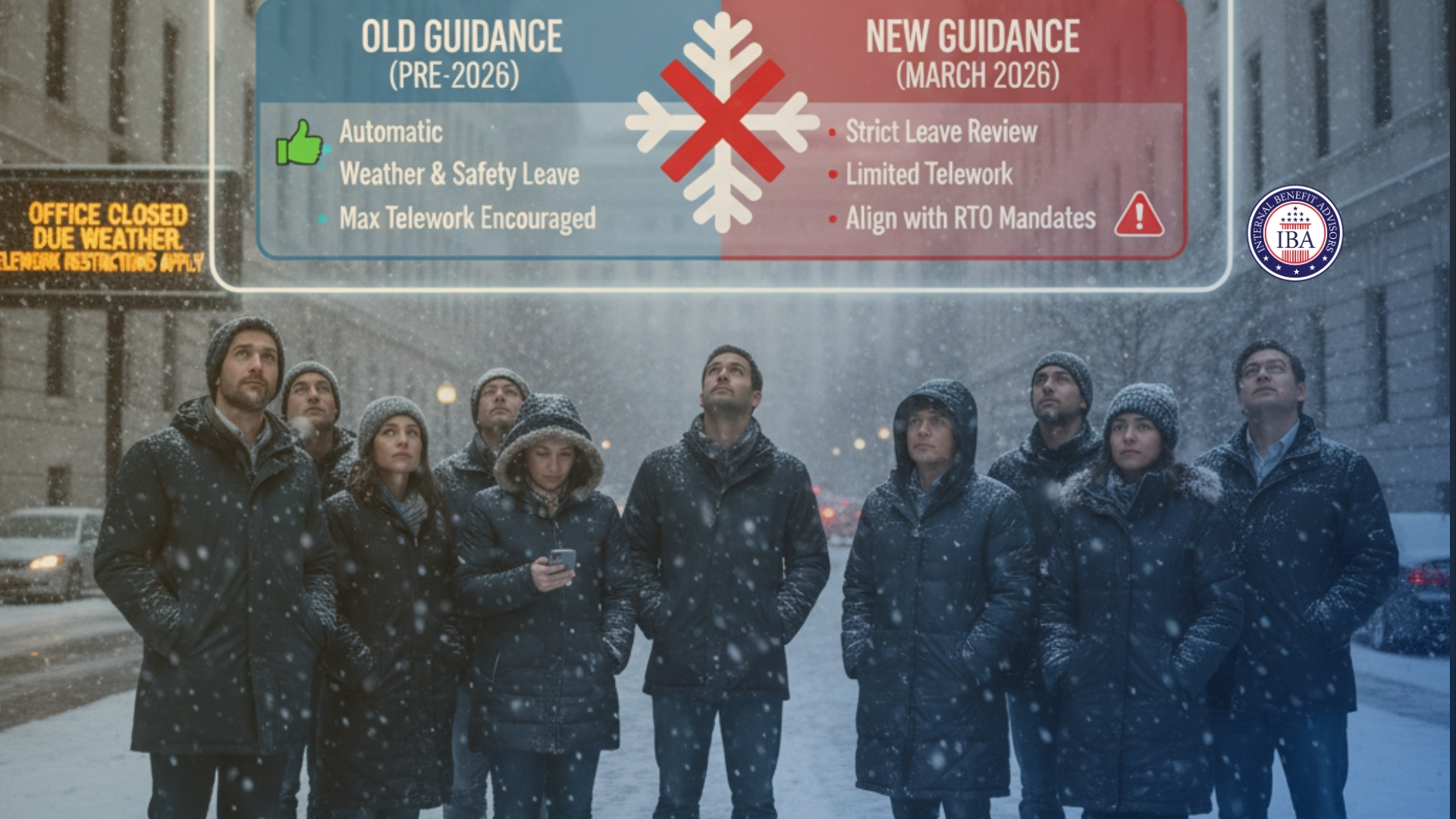

The Office of Personnel Management (OPM) has officially rewritten its guidance regarding how federal agencies handle workplace disruptions caused by severe weather and other emergencies. As reported by FEDweek, this revised policy marks a significant shift away from the previous administration’s reliance on telework, signaling a stricter approach to granting “weather and safety leave” when offices close.
For federal employees, the familiar “snow day” protocol has been overhauled. The new guidance aligns with the current administration’s broader push to limit remote work, requiring agencies to carefully review their continuity of operations plans to ensure strict compliance with new telework restrictions.
❄️ The “Situational Telework” Paradox
The most critical change for everyday employees involves the interaction between telework agreements and office closures. The revised guidance systematically deletes language that previously praised telework as an “effective tool” during emergencies, reframing it as a heavily restricted management flexibility.
- The Rule: OPM explicitly reminds agencies that employees performing “situational” or unscheduled telework during an emergency are generally not eligible for weather and safety leave.
- The Catch: If the office closes due to a blizzard or hurricane, employees without a telework agreement are granted paid weather and safety leave. However, if you have a situational telework agreement on file, you are expected to work from home. If you cannot work—perhaps due to a localized power outage or unexpected childcare duties—you may be forced to use your own accrued Annual Leave or take Leave Without Pay (LWOP).
🏢 The End of Regional Coordination
The revision also eliminates the traditional role of Federal Executive Boards (FEBs). Previously, FEBs helped coordinate uniform operating statuses for agencies outside the Washington D.C. area.
Now, each agency must individually communicate its operating status directly to its impacted employees, which may lead to differing closure protocols for federal buildings in the exact same city. Furthermore, the guidance strongly reminds agencies to strictly designate “emergency” employees who are expected to report to the physical worksite regardless of the conditions or closure announcements.
📉 Sound Data: The 90% Exposure Risk
This policy shift carries massive financial and operational implications for the workforce.
- The Exposure: According to recent workforce tracking following the 2025 return-to-office mandates, approximately 90% of federal employees are now working in-person. This means the vast majority of the workforce is now navigating these stricter weather leave rules without the protection of routine remote work agreements.
- The Cost Shift: Historically, a single full-day closure in the National Capital Region cost taxpayers an estimated $70 million to $100 million in lost productivity before mass telework was implemented. By forcing situational teleworkers to either work or burn their own leave, the government effectively shifts the cost of the emergency onto the employee’s personal leave balance.
- The Backlash: Because having a situational telework agreement now acts as a double-edged sword that disqualifies employees from free weather leave, many federal workers are reportedly canceling their agreements entirely to avoid draining their Annual Leave during extreme weather events.
🛡️ Protect Your Leave Balance and Your Retirement
Your Annual Leave is not just for vacations; it is a critical financial asset. When you retire, your unused Annual Leave is paid out as a lump sum, often providing a vital cash bridge while you wait for your first OPM pension check to be processed. If the new OPM emergency guidance forces you to burn your leave during winter storms or hurricane evacuations, you are essentially spending your retirement cash.
Internal Benefit Advisors helps you build a resilient financial strategy that protects your hard-earned benefits from unpredictable policy shifts.
How We Help You Safeguard Your Future:
- Annual Leave Optimization: We project the exact cash value of your unused Annual Leave payout at retirement. If weather disruptions are draining your balance, we help you adjust your TSP contributions and savings rate to replace that lost cash buffer.
- Emergency Fund Planning: With the risk of unexpected leave usage rising in 2026, we help you structure a liquid emergency fund outside of your TSP so you never have to resort to high-interest debt during a crisis.
- Retirement Date Strategy: If your agency’s new operating protocols or strict “emergency personnel” designations are accelerating your burnout, we analyze your eligibility for immediate retirement or Voluntary Early Retirement Authority (VERA) to help you plan a strategic exit.
Don’t let a change in the weather policy wash away your retirement savings.
Contact Internal Benefit Advisors today for a comprehensive leave and benefits review.
References
- FEDweek. “OPM Rewrites Guidance on Policies for Emergency-Related Work Disruptions.” January 1, 2026.
- U.S. Office of Personnel Management (OPM). Guide to Telework and Remote Work in the Federal Government. December 2025.
- Internal Benefit Advisors. Retrieved from