
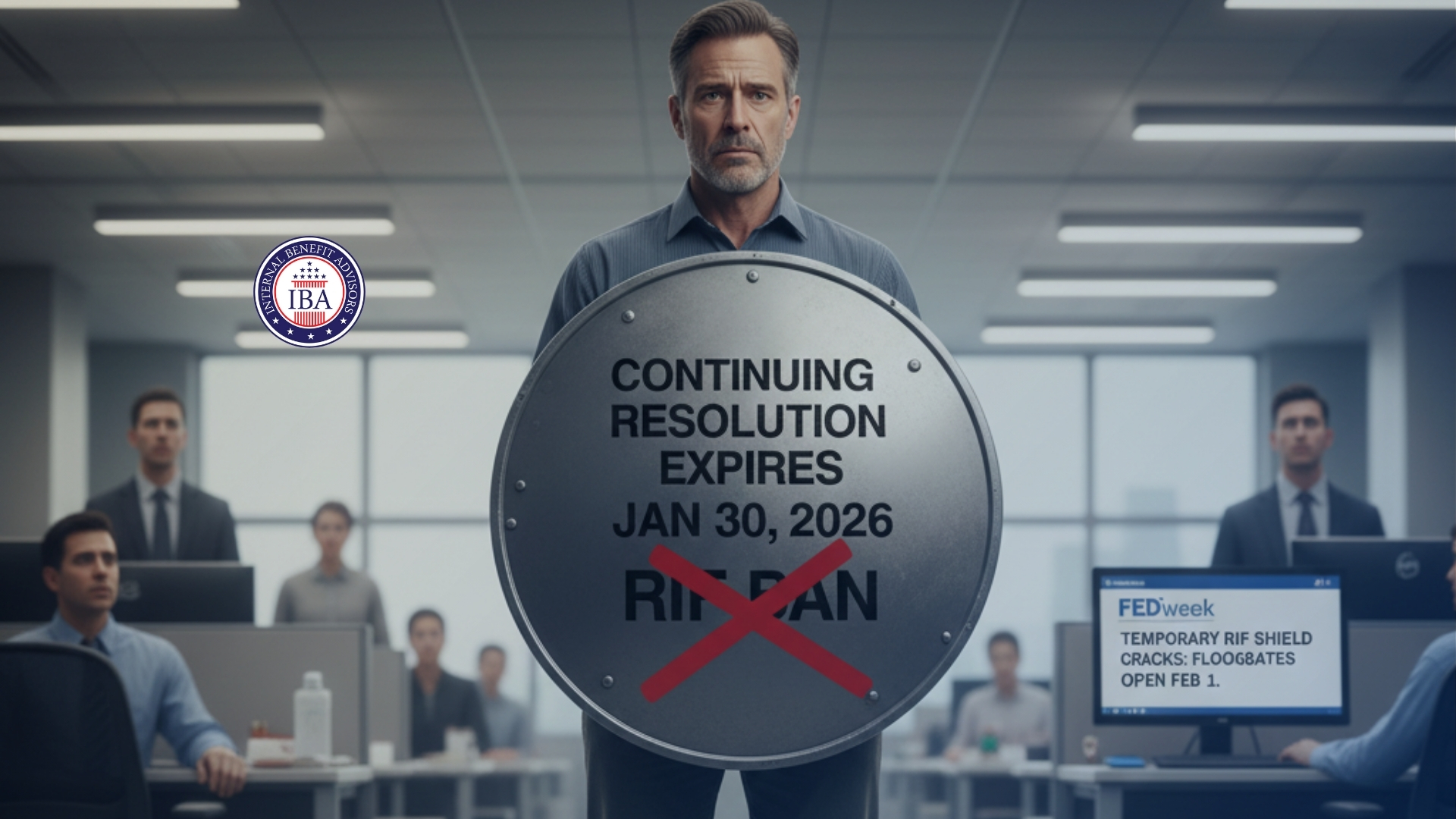

The temporary shield protecting federal employees from downsizing is about to crack. As reported by FEDweek, the current Continuing Resolution (CR) that funded the government and explicitly banned Reductions in Force (RIFs) is set to expire on January 30, 2026.
For the past few months, agencies have been legally paralyzed from issuing RIF notices. However, with no guarantee that this protection will be renewed in the upcoming appropriations bills, the floodgates for stalled layoffs could open as early as February 1st.
📉 Sound Data: The “Notice” vs. The “Ban”
The shift from a “moratorium” to standard appropriations language is not a minor policy tweak; it is a massive reduction in your protection level.
1. The 4,000-Employee Backlog: Before the current ban was enacted, multiple agencies had already initiated or planned RIFs targeting approximately 4,000 positions. These were not theoretical cuts; they were active administrative actions that were merely “paused.” When the moratorium lifts on January 30, these actions can resume immediately where they left off.
2. The “5% Loophole”: The new spending bills currently under consideration (Commerce-Justice-Science, Energy-Water, Interior-Environment) do not include the general ban on RIFs. Instead, they only require agencies to notify Congress 30 days in advance if they plan to reduce personnel by 5% or more.
- The Risk: Most targeted RIFs are surgical, affecting specific units or offices. A reduction of 20 people in a 500-person bureau is a 4% cut—meaning the agency could fire those employees without even notifying Congress first.
3. The “Clipped” Safety Net: While specific agencies like the National Park Service and EPA have language requiring them to “maintain staffing,” the vast majority of the federal workforce falls under the general government-wide policy. Without the specific “no funds shall be used to notice a RIF” clause, your job security reverts to standard OPM retention rules.
⚠️ The “Zombie” RIFs Are Waking Up
The most dangerous aspect of this expiration is that agencies don’t need to start from scratch. OPM guidance explicitly told agencies to “cease issuing” notices, not to cancel their plans. The administrative machinery for downsizing has been idling, not dismantled.
If your agency was discussing “restructuring,” “reshaping,” or “workforce optimization” in late 2025, those plans are likely sitting on a director’s desk, waiting for the clock to strike midnight on January 30.
🛡️ Your Retention Standing is Your Only Shield
When the legislative ban disappears, the only thing standing between you and separation is your position on the Retention Register. RIFs are not random; they are a mathematical calculation based on Tenure, Veterans’ Preference, and Service Computation Date (SCD).
This is where Internal Benefit Advisors becomes your strategic defense. We help you audit your personnel file before the notices go out.
How We Help You Prepare for the Expiration:
- Retention Register Audit: We help you verify your SCD-RIF. A single missing year of service credit or an unrecorded performance appraisal can drop you from “Safe” to “Released.”
- “Bump and Retreat” Analysis: If your position is abolished, do you have the right to take a lower-graded position? We analyze your assignment rights to see if you can displace a junior employee to save your career.
- Severance & VERA Calculation: If the worst happens, we calculate your severance pay entitlement and analyze whether a Voluntary Early Retirement Authority (VERA) offer is better than risking a RIF.
The moratorium bought you time. Now you need to use it.
Contact Internal Benefit Advisors today for a RIF preparedness and retention standing review.
References
- FEDweek. “End of Temporary Funding, Moratorium on RIFs Just Ahead.” January 6, 2026.
- U.S. Office of Personnel Management (OPM). Workforce Reshaping and Reduction in Force.
- Congressional Research Service. Appropriations Status Table: FY2026.
- Internal Benefit Advisors. Retrieved from https://internalbenefitadvisors.com