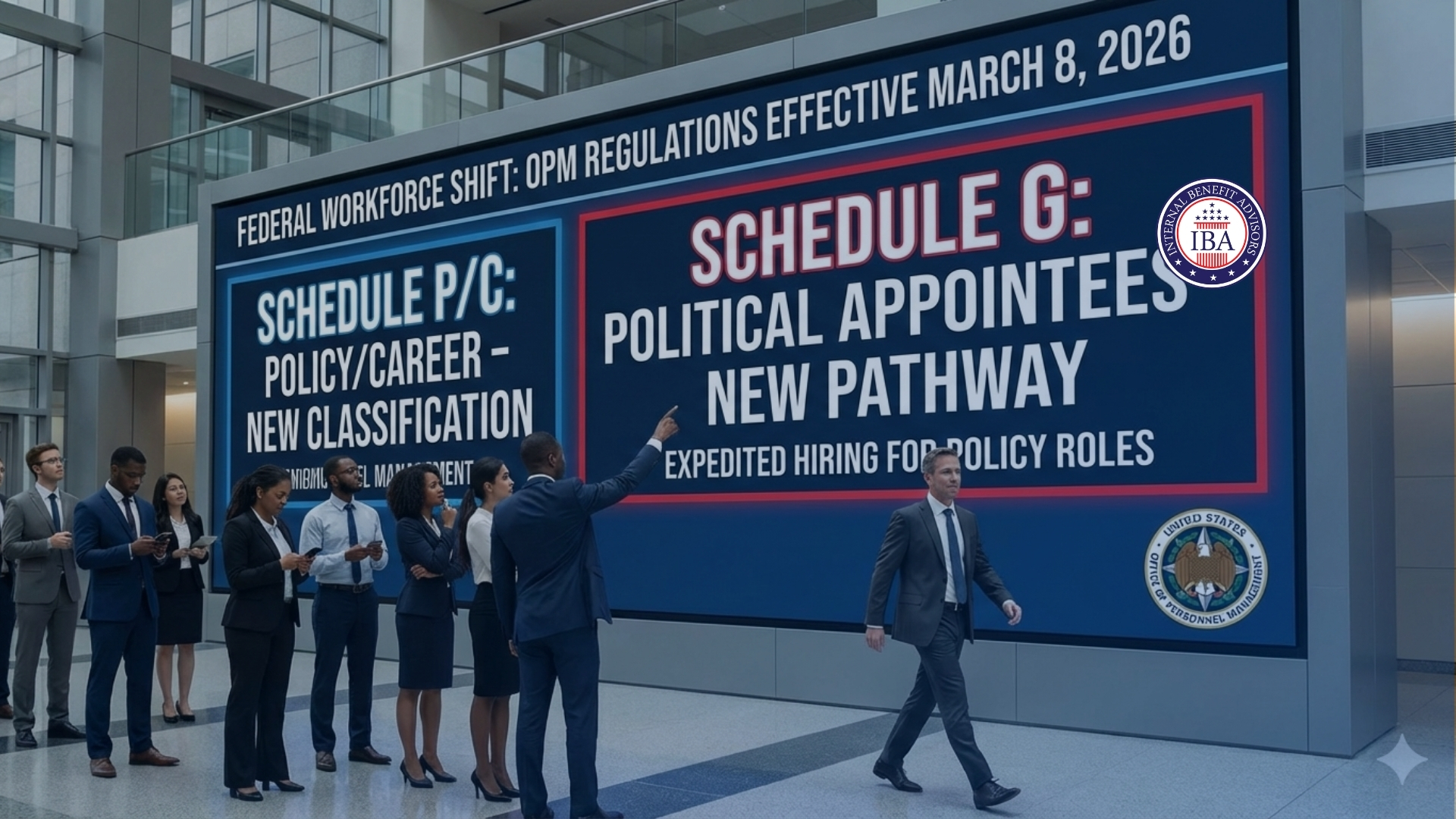

The federal workforce is bracing for one of the most significant shifts in civil service protections in decades. As reported by FEDweek, the Office of Personnel Management (OPM) has issued final regulations for Schedule Policy/Career (Schedule P/C), effective March 8, 2026.
This new rule, coupled with the introduction of Schedule G for political appointees, fundamentally alters the landscape for roughly 50,000 federal employees. If you are in a mid-to-senior level role that touches policy, regulations, or grants, your “career” status is about to come with an asterisk.
🏛️ The New Reality: “At-Will” with a Twist
The final rule doesn’t just reclassify jobs; it rewrites the terms of employment for a targeted segment of the workforce.
1. Schedule P/C: The “Career” Shift
- Who is Impacted: OPM estimates 50,000 positions (approx. 2.2% of the federal workforce) will be moved to this schedule.
- The Criteria: Positions of a “confidential, policy-determining, policy-making, or policy-advocating character.” This includes roles involved in drafting regulations, advocating agency policy, or exercising significant discretion in grants and funding.
- The Process: Agencies are currently identifying these positions. Once approved by the President, employees will be presented with a waiver to sign, acknowledging they are now “at-will” and have lost specific appeal rights.
- Note: Refusing to sign the waiver does not stop the conversion. It simply gets documented in your HR file.
2. Schedule G: The Political Surge
- What it is: A new schedule specifically for non-career (political) appointees in policy roles.
- The Goal: To “add horsepower” to agency agendas by bringing in temporary political leadership that bypasses traditional hiring bottlenecks.
📉 Sound Data: What You Actually Lose
The most critical takeaway from the OPM guidance is the specific list of rights that disappear upon conversion to Schedule P/C.
- MSPB Appeal Rights: You lose the right to appeal adverse actions (removal, suspension) to the Merit Systems Protection Board. The agency head’s decision becomes the final word.
- Whistleblower Enforcement: While you technically retain whistleblower protections, enforcement shifts from the Office of Special Counsel (OSC) to internal agency counsel. This raises significant concerns about impartiality if you are blowing the whistle on the very leadership that can now fire you at will.
- Bargaining Unit Status: Most policy-influencing positions will be removed from union bargaining units, stripping you of collective bargaining representation.
⚠️ The “Severance” Trap
One of the lesser-known risks of Schedule P/C involves severance pay.
- The Rule: Generally, federal employees removed for “inefficiency” (poor performance) are eligible for severance pay.
- The Risk: Because Schedule P/C employees can be removed for “failure to follow policy” or “subversion of directives,” agencies may categorize these removals as misconduct rather than performance. Misconduct removals are ineligible for severance pay.
- The Result: You could be walked out the door with zero weeks of pay and a permanent “misconduct” flag on your SF-50, making future federal employment nearly impossible.
🛡️ Strategy: Build Your Independent Safety Net
If your position is on the list for conversion, you need a financial strategy that doesn’t rely on tenure.
Internal Benefit Advisors helps you prepare for the instability of an “at-will” environment.
How We Help You Navigate Schedule P/C:
- Involuntary Separation Analysis: We calculate your eligibility for Discontinued Service Retirement (DSR). If you are removed (and it’s not for misconduct), this can provide an immediate annuity even if you are under age 62.
- Deferred Annuity Valuation: If you are fired before you are eligible to retire, we help you understand the inflation-adjusted value of your Deferred Annuity so you don’t make a panic decision to cash out your FERS contributions.
- Emergency Liquidity Planning: We help you structure your TSP and savings to create a “severance bridge” in case the agency denies you official severance pay.
The rules of your employment are changing on March 8. Make sure your financial plan is ready for the new reality.
Contact Internal Benefit Advisors today for a Schedule P/C impact analysis and retirement contingency review.
References
- FEDweek. “Schedule P/C in Your Future? Here’s What’s Coming.” February 10, 2026.
- U.S. Office of Personnel Management. Final Rule: Upholding Civil Service Protections and Merit System Principles. February 2026.
- Internal Benefit Advisors. Retrieved from https://internalbenefitadvisors.com
OPM argues this change will “streamline” the process and reduce the burden on agencies. However, for an employee facing job loss, “streamlining” often looks like a reduction in due process.