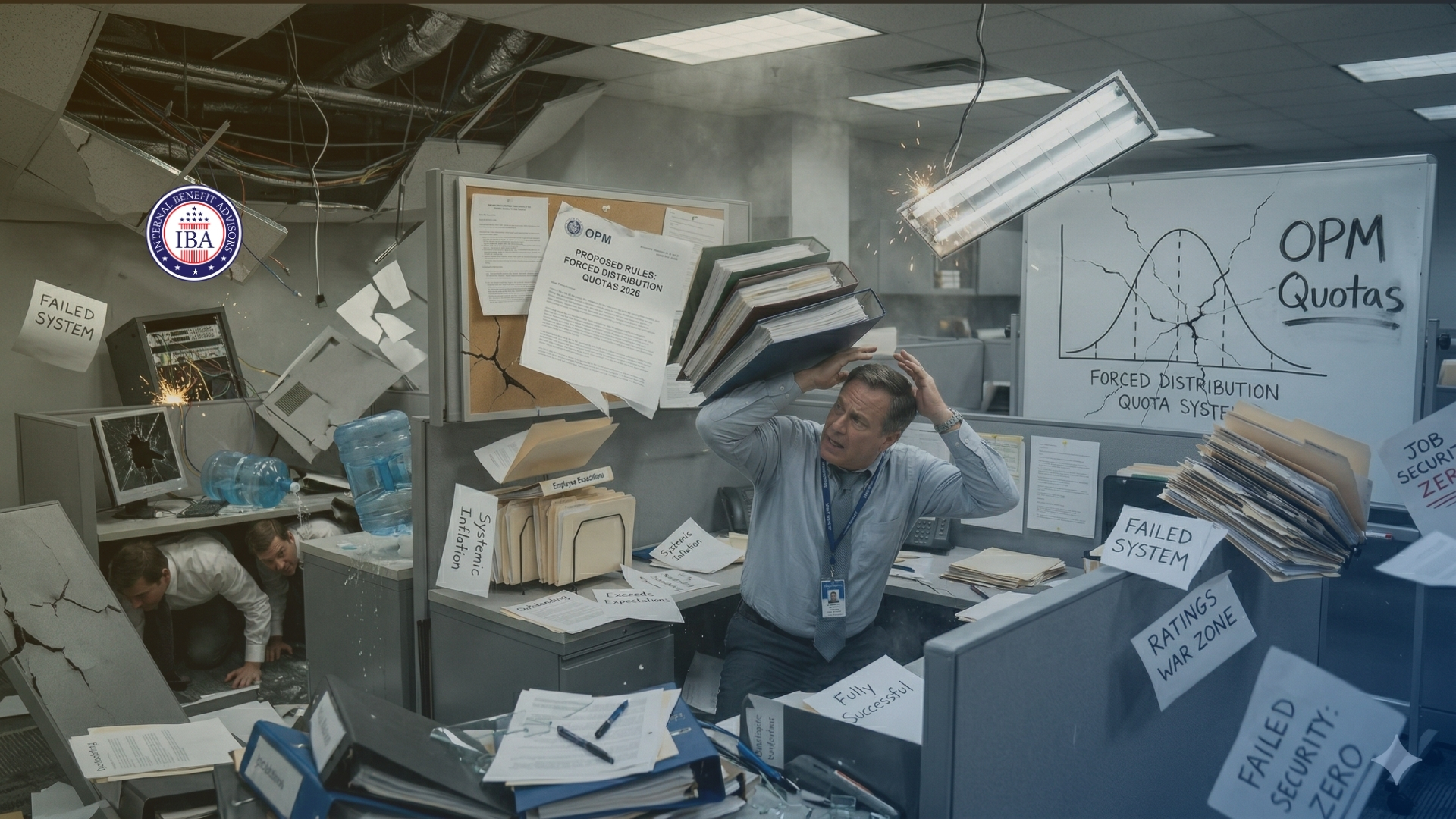

The federal performance review process is facing a potential earthquake in 2026. In an effort to combat what it describes as “systemic inflation” of employee evaluations, the Office of Personnel Management (OPM) has proposed controversial new rules that would introduce forced distributions—or quotas—for federal employee performance ratings.
The proposal has sparked intense debate on Capitol Hill, with the top Democrat on the House Oversight and Government Reform Committee warning that the plan is practically “asking for abuse.” For the average career civil servant, this policy shift represents more than just a change in HR paperwork; it directly threatens retention standing, promotion potential, and overall workplace culture.
The Core Debate: Rating Inflation vs. Objective Evaluation
OPM Director Scott Kupor has openly called the current federal performance management system “broken.” The agency’s primary argument is that supervisors are too lenient. When nearly everyone receives top marks, the government cannot effectively reward true excellence or easily identify and remove underperformers.
However, critics argue that forced rankings do not fix the problem—they simply introduce a new, more toxic one. Representative Robert Garcia (D-Calif.) recently urged OPM to withdraw the rules, stating that artificial quotas overlook objective job performance in favor of relative, subjective rankings.
As Garcia noted, major private-sector corporations like Microsoft and General Electric famously abandoned forced ranking systems after finding they degraded organizational performance, pitted employees against one another, and destroyed collaborative teamwork.
Sound Data: What the 2026 Rules Actually Mandate
To understand the gravity of this shift, federal employees must look at the specific language and data driving the proposed regulations published in the late-February 2026 Federal Register:
- The “Inflation” Justification: OPM cited data showing that in recent years, approximately 43% of federal employees received an “Outstanding” (Level 5) rating, while another 22% were rated as “Exceeds Fully Successful” (Level 4).
- The Cap on Excellence: While the exact percentages for the General Schedule (GS) and wage grade workforce are still being finalized, OPM is using the Senior Executive Service (SES) model as a precedent, which artificially limits the top two rating tiers to a combined 30% of employees.
- The High-Performer Penalty: Under a forced distribution, a supervisor managing a highly effective, specialized unit will be mathematically forced to assign lower ratings to employees who actually meet or exceed all expectations, simply to satisfy the agency’s bell-curve quota.
- Elimination of Grievance Rights: Perhaps most alarmingly, the proposed rules would eliminate an employee’s right to challenge or grieve a performance rating through union-negotiated processes, leaving supervisors with little accountability for subjective or biased evaluations.
The Hidden Risk to Your Financial Future
Performance ratings in the federal government dictate far more than a yearly bonus. Your rating is a primary factor in your Retention Register standing during a Reduction in Force (RIF). If your rating is artificially downgraded to satisfy a quota, you could suddenly find yourself placed in a highly vulnerable position during agency downsizing.
When a workplace shifts from a collaborative environment to an open competition for a limited pool of “Level 5” ratings, the resulting stress and uncertainty often prompt federal professionals to rethink their long-term career trajectories.
Protect Your Legacy with Internal Benefit Advisors
When your agency changes the rules of the game, relying on the system to protect you is a risky strategy. At Internal Benefit Advisors, we provide the independent, fiduciary-level planning required to ensure your financial security remains fully in your control—regardless of your latest performance review.
We empower federal employees to navigate institutional turbulence through:
- RIF Impact and Retention Analysis: We help you understand exactly how changes to your performance ratings could impact your standing during a potential agency restructuring, and what severance or buyout options might look like.
- Accelerated Exit Strategies: If a toxic “forced ranking” culture is pushing you toward the door, we help you calculate the precise financial impact of retiring early.
- Complimentary Retirement Paperwork Assistance: Administrative chaos should not delay your hard-earned annuity. We provide free assistance with your FERS or CSRS retirement paperwork to ensure a flawless application process at OPM.
- TSP and Benefit Optimization: Job insecurity requires a highly defensive financial posture. We provide expert, unbiased counseling on your Thrift Savings Plan (TSP) and life insurance (FEGLI) to ensure your capital is protected and accessible.
Take Command of Your Financial Standing
Do not let an arbitrary rating quota dictate your readiness for the future. The federal landscape is changing rapidly in 2026, and proactive planning is your absolute best defense against workplace instability.
Contact the experts at Internal Benefit Advisors today for a Free Benefit Assessment and ensure your retirement and benefits strategy is built on solid ground.
References
- FEDweek Staff. (2026, March 31). OPM Plan on Employee Ratings Asking for Abuse, Says Senior House Democrat. FEDweek
- Internal Benefit Advisors. Information you need, Support you can trust. InternalBenefitAdvisors.com
- Federal Register. (2026, February 24). Performance Appraisal for General Schedule, Prevailing Rate, and Certain Other Employees. [Docket 2026-03619]
- Government Executive. (2026, March). Top Oversight Dem criticizes OPM’s forced distribution plan for federal worker appraisals.