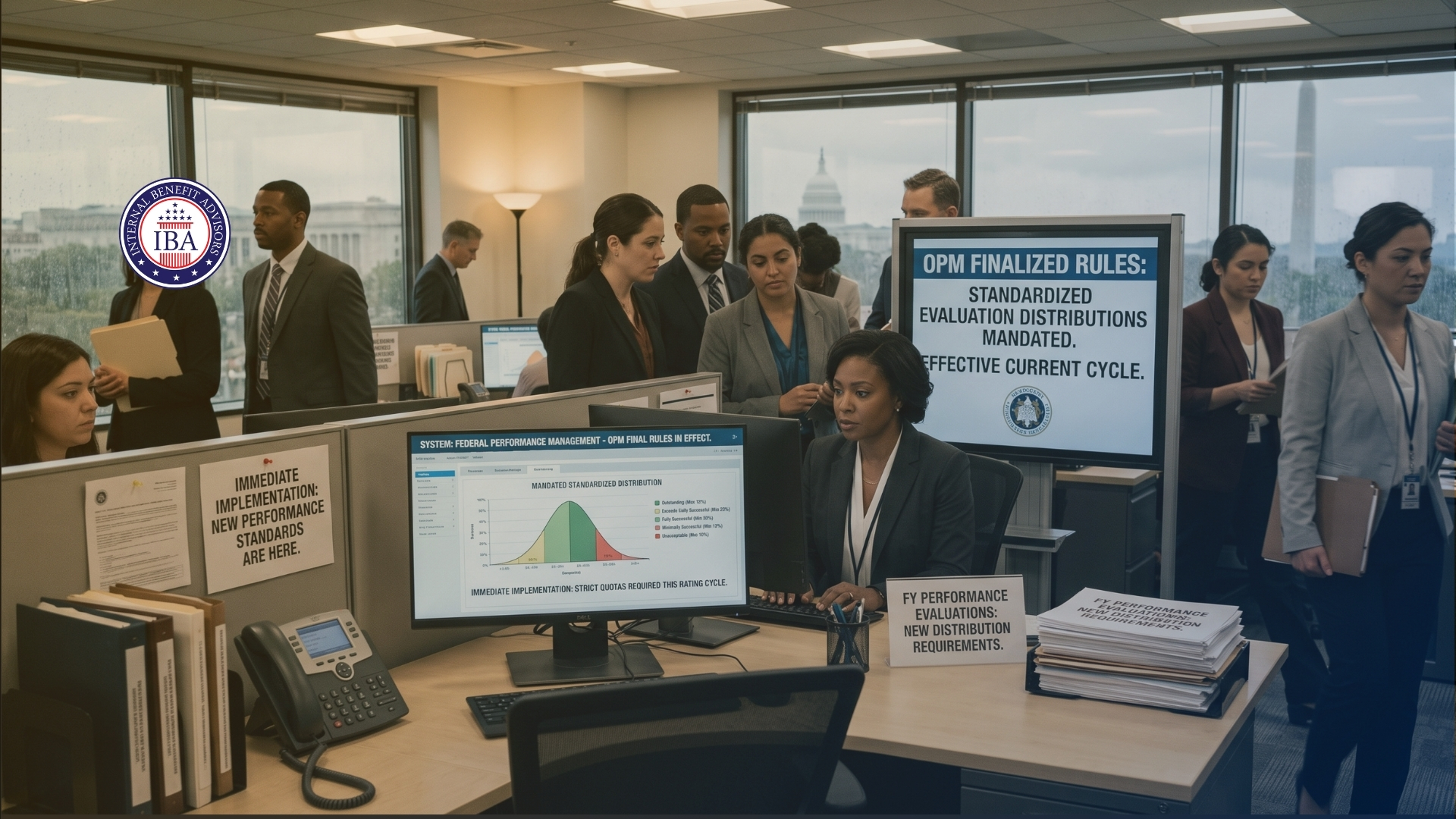

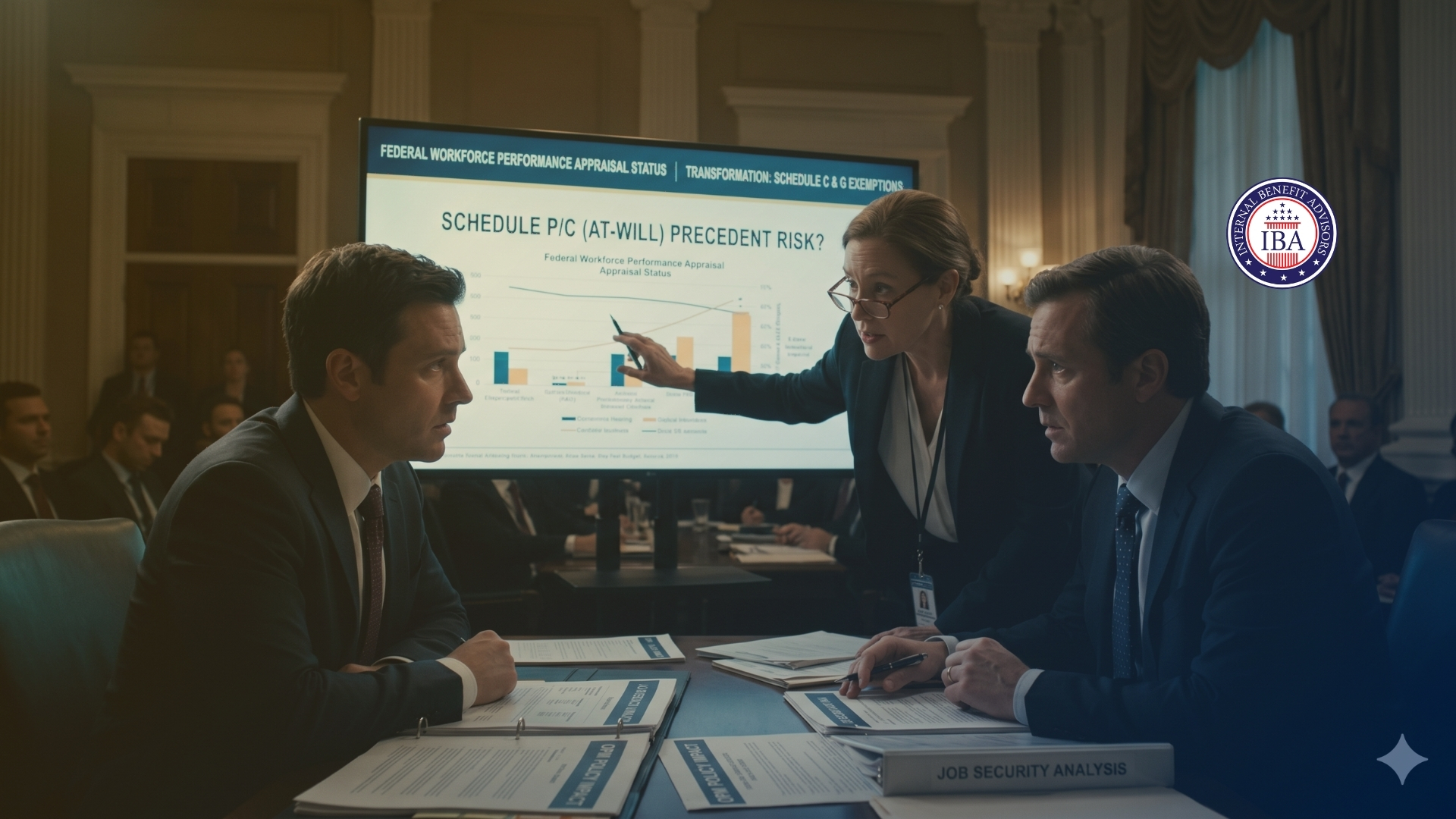

The structural foundation of the federal workforce is undergoing a profound transformation. The Office of Personnel Management (OPM) recently advanced a policy that exempts political appointees under Schedule C and Schedule G from standard performance appraisals. While this move directly impacts a specific subset of federal workers, its broader implications are sending shockwaves through the career civil service.
Industry experts and labor advocates warn that this exemption establishes a critical precedent for managing the newly discussed “Schedule Policy/Career” (Schedule P/C) or similar at-will classifications. As the regulatory lines between career civil servants and political appointees blur, federal professionals must understand how these shifting performance metrics could impact their job security and retirement timelines.
The Two-Tiered Performance Landscape
Historically, Title 5 of the U.S. Code has governed federal performance management, ensuring that career employees are evaluated, retained, or disciplined based on objective, merit-based criteria. The recent memorandum from OPM directorates explicitly excludes General Schedule (GS) employees in Schedule C and G positions from these Chapter 43 requirements, citing their “at-will” status.
The concern is not just the exemption itself, but the operational blueprint it creates:
- The Schedule P/C Precedent: Proposals to reclassify thousands of career civil servants with “policy-influencing” duties into excepted service categories (such as Schedule P/C or the previously proposed Schedule F) aim to strip these roles of standard adverse action appeal rights. By establishing that at-will employees do not require formal performance appraisals, agencies can bypass merit-based retention, tying job security directly to political alignment rather than documented professional competence.
- Arbitrary Retention Metrics: If a sweeping reclassification occurs, employees moved into these new schedules could find themselves evaluated without a standardized curve or formal feedback mechanism, leaving them highly vulnerable during administration transitions or targeted Reductions in Force (RIFs).
Sound Data: The Scope of Reclassification
Understanding the magnitude of these policy shifts requires looking at the raw data surrounding federal workforce classifications:
- The Impact Zone: Government watchdogs and federal labor unions estimate that expanding excepted service classifications to cover “policy-determining, policy-making, or policy-advocating” roles could strip standard civil service protections from 50,000 to over 100,000 career employees across the government.
- The RIF Vulnerability: Under traditional federal regulations, RIF procedures prioritize an employee’s tenure, veteran status, and documented performance ratings. If performance appraisals are eliminated or bypassed for a massive swath of the workforce, the standard, objective defenses against layoffs are effectively neutralized.
- The Appeal Bottleneck: Employees who attempt to fight unjust terminations or reclassifications face an uphill battle. The Merit Systems Protection Board (MSPB) is currently navigating historic case backlogs, meaning that even if an employee retains limited appeal rights, achieving a timely resolution is statistically unlikely.
Shielding Your Career Trajectory with Internal Benefit Advisors
When the institutional protections that have historically guaranteed a stable path to federal retirement are altered, relying on standard agency procedures is a high-risk strategy. Federal employees must prioritize building an independent, impenetrable financial defense.
At Internal Benefit Advisors, we provide the secure, fiduciary-level guidance federal professionals require to protect their legacy during periods of extreme administrative volatility:
- Strategic VERA, VSIP, and RIF Analysis: If the threat of reclassification or shifting performance standards triggers a Reduction in Force (RIF) or results in a Voluntary Early Retirement Authority (VERA) offer at your agency, we provide exact mathematical projections. We ensure you fully understand how an early exit will impact your High-3 average and your lifetime FERS or CSRS annuity.
- TSP Capital Protection: Structural instability at the agency level demands a defensive financial posture. We offer expert counseling on your Thrift Savings Plan (TSP) allocations to shield your capital from market volatility and ensure your funds remain accessible if your employment is abruptly impacted by shifting performance standards.
- Complimentary Retirement Paperwork Processing: If the changing legal landscape prompts you to accelerate your retirement, we help you bypass the administrative chaos. Our team audits and completes your retirement paperwork for FREE, ensuring a flawless application that prevents costly OPM processing delays.
- Comprehensive Benefit Synchronization: We evaluate your entire portfolio to ensure your critical safety nets, including your Federal Employees Health Benefits (FEHB) and life insurance (FEGLI), remain completely intact and transition with you seamlessly.
Secure Your Professional Independence
The exemption of specific appointees from performance appraisals signals a clear pivot toward at-will federal employment models. You cannot control how your agency defines its performance metrics, but you have absolute control over your financial readiness.
Take command of your transition today. Contact the experts at Internal Benefit Advisors for a Free Benefit Assessment and ensure your hard-earned benefits remain secure, regardless of your classification schedule.
References
- FEDweek. Schedule C/G Appointees Exempted from Performance Appraisals; Could Set Precedent for Schedule P/C. FEDweek.com
- Internal Benefit Advisors. Information you need, Support you can trust. InternalBenefitAdvisors.com
- Government Accountability Office (GAO). Federal Workforce: Civil Service Protections and Excepted Service Classifications.
- Office of Personnel Management (OPM). Guidance on Performance Management and Excepted Service Employment.