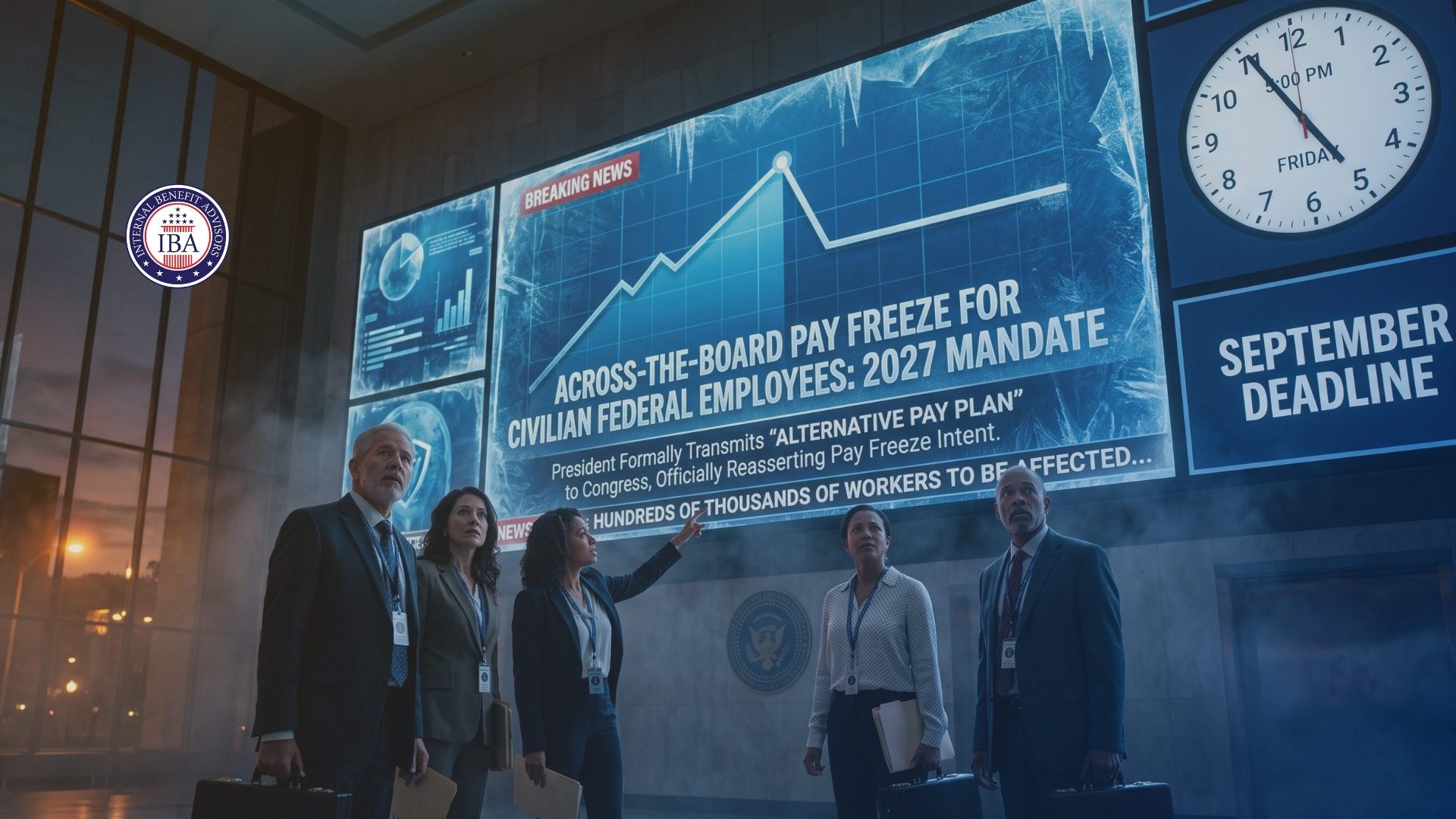


The federal workforce is currently undergoing one of the most profound structural shifts in modern history. Recent actions by the Office of Personnel Management (OPM) have formalized a growing divide in how federal employees are evaluated, disciplined, and retained. According to recent reporting by FEDweek, OPM has officially exempted political appointees from standard performance appraisals, a move that establishes a critical precedent for the newly created “Schedule Policy/Career” (Schedule P/C) classification.
For career civil servants, this development is a blaring warning sign. As the rules governing job security and performance reviews diverge, federal professionals must understand the changing landscape and prioritize their own independent financial defense.
Sound Data: The Two-Tiered Performance Landscape
On April 28, 2026, OPM Director Scott Kupor issued a memorandum explicitly excluding all General Schedule (GS) employees in Schedule C and Schedule G positions—roles typically reserved for political appointees—from the performance appraisal requirements under Subchapter I of Chapter 43 of Title 5.
The administration’s rationale is that because these appointees serve “at-will,” their retention does not depend on formal ratings. However, this exemption must be viewed alongside other concurrent, sweeping workforce reforms:
- The Schedule P/C Precedent: The creation of the “Schedule Policy/Career” (Schedule P/C) via Executive Order 14171 reclassifies thousands of career civil servants with policy-influencing duties into an excepted service category. Employees moved into Schedule P/C are stripped of their Chapter 43 and Chapter 75 adverse action appeal rights. OPM’s move to exempt Schedule C and G appointees from performance reviews entirely sets a direct precedent for how Schedule P/C employees may be managed—meaning job security will be tied to political alignment rather than documented performance.
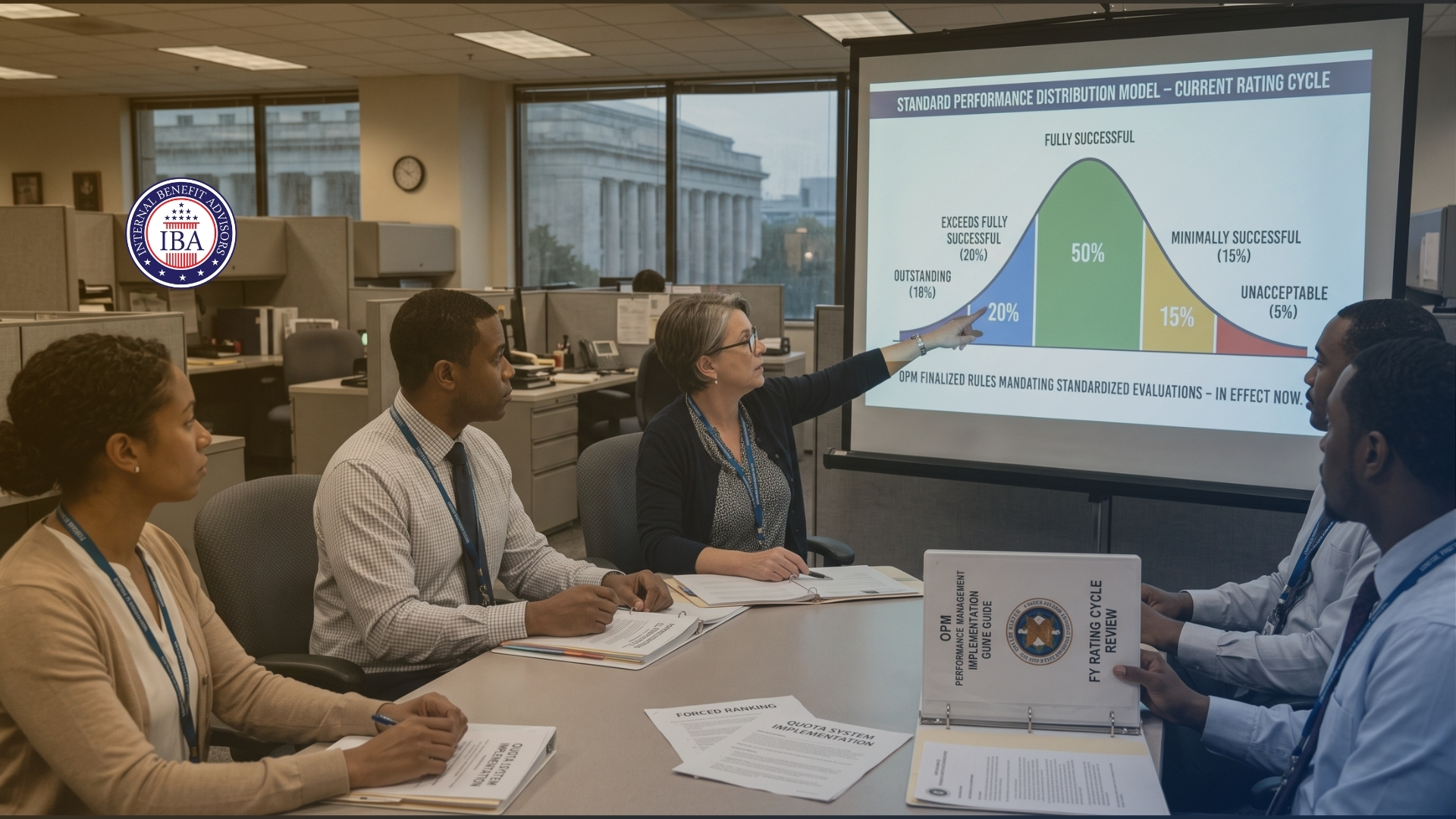
- The Forced Distribution Proposal: While political appointees are being exempted from appraisals, career civil servants are facing a highly restrictive proposed overhaul. OPM is advancing a rule that would impose a forced distribution curve on regular GS employees. Under this proposed system, only a strict 30% of career employees would be allowed to receive top performance marks, while the remainder must be distributed into lower tiers, regardless of actual individual merit.
- The RIF Reversal: Currently, in the event of a Reduction in Force (RIF), jobs are cut based first on tenure and then on performance. Proposed regulatory changes aim to flip this hierarchy. By forcing career employees onto an arbitrary performance curve while exempting political appointees, agencies can efficiently target career staff during RIFs based on artificially lowered performance ratings.
Shielding Your Career Trajectory with Internal Benefit Advisors
When your agency operates under a two-tiered system where career civil servants face rigid performance curves while political appointees receive blanket exemptions, relying on the traditional federal safety net is a precarious strategy. The institutional protections that once guaranteed a stable path to retirement are being actively dismantled.
During periods of extreme administrative volatility, you need an independent, fiduciary-level financial strategy. Internal Benefit Advisors provides the secure, unbiased guidance federal employees require to protect their legacy:
- Navigating Arbitrary RIFs and Buyouts: If the impending performance appraisal overhaul or the expansion of Schedule P/C triggers a Reduction in Force (RIF) or results in a Voluntary Early Retirement Authority (VERA) offer at your agency, we calculate the exact mathematical impact on your future. We ensure you understand how an early exit will affect your High-3 average and lifetime annuity.
- TSP Capital Protection: Structural shifts at the agency level require a highly defensive financial posture at the personal level. We provide expert counseling on your Thrift Savings Plan (TSP) allocations to protect your capital from market volatility and ensure liquidity if your employment situation suddenly changes due to an adverse performance rating.
- Complimentary Retirement Paperwork Processing: If the changing legal landscape and the threat of forced distribution curves prompt you to accelerate your retirement timeline, we help you bypass the administrative chaos. We audit and complete your retirement paperwork for FREE, ensuring a flawless application that prevents costly OPM processing delays.
- Benefit Synchronization: We ensure your critical safety nets, including your Federal Employees Health Benefits (FEHB) and life insurance (FEGLI), remain completely intact and transition with you seamlessly, regardless of your agency’s restructuring timeline.
Secure Your Professional Independence
The exemption of Schedule C and G appointees from performance appraisals is a clear signal that the federal government is prioritizing administrative loyalty over standard civil service protections. Do not let your agency’s shifting performance metrics dictate your retirement timeline.
Take command of your financial readiness today. Contact the experts at Internal Benefit Advisors for a Free Benefit Assessment and ensure your hard-earned benefits remain secure, no matter what schedule your position falls under.
References
- FEDweek. Schedule C/G Appointees Exempted from Performance Appraisals; Could Set Precedent for Schedule P/C. FEDweek.com
- Internal Benefit Advisors. Information you need, Support you can trust. InternalBenefitAdvisors.com
- Office of Personnel Management (OPM). (2026, April 28). Memorandum: Exclusion of Schedule C and G General Schedule positions from Subchapter I of Chapter 43 of Title 5.
Office of Personnel Management (OPM).Appendix 2: Questions and Answers on Schedule Policy/Career Final Regulations.