
The federal workforce is currently navigating a period of unprecedented structural disruption. Amidst widespread downsizing initiatives, a new regulatory proposal from the Office of Personnel Management (OPM) regarding Reductions in Force (RIFs) has sounded a massive alarm among federal labor advocates.
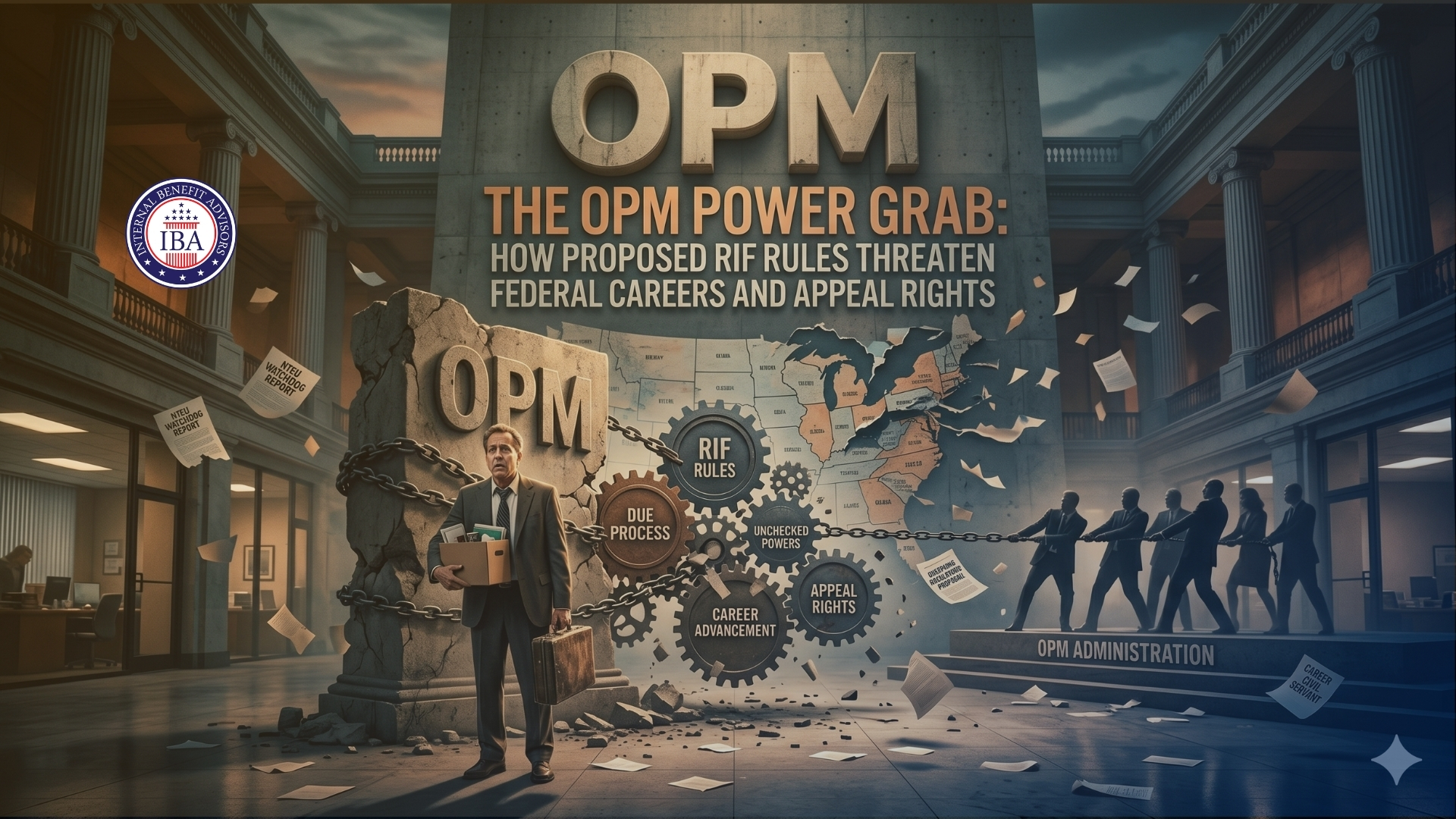
According to the National Treasury Employees Union (NTEU) and other industry watchdogs, the proposed rules would grant OPM sweeping, unchecked powers over the federal workforce while actively dismantling the objective due process rights of career civil servants. For federal employees, understanding the mechanics of this proposed “power grab” is essential for surviving the current administrative climate.
Sound Data: The 2026 Workforce Reduction Reality
To fully grasp the severity of OPM’s proposed rule changes, one must look at the hard data defining the current federal landscape. The threat of a RIF is no longer a theoretical exercise; it is an active administrative tool.
- A Shrinking Workforce: Between September 2024 and January 2026, the federal civilian workforce shrank by roughly 12%, losing over 250,000 employees through forced relocations, deferred resignation programs, and mass firings.
- The RIF Explosion: Historically, RIFs are a rare administrative mechanism used only as a last resort, averaging fewer than 300 separations per year over the last decade. However, between January 2025 and January 2026 alone, over 10,400 federal employees were separated via RIF actions.
- The Proposed Exclusivity: As of March 2026, OPM’s newly published rule (RIN 3206–AO99) seeks to make its own internal appeal process the “sole and exclusive means” to challenge any RIF action, effectively attempting to override collective bargaining agreements and block federal court judicial review.
In this highly volatile environment, the regulations governing how a RIF is executed and appealed are the only safety nets keeping career professionals from arbitrary dismissal.
The Core Threat: Dismantling Tenure and Independent Review
The newly proposed OPM rules aim to fundamentally rewrite the decades-old formula for how agencies conduct layoffs, attacking employee protections on two distinct fronts:
1. Prioritizing Subjectivity Over Tenure
Currently, retention during a RIF is based primarily on objective, easily verifiable factors: length of service (tenure) and veterans’ preference. The new rule would flip this hierarchy, prioritizing subjective performance ratings over years of dedicated service. When viewed alongside OPM’s concurrent proposals to institute “forced distribution” performance curves (which require a certain percentage of employees to receive low ratings regardless of actual merit), this creates a direct mechanism for agencies to artificially lower career employees’ ratings to justify their removal during a RIF.
2. Stripping MSPB Appeal Rights
The most aggressive element of the proposal is the attempt to strip RIF appeal rights away from the independent Merit Systems Protection Board (MSPB). OPM proposes to move all RIF appeals internally to OPM itself. This effectively makes the exact same agency that writes and administers the government’s downsizing policies the sole judge and jury over whether those policies were applied fairly.
The NTEU has filed fierce opposition to the proposal, characterizing it as a blatant attempt to bypass objective accountability. The union argues that RIFs are not vehicles for politically expedient downsizing and that life-altering career appeals must remain before a neutral, independent adjudicatory body like the MSPB.
Shielding Your Legacy with Internal Benefit Advisors
Relying on standard civil service protections is no longer a viable career strategy. When the agency managing your human resources is actively seeking to lower your institutional defenses and strip away your right to an independent appeal, you need an independent, fiduciary-level financial strategy.
At Internal Benefit Advisors, we provide the secure, unbiased guidance federal professionals require to protect their legacy during periods of extreme administrative hostility:
- Strategic VERA, VSIP, and Severance Analysis: If the threat of a subjective RIF prompts your agency to offer a buyout or early retirement package, we provide the exact mathematical projections you need. We ensure you fully understand how an early exit will impact your High-3 average and your lifetime FERS or CSRS annuity.
- TSP Capital Protection: Structural instability at the agency level demands a highly defensive financial posture. We offer expert counseling on your Thrift Savings Plan (TSP) allocations to shield your capital from market volatility and ensure your funds remain accessible if your employment is abruptly impacted by a RIF.
- Complimentary Retirement Paperwork Processing: If the changing legal landscape prompts you to accelerate your retirement, do not face the backlogged OPM system alone. Our team audits and completes your retirement paperwork for FREE, ensuring a flawless application that prevents costly delays in your interim pay.
- Comprehensive Benefit Synchronization: We evaluate your entire portfolio to ensure your critical safety nets, including your Federal Employees Health Benefits (FEHB) and life insurance (FEGLI), remain completely intact and transition with you seamlessly.
Take Command of Your Financial Future
The proposed RIF regulations are a clear signal that the rules of federal employment are changing rapidly. You cannot control OPM’s regulatory agenda, but you have absolute control over your own financial readiness.
Take command of your transition today. Contact the experts at Internal Benefit Advisors for a Free Benefit Assessment and ensure your hard-earned benefits remain completely secure, regardless of how your agency executes its workforce reductions.
References
- FEDweek. Proposed RIF Rules Would Give OPM Sweeping Powers Over Federal Workforce, Says NTEU. FEDweek.com
- Internal Benefit Advisors. Information you need, Support you can trust. InternalBenefitAdvisors.com
- National Treasury Employees Union (NTEU). (2026, May 1). NTEU Opposes OPM’s Proposed Unfair RIF Changes.
- Federal Register. (2026, March 5). Office of Personnel Management Proposed Rule: Reduction in Force (RIN 3206-AO99).
- Partnership for Public Service. (2026, April 22). The Federal Workforce One Year into the Trump Administration: Separation and RIF Statistics.