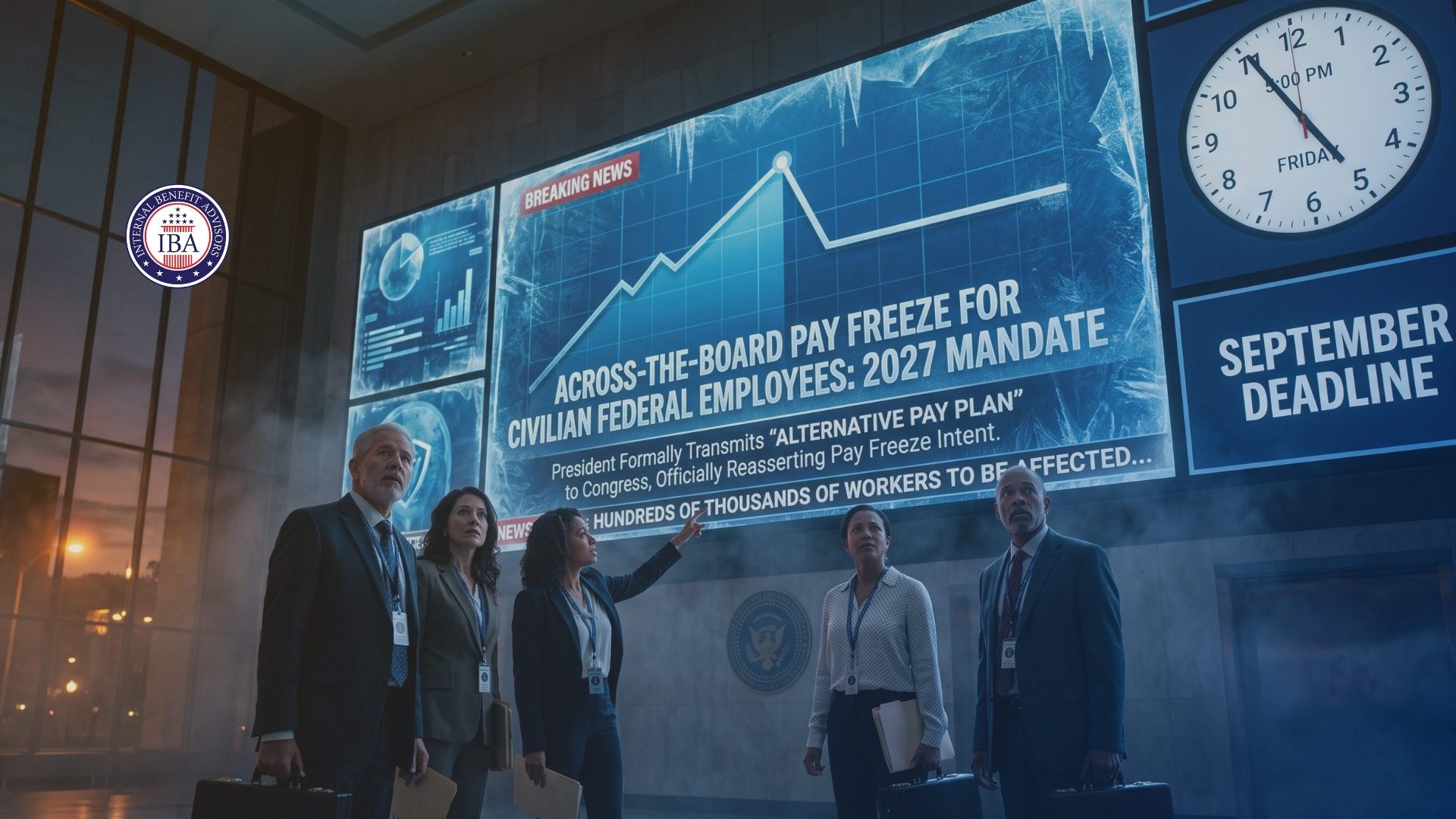
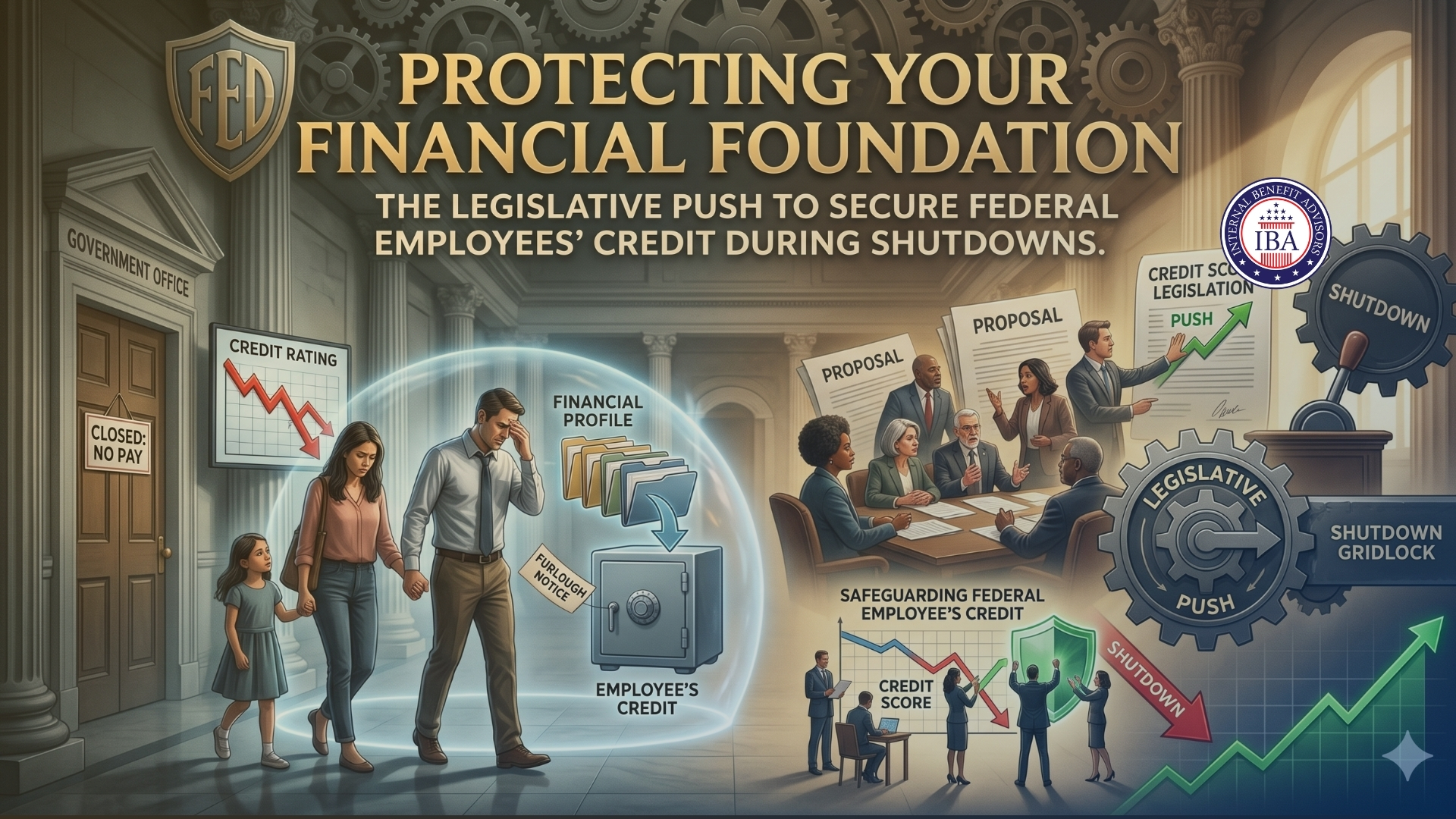

The stability of a career in the civil service is increasingly being tested by cyclical legislative gridlock. When the government experiences a lapse in appropriations, federal employees are often caught in the crossfire, either furloughed or forced to work without immediate pay. While back pay is eventually guaranteed by law, the immediate collateral damage to a federal worker’s financial profile—specifically their credit score—can be devastating.
Recognizing this persistent threat, a renewed legislative effort is underway to ensure that federal employees are not permanently penalized for financial crises they did not create. For career civil servants, understanding this proposed legislation and taking proactive control of your financial readiness is essential to weathering the storm of future government shutdowns.
Sound Data: The Federal Worker Credit Protection Act
A sudden halt in income forces many federal families into impossible choices, leading to missed mortgage payments, late credit card bills, and drained savings. Even a single payment missed by 30 days can cause a significant drop in a credit score, which can take years to rebuild.
To address this, lawmakers recently introduced the Federal Worker Credit Protection Act (S. 4478). The data and scope surrounding this critical legislation reveal the depth of the problem:
- The 76-Day Context: The introduction of S. 4478 follows a historic and grueling 76-day partial government shutdown initiated in early 2026. During this period, hundreds of thousands of federal workers and military personnel were subjected to severe financial strain.
- The Proposed Protections: The bill would legally bar consumer reporting agencies (such as Experian, Equifax, and TransUnion) from marking down a federal employee’s credit score during a lapse in appropriations that affects their employing agency.
- The Timeline of Coverage: The protection covers furloughed or working-without-pay feds from the beginning of any shutdown lasting at least 24 hours through 30 days after funding is completely restored.
- Retroactive Relief: If enacted, the measure would apply retroactively to February 1, 2026, effectively nullifying any negative credit consequences federal workers have incurred since the start of the recent funding lapse. It also provides a free avenue for feds to request the removal of negative entries tied to the shutdown.
The Hidden Costs of Damaged Credit
For federal employees, damaged credit is more than just a hurdle to securing a favorable mortgage rate; it is a direct threat to career security. Federal workers who hold security clearances are subject to Continuous Evaluation (CE) programs. Significant drops in a credit score or accounts placed in collections can flag a security clearance for review, potentially jeopardizing an employee’s ability to maintain their position.
Furthermore, relying on creditors to voluntarily place accounts into forbearance or deferred payment status during a shutdown is risky. While major credit scorers like FICO note that an account simply placed in forbearance does not hurt a score, any associated changes in balances or subsequent missed payments can still trigger a downgrade.
Shielding Your Wealth with Internal Benefit Advisors
While the Federal Worker Credit Protection Act is a necessary legislative step, relying on an act of Congress to protect your financial foundation is a highly precarious strategy. Federal employees must build their own financial perimeters so that a paused paycheck does not equal a financial emergency.
At Internal Benefit Advisors, we specialize in providing the fiduciary-level defense that federal employees need to insulate their lives from Washington’s budget battles:
- Emergency Liquidity and TSP Strategy: We help you stress-test your current cash reserves and optimize your Thrift Savings Plan (TSP) allocations. We ensure your capital is positioned to provide necessary liquidity during a lapse in pay without triggering unnecessary tax penalties.
- Retirement Sequence Planning: If the stress of cyclical shutdowns is prompting you to consider an early exit, we provide the exact mathematical analysis you need. We calculate how an early retirement impacts your lifetime FERS or CSRS annuity and ensure your transition is financially seamless.
- Complimentary Paperwork Processing: When you decide to retire, we help you bypass the administrative chaos. We audit and complete your retirement paperwork for FREE, ensuring a flawless application that prevents costly OPM processing delays.
- Comprehensive Benefit Optimization: We evaluate your entire portfolio to ensure your Federal Employees Health Benefits (FEHB) and life insurance (FEGLI) remain completely intact and funded, regardless of your agency’s operating status.
Take Command of Your Financial Independence
The push to protect federal credit records is a welcome development, but true financial security comes from proactive, independent planning. You cannot control when the government shuts down, but you can control how your family weathers the disruption.
Empower yourself with a resilient financial strategy. Contact the experts at Internal Benefit Advisors today for a Free Benefit Assessment and ensure your hard-earned benefits remain secure in any legislative climate.
References
- FEDweek. Bill Offered to Protect Credit Records of Employees Affected by Shutdowns. FEDweek.com
- Internal Benefit Advisors. Information you need, Support you can trust. InternalBenefitAdvisors.com
- Government Executive. (2026, May). Dems introduce bill to protect feds’ credit scores during shutdowns.
- Experian / CDIA. Helping Consumers Impacted by a Federal Government Shutdown Avoid Credit Problems.