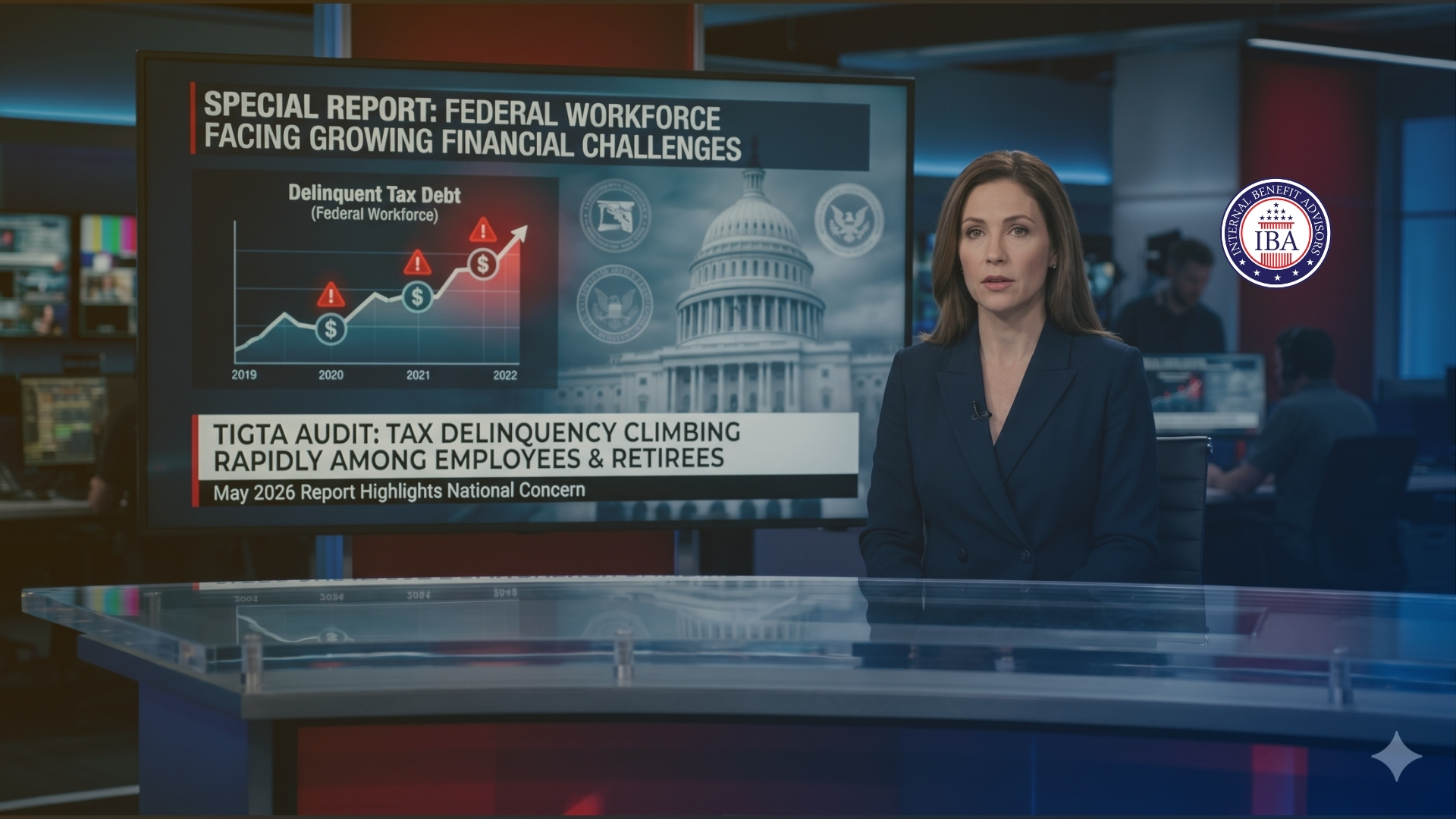

Recent oversight reports have spotlighted a growing financial challenge within the federal workforce. According to a May 2026 audit by the Treasury Inspector General for Tax Administration (TIGTA) and highlighted by FEDweek, tax delinquency among federal employees and retirees is climbing at a rapid pace.
For career civil servants, tax noncompliance is far more than an administrative hurdle—it is a direct threat to security clearances, employment suitability, and long-term financial stability. Understanding the depth of this issue and prioritizing your financial readiness is essential to protecting your federal legacy.
Sound Data: Inside the 2026 TIGTA Audit
To comprehend the scale of this issue, one must look at the hard data from the IRS’s Federal Employee/Retiree Delinquency Initiative (FERDI). The latest figures reveal a stark reality regarding the financial health of the federal workforce:
- The $6.3 Billion Deficit: As of Fiscal Year 2024, approximately 572,000 current federal employees and retirees had outstanding tax obligations. Combined, this group owes a staggering $6.3 billion in unpaid taxes.
- A Sharp Active-Duty Surge: Among active federal civilian employees, 215,000 were delinquent on their taxes, reflecting a 45% jump since 2021. This active workforce segment collectively owes $2.1 billion.
- Chronic Non-Filers: Investigators identified that approximately 50,000 federal civilian employees failed to file a tax return for multiple consecutive years, with over 1,000 employees delinquent for at least six years.
- Agency-Specific Variances: Delinquency rates fluctuate significantly across the government. While the Treasury Department maintains a relatively low 2.4% delinquency rate due to strict internal enforcement, other agencies face steeper challenges. For instance, the Department of Veterans Affairs reported a 7.3% delinquency rate, and the Department of the Army exceeded 5%.
- The Resumption of Enforcement: The IRS attributes much of this increase to the temporary suspension of levy programs and collection notices during the pandemic. However, the IRS has since resumed its Federal Payment Levy Program, enabling the garnishment of federal wages and pension benefits to reclaim these debts.
The Hidden Costs: Security Clearances and Employment Suitability
The federal government views tax compliance as a fundamental measure of personal integrity and trustworthiness. Falling behind on taxes or failing to file returns triggers severe administrative consequences that can permanently derail a career:
- Guideline F (Financial Considerations): Unresolved tax debt is one of the primary causes of security clearance denials and revocations under the Adjudicative Guidelines (SEAD 4). A federal tax lien or a history of unfiled returns signals a vulnerability to coercion. Even older, unresolved tax delinquencies can resurface and trigger a Statement of Reasons (SOR) during a routine background reinvestigation.
- Disciplinary Action: Federal agencies are legally empowered to take disciplinary action against employees for failing to satisfy “just financial obligations,” which explicitly includes federal, state, and local taxes. These actions can range from formal counseling and wage garnishment to outright removal from federal service.
Securing Your Financial Perimeter with Internal Benefit Advisors
When a simple tax oversight or sudden financial hardship can jeopardize your clearance and your livelihood, proactive financial planning is your strongest defense. You cannot afford to leave your tax and retirement strategy to chance.
At Internal Benefit Advisors, we specialize in helping federal professionals build an impenetrable financial perimeter. We ensure your wealth management strategy keeps you compliant, secure, and prepared for the future:
- Tax-Smart Retirement Planning: The federal tax code is complex. We help you understand the exact tax implications of your FERS or CSRS annuity, your Social Security benefits, and your investment withdrawals, ensuring you are never blindsided by unexpected tax liabilities in retirement.
- TSP Optimization and Cash Flow: We analyze your Thrift Savings Plan (TSP) to ensure your allocations are optimized for growth while providing the necessary liquidity to handle sudden financial burdens. This prevents you from making early, heavily penalized withdrawals that artificially inflate your taxable income.
- Complimentary Retirement Paperwork Assistance: If financial stress or agency changes are prompting you to consider an early exit, we help you bypass the administrative chaos. We audit and complete your Office of Personnel Management (OPM) retirement paperwork for FREE, ensuring a flawless application that prevents costly processing delays and interim pay traps.
- Comprehensive Benefit Synchronization: We evaluate your entire portfolio to ensure your benefits work in harmony, keeping your net income stable and your long-term tax liabilities predictable.
Take Command of Your Financial Readiness
The recent TIGTA audit serves as a critical warning for the federal workforce. Do not let disorganized finances or tax confusion dismantle the career and the retirement you have worked decades to build.
Take command of your future today. Contact the experts at Internal Benefit Advisors for a Free Benefit Assessment and ensure your financial house is entirely in order.
References
- FEDweek. Tax Delinquency Growing Among Federal Employees, Retirees, Says Audit. FEDweek.com
- Internal Benefit Advisors. Information you need, Support you can trust. InternalBenefitAdvisors.com
- Treasury Inspector General for Tax Administration (TIGTA). (2026, May 6). Federal Employee and Retiree Trends Show Increased Tax Noncompliance. (Report Number: 2026-3S0-023).
- Government Executive. (2026, May 11). The number of feds in tax debt spiked during the pandemic.
- The Washington Stand. (2026, May 13). 215,000 Federal Civilian Employees Were Tax-Delinquent in 2024: IG Report.