

The landscape of federal employment is undergoing a fundamental restructuring. For decades, career civil servants have relied on a predictable, objective set of rules governing job security, particularly during downsizing efforts. However, the Office of Personnel Management (OPM) has proposed sweeping changes to the regulations governing Reductions in Force (RIFs).
According to recent analysis from FEDweek, if these proposed rules become final, the metrics determining who stays and who goes during a mass layoff will drastically shift. For federal professionals, simply waiting to see how these regulations unfold is a high-risk strategy. Understanding the immediate implications and taking proactive steps to secure your financial future is essential in today’s volatile administrative climate.
Sound Data: The New Architecture of Federal Layoffs
To fully grasp the magnitude of OPM’s proposed changes, one must look at the specific language of the rules and the broader workforce data driving them:
- The Shift to Performance Over Tenure: Historically, RIF retention has been calculated using four factors, with heavy emphasis on objective metrics: tenure of employment, veterans’ preference, and length of service. The proposed rule, published in the Federal Register in March 2026, aims to explicitly prioritize subjective performance ratings above all other factors, including years of dedicated service.
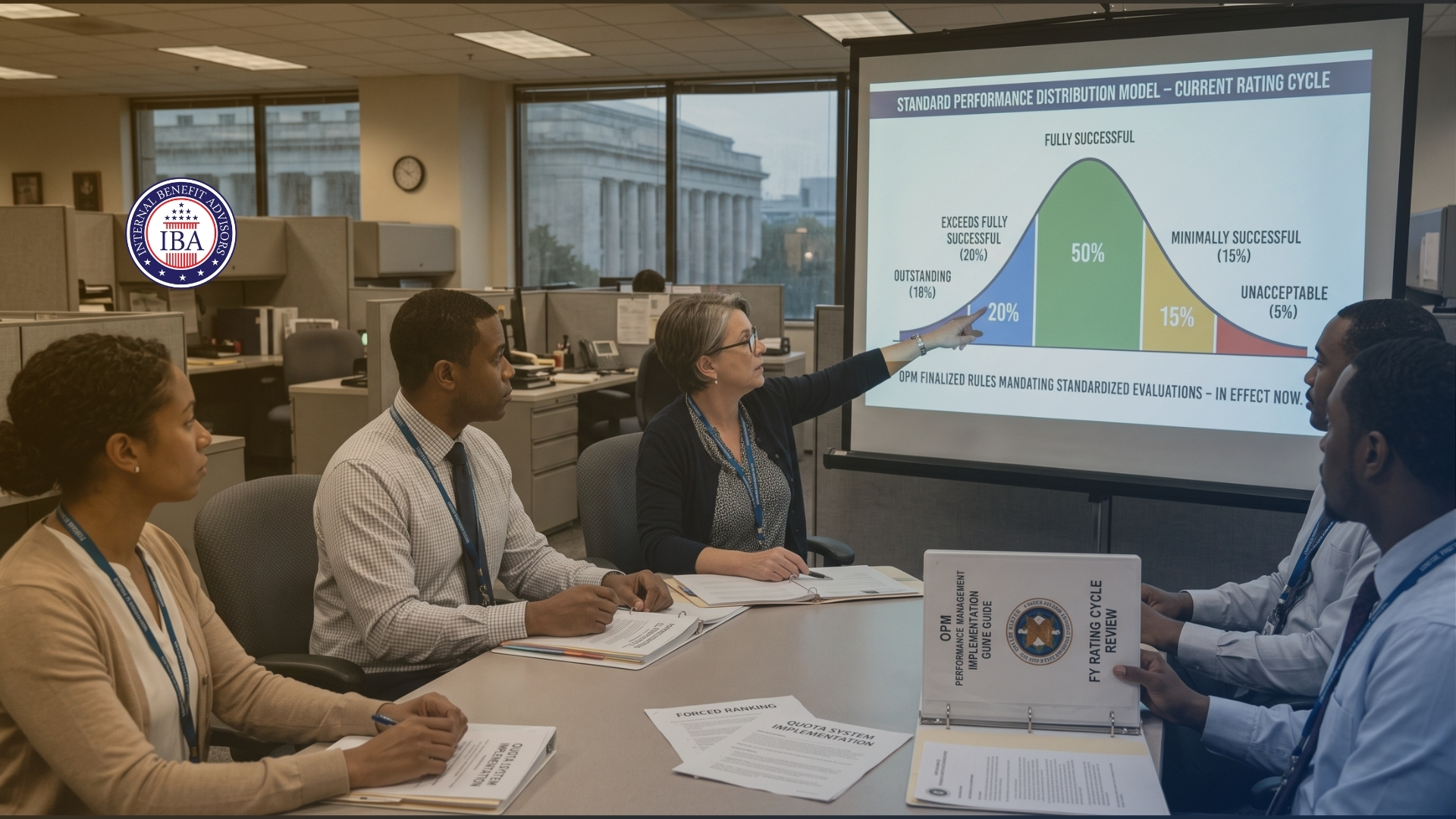
- The Threat of Forced Distribution: This RIF proposal does not exist in a vacuum. It is being advanced alongside another OPM proposal that seeks to impose a “forced distribution” curve on federal performance appraisals. This would cap the percentage of employees who are allowed to receive top ratings. When combined, agencies could theoretically use artificially capped performance ratings to target career employees during a RIF.
- A Shrinking Workforce: These regulatory changes are occurring against the backdrop of aggressive downsizing initiatives. Recent administration budgets have outlined plans to slash over 100,000 federal jobs across non-defense agencies, moving RIFs from a rare administrative tool to an active, widespread management strategy.
- Eroding Appeal Rights: Concurrent proposals also seek to strip RIF appeal rights away from the independent Merit Systems Protection Board (MSPB), moving the appeals process internally to OPM, effectively eliminating third-party oversight of federal layoffs.
What Federal Employees Should Do Now
If your job security is suddenly tied to a subjective, artificially capped performance rating rather than your years of service, relying on institutional protections is no longer enough. The single most important step a federal employee can take right now is to build an independent financial perimeter.
1. Document Your Performance Aggressively
With performance ratings becoming the ultimate shield against a RIF, ensure your personnel file is impeccable. Do not wait for your annual review to document your achievements. Keep a continuous, written record of your completed projects, acquired skills, and contributions to your agency’s mission.
2. Evaluate Early Exit Opportunities
Agencies frequently offer Voluntary Early Retirement Authority (VERA) and Voluntary Separation Incentive Payments (VSIP), or “buyouts,” before executing a formal RIF. If you are offered a buyout, you must have the mathematical analysis ready to determine if accepting it is financially viable compared to the risk of staying.
Shielding Your Legacy with Internal Benefit Advisors
When the rules of your employment are actively being rewritten, you need fiduciary-level guidance that operates entirely independent of your agency’s HR department. At Internal Benefit Advisors, we specialize in protecting federal employees during periods of intense administrative restructuring:
- Strategic VERA/VSIP Analysis: If the threat of a RIF triggers an early retirement or buyout offer at your agency, we provide the exact mathematical projections you need. We ensure you understand how an early exit will impact your High-3 average and your lifetime FERS or CSRS annuity before you make a permanent decision.
- TSP Capital Protection: Career instability demands a highly defensive financial posture. We offer expert counseling on your Thrift Savings Plan (TSP) allocations to shield your capital from market volatility and ensure your funds remain accessible if you are abruptly impacted by a workforce reduction.
- Complimentary Retirement Paperwork Processing: If the changing legal landscape prompts you to accelerate your retirement, do not navigate the backlogged OPM system alone. Our experts audit and complete your retirement paperwork for FREE, ensuring a flawless application that prevents costly delays in your interim pay.
- Comprehensive Benefit Synchronization: We evaluate your entire portfolio to ensure your critical safety nets, including your Federal Employees Health Benefits (FEHB) and life insurance (FEGLI), remain completely intact and transition with you seamlessly, regardless of your agency’s operating status.
Take Command of Your Financial Future
The proposed RIF regulations are a clear signal that the federal government is prioritizing agency flexibility over employee tenure. While you cannot control OPM’s regulatory agenda, you have absolute control over your own financial readiness.
Take command of your transition today. Contact the experts at Internal Benefit Advisors for a Free Benefit Assessment and ensure your hard-earned benefits remain secure, no matter how the rules change.
References
- FEDweek. If OPM’s Proposed RIF Rules Become Final: What Federal Employees Should Do Now. FEDweek.com
- Internal Benefit Advisors. Information you need, Support you can trust. InternalBenefitAdvisors.com
- Federal Register. (2026, March 5). Office of Personnel Management Proposed Rule: Reduction in Force (RIN 3206-AO99).
- Government Executive. Here’s how planned regulations could impact federal employees.
- American Federation of Government Employees (AFGE). Statements on Proposed Changes to Reduction in Force Rules.