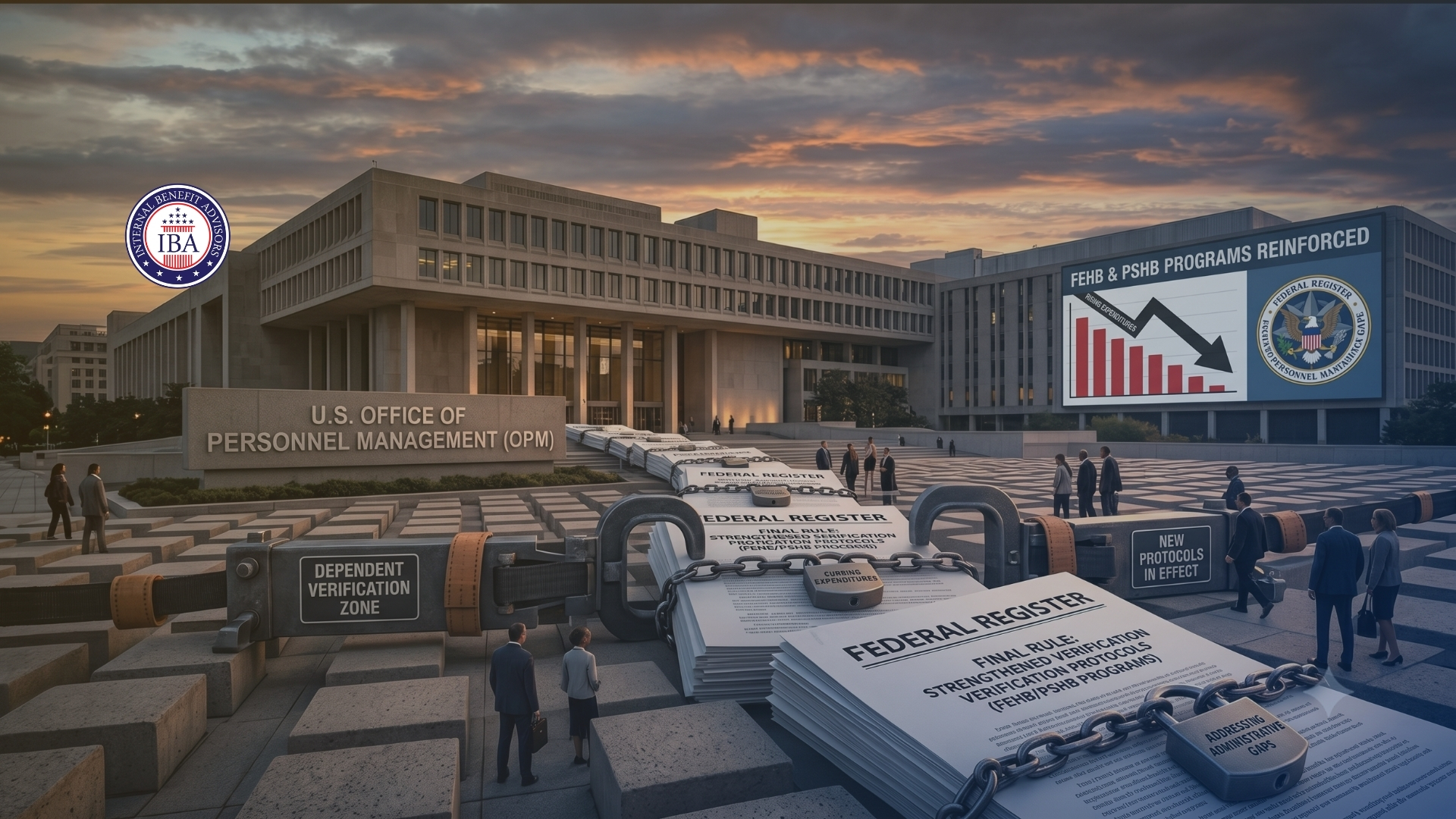

The landscape of federal healthcare administration is undergoing a profound regulatory tightening. In a decisive move to curb rising expenditures and address administrative gaps, the U.S. Office of Personnel Management (OPM) has issued a comprehensive final rule in the Federal Register. This directive drastically reinforces verification protocols for dependents enrolled in both the Federal Employees Health Benefits (FEHB) program and the newly launched Postal Service Health Benefits (PSHB) program.
For decades, the process of maintaining a spouse or dependent child on a federal health plan operated on an honor-system foundation during routine Open Season cycles. Under the new regulations, federal employees and retirees face mandatory verification criteria that reframe how healthcare benefits must be managed, validated, and audited across all executive branch agencies and the U.S. Postal Service.
The Fiscal Blueprint Behind the Mandate
The catalyst for this regulatory intervention stems directly from the FEHB Protection Act of 2025 (FPA) (Public Law 119-21). This legislation directed OPM to establish aggressive, centralized protocols to verify dependent eligibility and validate the legitimacy of Qualifying Life Events (QLEs) before family additions can be processed.
The economic scale of the issue is substantial. According to official OPM assessments, fraudulent, outdated, or improper dependent enrollments have quietly escalated, costing American taxpayers an estimated $1 billion annually in improper health insurance claims.
Initial pilot audits reviewed by OPM and the Government Accountability Office (GAO) delivered clear data that accelerated the rule’s finalization:
- Ineligibility Rate: Agency sampling confirmed that nearly 2 percent of currently enrolled family members were categorically ineligible for coverage.
- Documentation Deficits: A significant secondary tier of dependents lacked sufficient legal documentation to satisfy basic regulatory standards.
The most common drivers of these improper enrollments are not malicious fraud, but rather administrative neglect. Millions of family members remain on health plans after losing structural eligibility—such as spouses following a finalized divorce, or dependents who have aged past the statutory threshold.
Strict Accountability: The New Verification Landscape
Effective July 2, 2026, the final rule mandates that any federal employee, annuitant, or postal worker seeking to add a dependent must present primary source documentation before coverage can be authorized. This requirement applies explicitly during the annual Open Season and any mid-year enrollment window triggered by a QLE.
The rule explicitly underscores that while eligibility criteria have not changed, the enforcement mechanism has been completely modernized.
FEHB & PSHB Dependent Verification Standards
┌───────────────────────────────┬────────────────────────────────┐
│ DEPENDENT CATEGORY │ REQUIRED VERIFICATION PROOF │
├───────────────────────────────┼────────────────────────────────┤
│ Spouse (Married < 12 Months) │ Government Marriage Certificate│
│ Spouse (Married ≥ 12 Months) │ Marriage Certificate + Tax │
│ │ Return or Common Residency Proof│
│ Biological/Adopted Children │ Birth Certificate / Adoption │
│ (Under Age 26) │ Decree or Recent Tax Return │
│ Stepchildren (Under Age 26) │ Child’s Birth Certificate + │
│ │ Parent’s Marriage Certificate │
│ Disabled Children (Age 26+) │ Certified Medical Certificate │
│ │ of Physical/Mental Incapacity │
└───────────────────────────────┴────────────────────────────────┘
Furthermore, the rule empowers health insurance carriers and employing agency Human Capital Offices to execute retroactive audits. If an enrollee fails to supply sufficient documentation within designated compliance windows, the agency is legally required to execute a prospective removal of the unverified individual from the plan. If intentional or material misrepresentation is uncovered, the financial liabilities can be severe.
Navigating the Multi-Program Shift: FEHB vs. PSHB
The administrative friction generated by this mandate is uniquely amplified for the workforce navigating the parallel tracks of the FEHB and PSHB. Since the formal decoupling of postal personnel into the dedicated PSHB platform, health benefit structures have required absolute precision to avoid gaps in coverage.
For a family managing a household transition—such as a child approaching their 26th birthday who is incapable of self-support, or a complex blended family configuration—the burden of proof resides entirely on the employee. Managing multiple verification deadlines across separate administrative clearinghouses introduces an unexpected layer of risk for families who depend on uninterrupted medical coverage.
Proactive Benefit Strategies for Federal Personnel
Faced with a highly scrutinized administrative environment, federal professionals and retirees must shift from a passive approach to a disciplined strategy for managing their benefits folder.
- Conduct an Internal Audit: Review your Electronic Official Personnel Folder (eOPF) or retirement portal to ensure your family layout matches your official legal documentation. If a former spouse is still erroneously listed on your health plan, initiate an administrative removal immediately to prevent compliance liabilities.
- Secure Primary Records Prematurely: Gathercertified copies of birth certificates, adoption decrees, and certified marriage records now. Do not wait for an Open Season deadline or an unexpected QLE to hunt down missing paperwork.
- Understand Tax Return Redactions: When utilizing the front page of a Federal or State tax return to prove common residency or financial interdependency for a spouse, remember that OPM regulations permit the complete redaction of private financial data and Social Security numbers.
Securing Your Household Stability with Specialized Guidance
When federal health benefit rules are modified, your approach to family protection and long-term financial security must evolve alongside them. Making certain that your health care continuity, life insurance portfolios, and retirement milestones remain insulated from administrative compliance shocks requires specialized, expert oversight.
This is where dedicated assistance becomes invaluable. Internal Benefit Advisors provides comprehensive financial education, life insurance structuring, tax guidance, and holistic retirement planning designed specifically for federal, postal, and state employees.
Whether you need to audit your benefit selections ahead of an OPM compliance review, optimize your Thrift Savings Plan (TSP) asset allocations, or construct a resilient retirement transition plan that safeguards health coverage into your post-service years, working with a specialized advisor ensures your family’s future remains secure, compliant, and entirely under your control.
References
- Office of Personnel Management (OPM). (2026). Federal Employees Health Benefits Program: Verification Requirements for Family Member Coverage. 5 CFR Part 890, Federal Register (91 FR 32875, Document Number 2026-11022). https://www.federalregister.gov/documents/2026/06/02/2026-11022/federal-employees-health-benefits-program-verification-requirements-for-family-member-coverage
- U.S. Congress. (2025). Federal Employees Health Benefits Protection Act of 2025. Public Law 119-21, 139 Stat. 362, Section 90101. Washington, D.C.
- FedWeek. (2026). OPM Tightens Scrutiny of Family Member Coverage under FEHB, PSHB. https://www.fedweek.com/fedweek/opm-tightens-scrutiny-of-family-member-coverage-under-fehb-pshb/
- Office of Personnel Management (OPM) News Release. (2026). OPM Cracking Down on Fraudulent Health Benefits Enrollment. https://www.opm.gov/news/news-releases/opm-cracking-down-on-fraudulent-health-benefits-enrollment/
- Department of Defense Civilian Personnel Advisory Service (DCPAS). (2025). Federal Employees Health Benefits Family Member Eligibility Verification Guidelines and Field Audit Standard Operating Procedures. https://www.dcpas.osd.mil/sites/default/files/2024-10/2024_symposium_ppt_-fehb_fmv_final.09172024-_508.pdf
- Internal Benefit Advisors LLC. Retirement Planning Support and Benefits Package Education for State and Federal Employees. https://internalbenefitadvisors.com