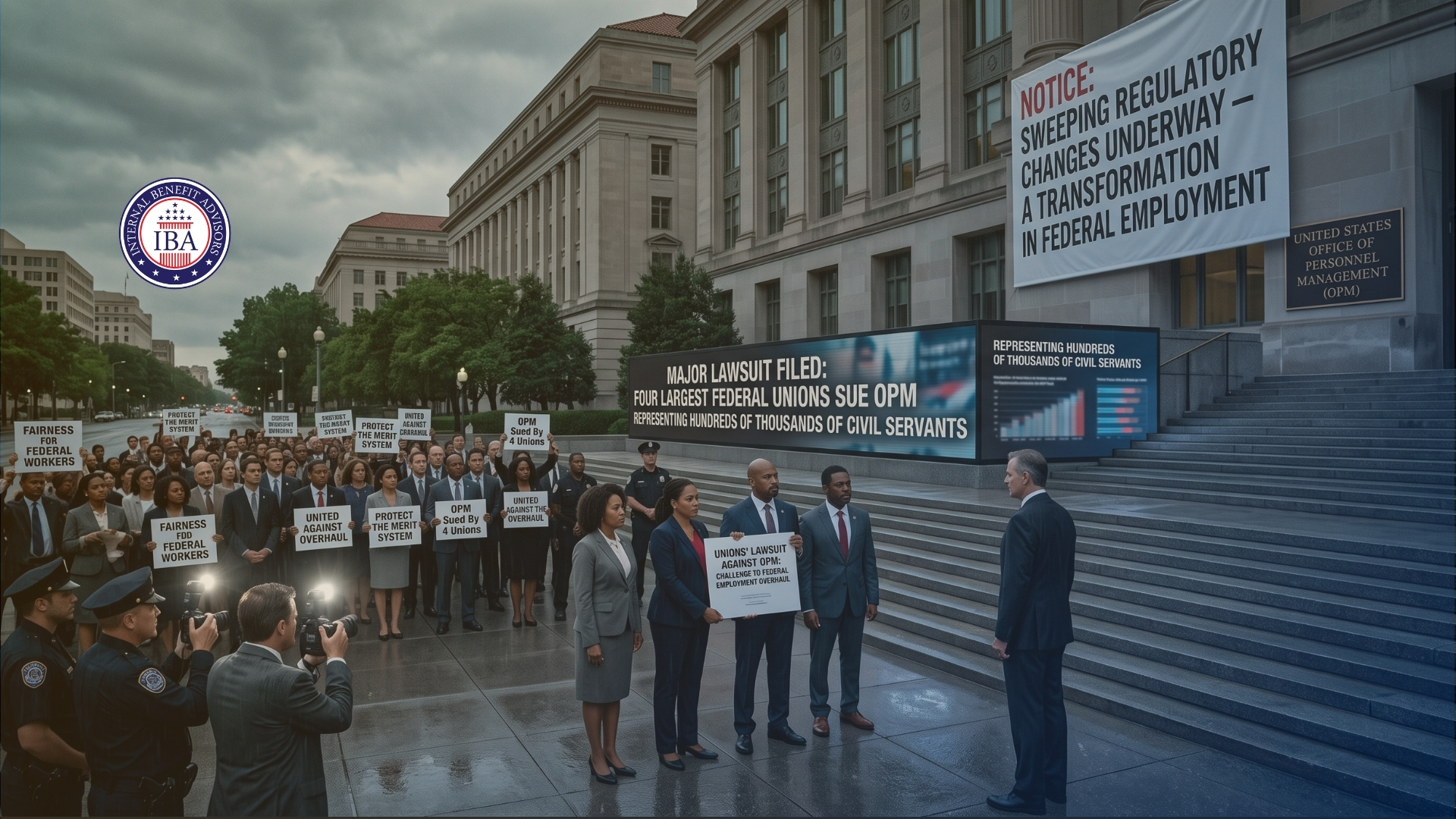


For federal employees and labor representatives, watching pivotal civil service lawsuits languish on appellate court dockets can feel like an exercise in profound helplessness. When your statutory job security, adverse action appeal routes, and long-term retirement benefits hang in the balance of unresolved litigation, administrative limbo injects severe anxiety into your daily professional life.
However, a critical procedural breakthrough has reshaped the appellate landscape. As detailed in recent civil service legal reporting from FedWeek, appellate courts have taken decisive action to speed up a central, precedent-setting case governing federal employee appeal rights. To clear the runway for this crucial ruling, judicial panels have systematically pushed back—or temporarily stayed—dozens of secondary civil service appeals.
While placing individual grievances on the back burner is frustrating for the impacted litigants, this judicial strategy is designed to resolve the core constitutional and statutory questions surrounding the Merit Systems Protection Board (MSPB) and civil service due process once and for all.
The Legal Strategy: Fast-Tracking the Baseline Precedent
In complex administrative law, appellate courts frequently face a massive traffic jam of overlapping lawsuits. Following recent executive branch actions that reclassified specific civil service tiers and altered standard removal procedures (such as Schedule F transitions and expedited Department of Veterans Affairs accountability frameworks), appellate dockets were flooded with individual appeals.
Rather than issuing piecemeal, potentially contradictory decisions across different circuit panels, the judiciary has opted for administrative efficiency. By fast-tracking one definitive “test case” that addresses the foundational mechanics of the Civil Service Reform Act (CSRA) and Title 5 adverse action jurisdiction, the court can establish a binding legal standard.
Once this primary precedent is established, the lower administrative courts and the MSPB can swiftly resolve the “pushed” cases utilizing a clarified, uniform interpretation of the law.
By the Numbers: The Adjudication Bottleneck
To understand why the court was forced to take this extraordinary step, we have to examine the hard statistical data driving the federal appeals system. The civil service adjudication infrastructure has been operating under immense structural friction for years.
| Adjudication Metric | Standard Benchmark | Current Reality |
| Annual MSPB Case Influx | ~5,500 Initial Appeals | 11,166+ Appeals (Double typical volume) |
| AJ Initial Decision Window | 120 Calendar Days | Stretched due to systemic inventory spikes |
| Historical Board Backlog | Zero (with steady quorum) | Peaked at ~3,800 unresolved petitions |
| Federal Circuit Reversal Rate | Less than 10% of Board rulings | Volatile pending structural test cases |
When an administrative agency absorbs twice its normal operational capacity while simultaneously navigating legal challenges to its core jurisdictional authority, the entire clearinghouse slows down. Pushing secondary cases back prevents the system from collapsing under its own weight while giving the appellate bench the breathing room required to issue a sound, highly vetted constitutional ruling.
Downstream Financial Risks for Federal Personnel
While this legal maneuvering occurs in the elevated halls of the judiciary, the downstream financial fallout lands squarely on the individual public servant. When an adverse action appeal or forced separation case is pushed back by a judicial stay, the timeline for achieving final financial relief stretches from months into years.
This prolonged friction introduces significant risks to your lifetime benefits layout:
High-3 Salary Stagnation
If you are wrongfully separated or demoted pending an appeal, your federal service clock pauses. If your case is delayed by appellate backlogs, you miss out on active step increases and annual federal pay adjustments. Even if you are eventually reinstated with back pay, calculating how that lump sum applies to your “High-3” average salary—the benchmark used to establish your lifetime Federal Employees Retirement System (FERS) pension—can turn into an administrative nightmare.
The Lump-Sum Tax Trap
Receiving multiple years of back pay in a single, delayed court settlement can artificially push your household into the highest federal marginal tax brackets (up to 37 percent). Without strategic pre-tax sheltering, the IRS captures an outsized percentage of your restored earnings.
Health and Thrift Continuity Gaps
During a protracted legal separation, maintaining your family’s coverage under the Federal Employees Health Benefits (FEHB) program requires paying the full premium out-of-pocket without the standard agency contribution. Furthermore, a frozen or separated status restricts your ability to execute active Thrift Savings Plan (TSP) contributions, halting your employer matching funds and disrupting your long-term compounding growth.
Proactive Defensive Steps You Can Take Now
When systemic legal procedures are entirely outside of your personal control, the most effective response is to build an unassailable administrative fortress around your personal career and benefits. Federal professionals must shift to a proactive defensive posture immediately:
- Audit Your Official Folder: Log into your Electronic Official Personnel Folder (eOPF) and download certified, date-stamped copies of every Standard Form 50 (SF-50) in your history. Verify that your Service Computation Date (SCD) and tenure group are explicitly established.
- Document All Performance Milestones: Do not rely on digital agency portals that could become inaccessible during an unannounced reorganization or localized Reduction in Force (RIF). Maintain physical, date-stamped copies of your signed performance appraisals and mid-year reviews.
- Map Out Immediate Contingency Pathways: Calculate your exact eligibility thresholds for early retirement mechanisms, such as the Voluntary Early Retirement Authority (VERA) or Discontinued Service Retirement (DSR), so you know your exact financial floor if your position is unexpectedly impacted.
Insulating Your Wealth With Internal Benefit Advisors
The judicial decision to speed up core appeal rights cases proves that the foundational rules of federal employment are shifting. You cannot afford to let appellate court backlogs, agency reorganizations, or administrative bottlenecks dictate your family’s financial security.
Navigating the intersection of civil service classifications, FERS annuity calculations, and tax-heavy settlement payouts demands specialized, objective expertise. Internal Benefit Advisors provides comprehensive financial education, life insurance structuring, tax strategy optimization, and tailored retirement planning structured explicitly for federal, postal, and state employees.
Whether you need to project your FERS annuity under an unexpected career pause, optimize your TSP asset allocations to preserve capital, or design a tax-efficient recovery strategy for delayed administrative settlements, working with an experienced advisor ensures your future remains completely protected, well-planned, and entirely under your own direction. Visit Internal Benefit Advisors today to take definitive control of your federal benefits package.
References
- FedWeek. (2026). Court Acts to Speed Up Key Case on Appeal Rights; Other Cases Pushed. https://www.fedweek.com/fedweek/court-acts-to-speed-up-key-case-on-appeal-rights-other-cases-pushed/
- United States Court of Appeals for the Federal Circuit. (2026). Clerk of Court Operational Notice: Case Consolidation and Stays in Title 5 Jurisdictional Appeals. Washington, D.C. https://www.cafc.uscourts.gov/home/clerk-of-court/operational-notices/
- U.S. Merit Systems Protection Board (MSPB). (2026). Annual Congressional Budget Justification and Performance Operational Insights. Oversight.gov. https://www.mspb.gov/about/annual_reports/
- Government Executive. (2025). High Case Numbers Could Snarl Federal Employees Who Appeal Their Removals. https://www.govexec.com/management/2025/07/high-case-numbers-could-snarl-federal-employees-who-appeal-their-removals/406569/
- Internal Benefit Advisors LLC. Retirement Planning Support and Benefits Package Education for State and Federal Employees. https://internalbenefitadvisors.com