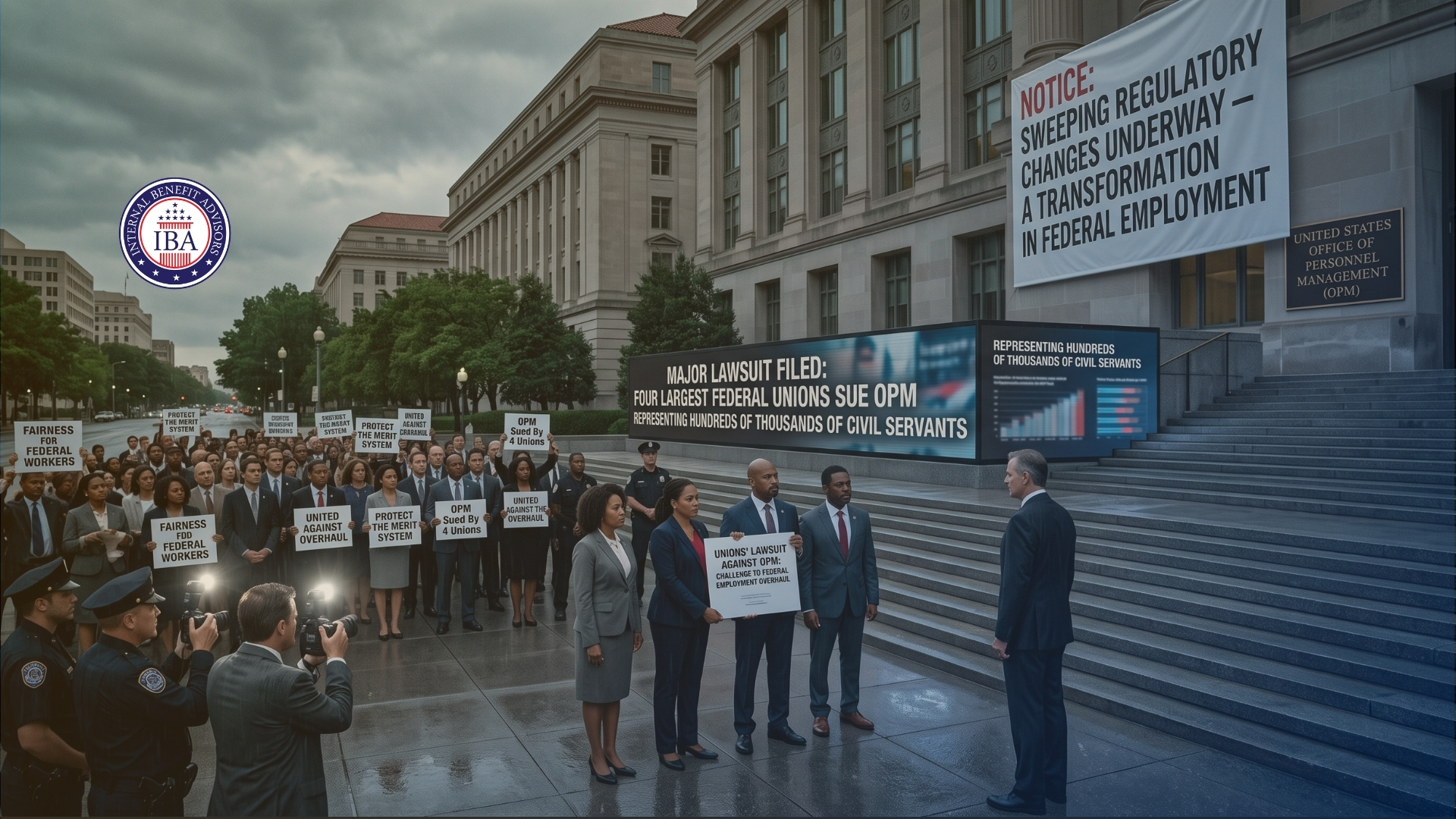
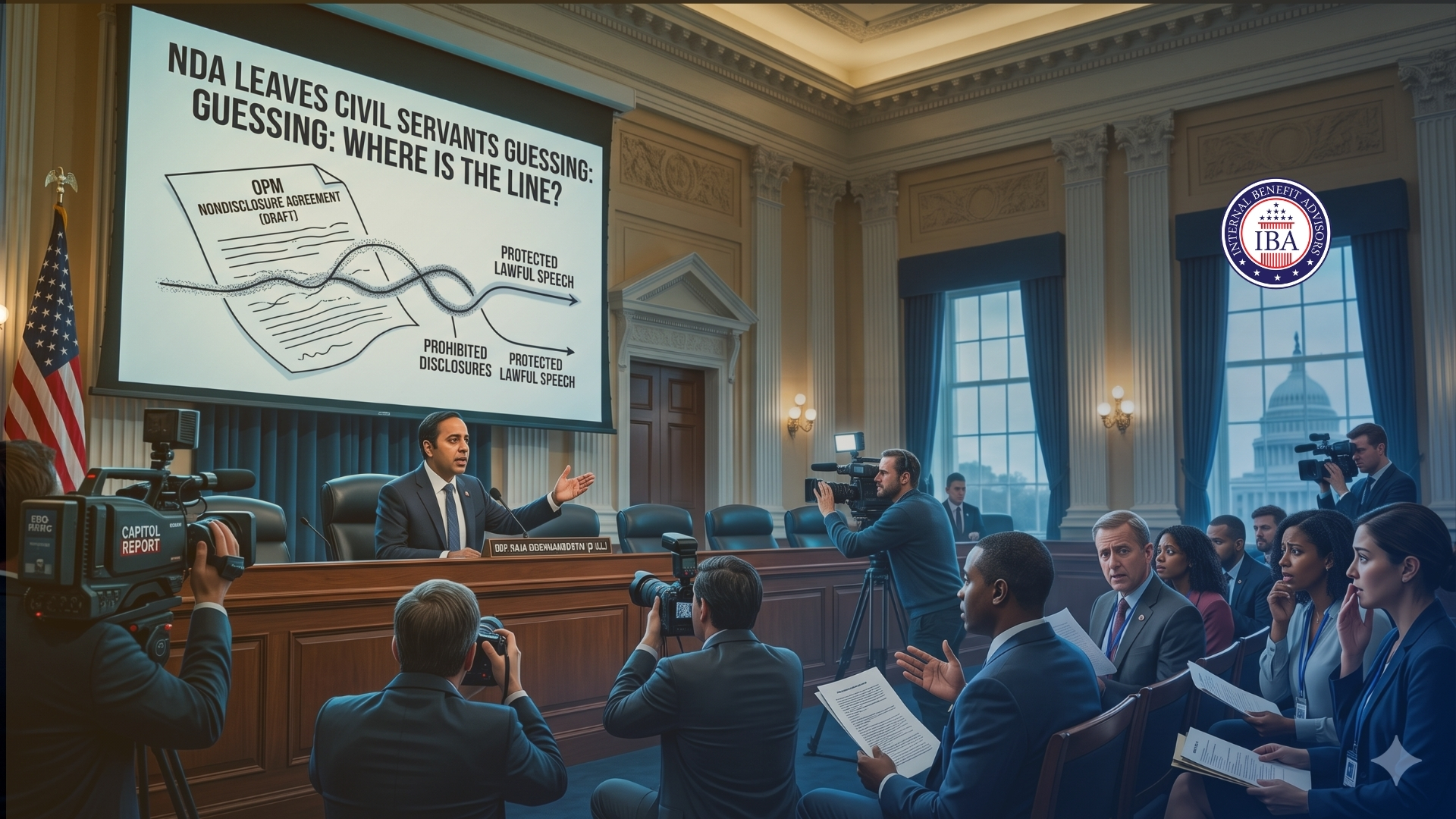

A newly proposed government-wide Nondisclosure Agreement (NDA) from the Office of Personnel Management (OPM) has triggered high-level warnings on Capitol Hill. In a scathing critique highlighted by FEDweek, House Democrats—led by Rep. Raja Krishnamoorthi (D-Ill.)—argued that the draft form is so broadly written that it will leave career federal employees completely guessing where the line exists between prohibited disclosures and protected, lawful speech.
When administrative boundaries are clouded by vague terminology, career civil servants face a precarious work environment. If you are uncertain about what internal deliberations or agency practices you are permitted to discuss, standard interagency communication and protected whistleblowing become professional minefields. In an era where federal job protections are actively being reinterpreted, understanding the hidden traps of this NDA proposal and securing an independent financial perimeter is vital for your long-term career survival.
Sound Data: The Anatomy of OPM’s Draft Form
To understand why lawmakers are sounding the alarm over the draft form (Docket ID: OPM-2026-0100), federal professionals must look at the specific language and the enforcement mechanisms operating behind it. The concrete data surrounding the rollout reveals a concerted effort to tighten control over internal agency information:
- An Overbroad Definition of “Confidentiality”: The draft NDA requires employees to pledge not to disclose non-public, confidential, or proprietary information relating to agency operations, personnel matters, or procurement. Most alarmingly, it extends to “any sensitive, pre-decisional or deliberative material,” an undefined catch-all phrase that covers virtually every piece of draft policy, internal email exchange, or candid brainstorming session within an agency.
- The House Democrat Warning: Rep. Krishnamoorthi formally warned OPM Director Scott Kupor that the form’s severe lack of clarity creates an immediate “chilling effect.” Lawmakers pointed out that while the form includes mandatory boilerplate language stating it does not supersede the Whistleblower Protection Act, an employee reading the document is left entirely guessing whether reporting mismanagement to Congress or an Inspector General will trigger retaliation under the guise of an NDA breach.
- The “Suitability” Weaponization: The NDA proposal does not exist in a vacuum. It is explicitly engineered to interface with OPM’s concurrent regulatory overhaul of federal “suitability and fitness” standards. Under these revised rules, an employee who refuses to sign the standardized NDA—or who is accused by agency leadership of violating its broad terms—can be summarily removed from federal service and debarred from government employment for up to five years.
- Bypassing Independent Oversight: Because NDA compliance is categorized as a baseline “suitability” standard rather than a standard Title 5 performance metric, agencies can potentially terminate career civil servants while stripping away their statutory right to appeal the firing before the independent Merit Systems Protection Board (MSPB).
The Danger of Organizational Silence
Research across public administration consistently demonstrates that large agencies function best when skilled professionals feel safe voicing dissenting views, pointing out analytical errors, and reporting operational waste.
By implementing an ambiguous NDA backed by the threat of job loss and federal debarment, agencies create a culture of extreme over-caution. If career experts are forced to guess whether sharing an unpolished data set or criticizing a flawed draft policy will be categorized by leadership as an unauthorized leak of “pre-decisional material,” the vast majority will choose silence. This whittles away professional autonomy and forces civil servants into an impossible corner: risk your livelihood to uphold your oath of transparency, or quietly comply with flawed directives to protect your pension.
Secure Your Financial Perimeter with Internal Benefit Advisors
When your agency can potentially weaponize an overly broad administrative form to threaten your career tenure without standard MSPB due process, passively relying on the federal bureaucracy to safeguard your retirement is a high-risk strategy. Career civil servants must construct an independent, fortified financial foundation that gives them the total freedom to walk away on their own terms if their working environment becomes fundamentally compromised.
At Internal Benefit Advisors, we specialize in providing the unbiased, fiduciary-level financial guidance federal professionals require to weather severe institutional turbulence:
- Defensive TSP Capital Protection: Career instability demands an agile financial posture. We offer expert counseling on your Thrift Savings Plan (TSP) allocations to insulate your accumulated capital from market volatility and ensure your wealth remains liquid, growing, and completely accessible if you are abruptly targeted by disciplinary action.
- Strategic VERA/VSIP Analysis: If evolving communication policies, mandatory NDAs, and workplace friction prompt your agency to offer Voluntary Early Retirement Authority (VERA) or buyout packages (VSIP), we provide the exact mathematical analysis you need. We calculate precisely how an accelerated exit will impact your High-3 average salary and your lifetime FERS or CSRS annuity check.
- Complimentary Retirement Paperwork Processing: When you decide it is time to preserve your professional integrity and transition out of federal service, do not face the notoriously backlogged OPM system alone. Our experts audit and complete your federal retirement packet for FREE, guaranteeing a pristine submission that prevents costly processing delays in your interim pay.
- Comprehensive Benefit Synchronization: We evaluate your entire federal portfolio to ensure your vital safety nets—including your Federal Employees Health Benefits (FEHB) and life insurance (FEGLI)—remain securely intact and transition with you seamlessly into civilian life or retirement.
Take Command of Your Career Trajectory
Lawmakers have made it clear: OPM’s proposed NDA form is designed to leave employees guessing. Do not let administrative ambiguity and the threat of disciplinary overreach hold your financial future hostage.
Take command of your career transition today. Contact the experts at Internal Benefit Advisors for a Free Benefit Assessment and ensure your hard-earned wealth remains securely protected, no matter what forms you are asked to sign.
References
- FEDweek. Proposed NDA Form Would Leave Employees Guessing, Says House Democrat. FEDweek.com
- Internal Benefit Advisors. Information you need, Support you can trust. InternalBenefitAdvisors.com
- U.S. House of Representatives (Rep. Raja Krishnamoorthi). (2026, June 9). Letter to OPM Director Scott Kupor Regarding Draft Government-Wide Nondisclosure Agreement.
- Federal Register (OPM). Notice with request for comment: Confidential Government Information Nondisclosure Agreement (Docket ID: OPM-2026-0100).
- Project on Government Oversight (POGO). (2026, June). How OPM’s Proposed Nondisclosure Form Chills Whistleblowers and Public Accountability.