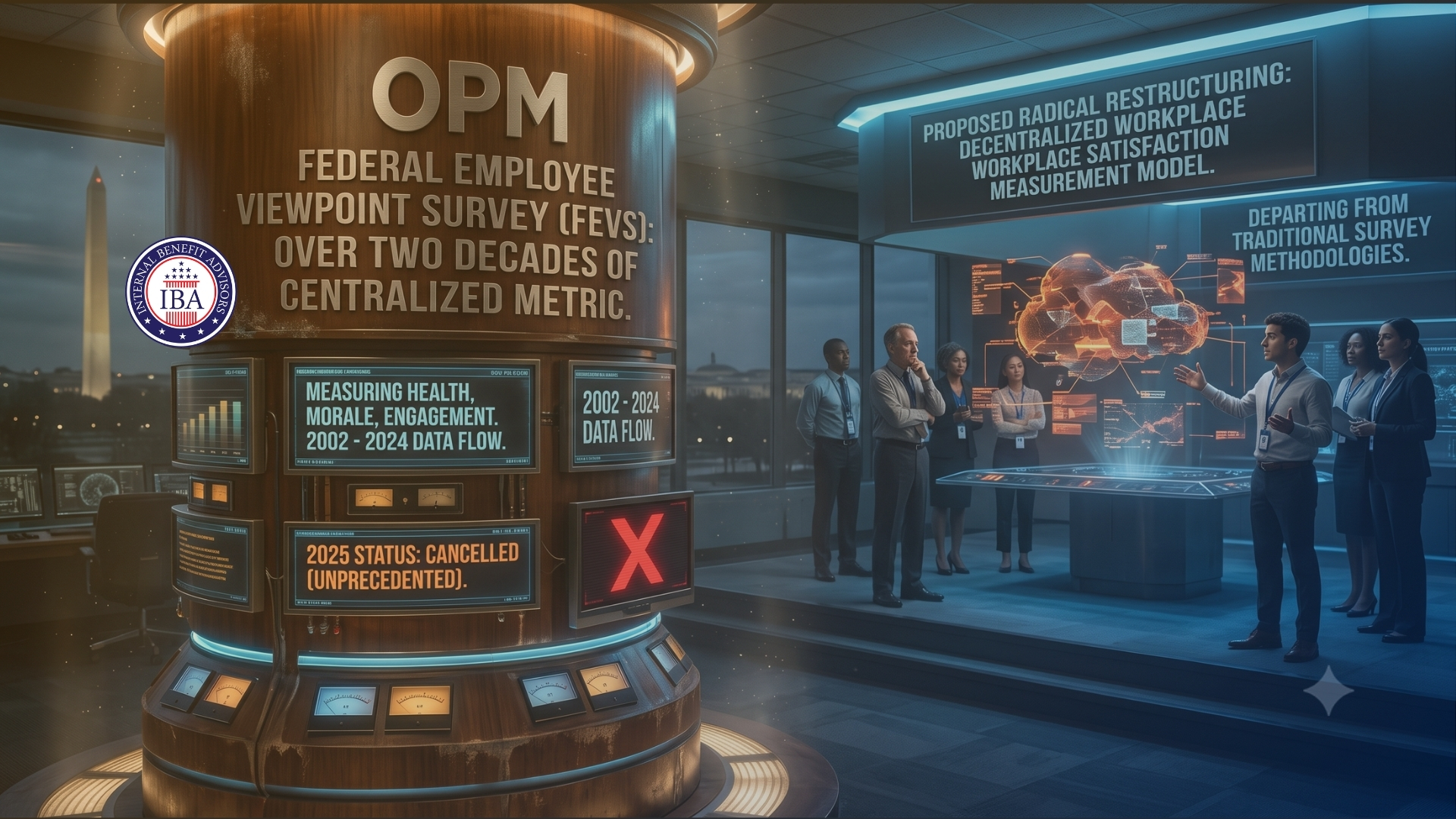

For over two decades, the Federal Employee Viewpoint Survey (FEVS) has stood as the premier, centralized metric for measuring the health, morale, and engagement of the civil service. However, following the unprecedented cancellation of the survey in 2025, the Office of Personnel Management (OPM) is now proposing a radical restructuring of how the federal government measures workplace satisfaction.
According to recent regulatory filings and critical pushback from lawmakers, OPM plans to completely decentralize the FEVS, offload the administration of the survey to individual agencies, and severely reduce the number of standardized questions required. For career civil servants currently weathering massive administrative changes, this move represents a significant loss of government-wide transparency. When the institutional mechanisms designed to measure and protect your workplace environment are actively dismantled, establishing an independent financial safety net becomes an absolute necessity.
Sound Data: Deconstructing the Proposed FEVS Rollback
To understand why federal labor unions and congressional oversight committees are raising alarms, one must look at the historical scale of the FEVS and the specific regulatory changes OPM is attempting to finalize:
- The Loss of the Centralized Benchmark: Historically, OPM centrally administered the FEVS to roughly 1 million eligible executive branch employees, reliably generating between 400,000 and 600,000 responses annually. This centralized approach guaranteed uniform data collection and allowed for objective, apples-to-apples comparisons of employee satisfaction across different agencies and presidential administrations.
- Decentralization and the “Playbook”: OPM’s proposed rule (amending 5 CFR Part 250) strips away this centralized model. Moving forward, individual agencies will be responsible for designing and administering their own surveys using an OPM “Playbook.” While OPM argues this allows for better tailoring to specific agency missions, workforce advocates warn it creates a disjointed system where struggling agencies can easily manipulate their survey timing or methodology to hide plummeting morale.
- Cutting the Core Questions: Under existing statutes, agencies were mandated to ask 16 core questions focusing on leadership effectiveness and employee satisfaction. The new regulatory proposal slashes this requirement down to just 10 questions. Critics argue this deliberate reduction targets historical satisfaction metrics, effectively breaking the long-term data trends used to hold political leadership accountable for toxic work environments.
- The Context of Contraction: The timing of these changes is highly scrutinized. The 2025 FEVS was canceled during a year when OPM’s own data showed approximately 317,000 employees left the federal government—a massive contraction driven by Deferred Resignation Programs (DRP) and aggressive return-to-office mandates. Independent surveys from groups like the Partnership for Public Service indicate that federal engagement and job satisfaction plummeted during this period, suggesting the rollback of the FEVS is a deliberate attempt to avoid documenting the fallout.
The Danger of a Fractured Feedback Loop
When the central HR agency of the federal government stops measuring job satisfaction and delegates the responsibility to individual departments with fewer guardrails, the voice of the career civil servant is effectively muted.
If you are operating in an agency experiencing severe staffing shortages, forced reclassifications, or plummeting morale, you can no longer rely on a government-wide survey to validate your frustration or trigger congressional intervention. The administrative feedback loop has been fractured, making it imperative that you build a highly resilient financial perimeter that allows you to survive the dysfunction or walk away on your own terms.
Secure Your Transition with Internal Benefit Advisors
When your agency is given the power to dilute how it measures your workplace satisfaction, relying passively on institutional safety nets is a high-risk strategy. You need an independent financial plan that prioritizes your personal well-being over agency metrics.
At Internal Benefit Advisors, we specialize in providing the fiduciary-level guidance federal employees require to secure their wealth amidst severe institutional restructuring:
- Strategic Exit Planning (VERA/VSIP): If deteriorating workplace conditions and a lack of institutional transparency prompt you to consider an early exit, we provide the exact mathematical projections you need. We calculate precisely how an accelerated retirement or buyout package will impact your High-3 average salary and your lifetime FERS or CSRS annuity check.
- Defensive TSP Optimization: A volatile, opaque workplace requires a highly defensive financial posture. We offer expert counseling on your Thrift Savings Plan (TSP) allocations to shield your accumulated capital from market volatility, ensuring your funds remain secure, growing, and completely accessible if you choose to transition.
- Leave Without Pay (LWOP) Financial Triage: If agency hostility forces you into a lower performance tier or unpaid leave status, we help you evaluate your cash flow and optimize your TSP withdrawal strategies to ensure you have emergency liquidity without incurring unnecessary tax penalties.
- Complimentary Retirement Paperwork Processing: Do not face the notoriously backlogged OPM system alone. Our team audits and completes your retirement paperwork for FREE, ensuring a flawless application that prevents agonizing processing delays in your interim pay.
Take Command of Your Financial Trajectory
OPM’s proposal to decentralize the FEVS and reduce core satisfaction questions proves that the government is actively reducing its accountability to the career workforce. While you cannot control how your agency chooses to survey its employees, you have absolute authority over your personal financial readiness.
Take command of your career transition today. Contact the experts at Internal Benefit Advisors for a Free Benefit Assessment and ensure your hard-earned wealth remains completely secure, regardless of the climate at your agency.
References
- FEDweek. OPM Proposes ‘Decentralized’ FEVS With Fewer Questions and Less Transparency. FEDweek.com
- Internal Benefit Advisors. Information you need, Support you can trust. InternalBenefitAdvisors.com
- Federal Register (OPM). (2026, July 2). Agency Information Collection Request: Federal Employee Viewpoint Survey (Docket ID: OPM-2026-13443).
- Partnership for Public Service. (2026, March). Public Service Viewpoint Survey: The Impact of the Administration’s Actions on Government Performance.
- U.S. Senate (Sen. Chris Van Hollen). (2026, June 18). Letter to OPM Director Scott Kupor Regarding Proposed FEVS 2026 Survey Changes.