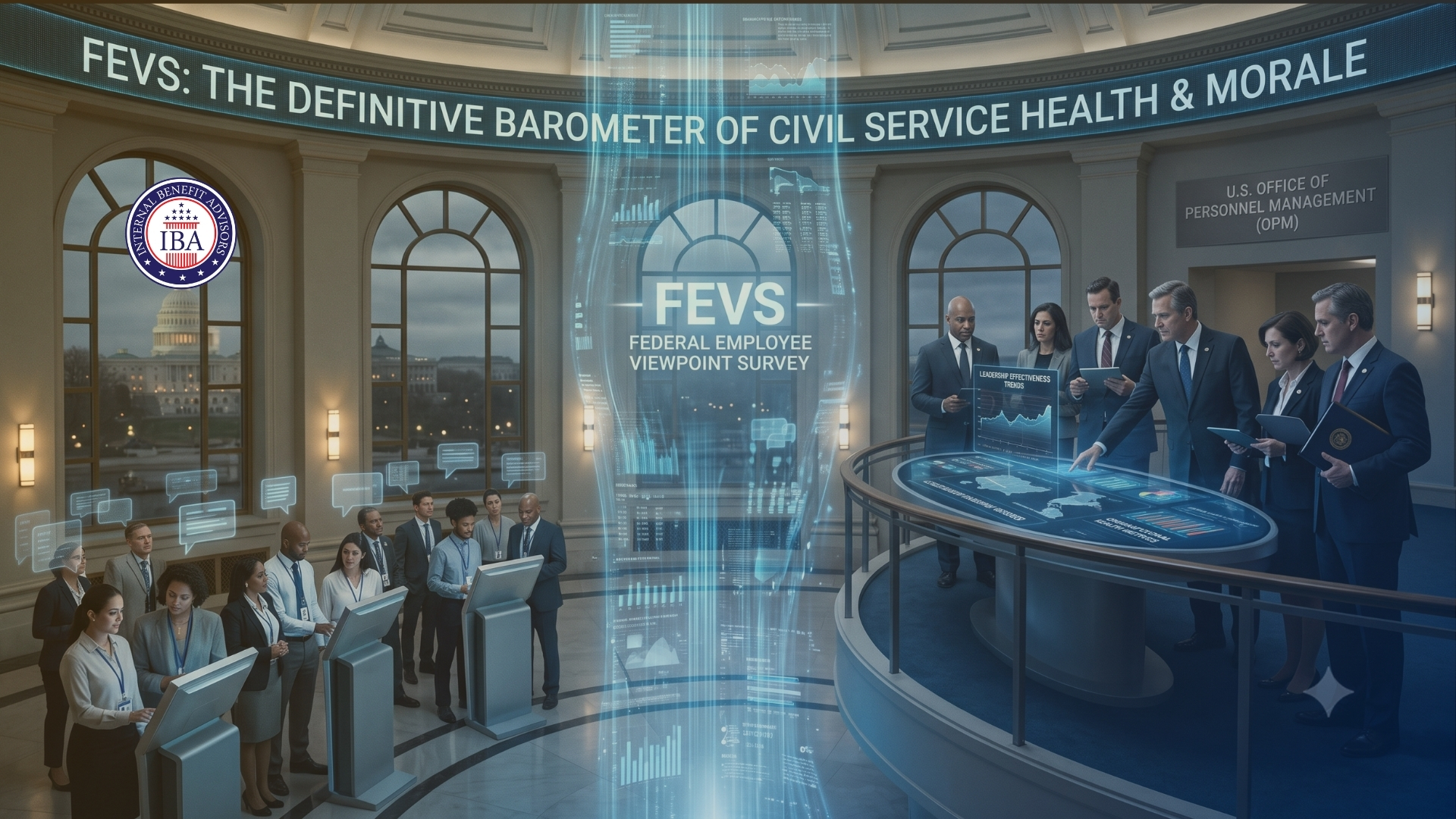

For more than two decades, the Federal Employee Viewpoint Survey (FEVS) has operated as the definitive barometer of civil service morale, leadership effectiveness, and organizational health across the federal government. When institutional turbulence arises, this feedback loop provides public servants with a direct, anonymized voice while delivering actionable data to agency leaders and congressional oversight committees.
However, the integrity and continuity of this vital diagnostic tool have become the center of intense legislative scrutiny. Following the unprecedented cancellation of the annual survey in 2025, a coalition of congressional lawmakers is aggressively prodding the U.S. Office of Personnel Management (OPM) for answers regarding its redesigned 2026 survey. For career professionals navigating historic workforce drawdowns and shifting workplace policies, this administrative clash is not merely a procedural debate—it directly impacts institutional transparency, workplace due process, and long-term career planning.
The Legislative Push for Survey Transparency
The current clash was sparked when OPM opted to cancel the 2025 FEVS—marking the first time the government-wide poll was entirely shelved since 2002. In response, a formal congressional inquiry led by 23 lawmakers, including Federal Workforce Caucus co-chairs Senator Chris Van Hollen (D-Md.) and Representative James Walkinshaw (D-Va.), pressed OPM leadership for absolute transparency regarding the impending 2026 relaunch.
Lawmakers expressed deep concern that OPM’s announced transition toward “micro-level responses” could systematically dilute government-wide tracking data, strip out essential demographic and accessibility metrics, and undermine the survey’s core intent. The congressional inquiry laid out a series of direct, binding demands for OPM leadership:
- Immediate public delivery of the verbatim 2026 FEVS question set.
- Confirmation on whether individual executive branch agencies will retain the administrative authority to append their own customized pulse questions.
- A definitive timeline for administering the poll across active personnel.
- A binding commitment to publish the unredacted, government-wide data files for public and legislative review.
By the Numbers: Why Workforce Feedback is Critical Now
The congressional insistence on a robust, uncompromised viewpoint survey arrives at a highly sensitive moment for the federal civil service. To understand why lawmakers are prodding OPM so aggressively, we must look past the survey mechanics and examine the macroeconomic workforce data that characterized the previous 12 months.
Recent investigations published by the Government Accountability Office (GAO) and independent analytical firms illustrate a workforce undergoing massive structural realignment:
| Macroeconomic Workforce Metric | Baseline Standard | Confirmed Post-Reform Reality |
| Total Civilian Workforce Deficit | Steady baseline growth | Down 11% (~256,000 net personnel loss) |
| Annual Agency Separations | Historical attrition baselines | ~378,000 Separations across 22 major CFO Act agencies |
| Workforce Layoff Perception | ~9% to 12% reporting layoffs | 38% of Federal Workers reporting localized layoffs |
| State & Local Layoff Benchmark | Correlated with federal trends | 19% (Half the rate of federal civil servants) |
According to parallel tracking data from Gallup, the combination of hiring freezes, localized Reductions in Force (RIFs), and mandatory Deferred Resignation Programs (DRP) triggered sharp declines in career employee engagement and job satisfaction throughout 2025. When an enterprise sheds more than a tenth of its active human capital, capturing clean, unmanipulated survey data is essential to prevent institutional failure.
Explore how recent workforce contractions and policy shifts have impacted core civil service satisfaction indices compared to state and local benchmarks:
Key Insight: The gap between federal employee burnout and private/state sector benchmarks widened to historic levels during the 2025 workforce contractions, underscoring the absolute necessity of retaining independent, standardized survey oversight.
Statutory Mandates: The 16 Core Questions
A central pillar of the congressional inquiry focuses on statutory compliance. Under federal law codified in 5 CFR Part 250, subpart C, executive branch agencies do not have the option to bypass employee evaluations. The statute mandates that agencies administer an annual assessment incorporating 16 specific, unalterable core questions.
These statutory questions serve as vital legal benchmarks. They force agencies to quantitatively record whether employees believe personal merit is recognized, whether organizational leadership maintains high standards of honesty, whether physical and operational security protocols are respected, and whether poor performers are successfully remediated or removed. Stripping or altering these baseline questions violates federal code and severely restricts the Merit Systems Protection Board (MSPB) and Congress from executing objective human capital oversight.
Downstream Impacts on Your Federal Benefits and Retirement
While high-level clashes over survey design and institutional transparency dominate the headlines, individual civil servants must recognize how workplace disruption impacts their personal financial architecture. Surviving in an agency experiencing severe organizational strain, low morale, or localized downsizing requires constant defensive planning.
When organizational units are restructured or consolidated without the guiding guardrails of employee feedback, individual professionals face enhanced risks:
- High-3 Salary Stagnation: Involuntary reassignments or frozen promotional ladders can suppress your peak earning years, permanently depressing the “High-3” average salary calculation used to establish your lifetime Federal Employees Retirement System (FERS) pension.
- Administrative Bottlenecks: Human Capital Offices across major departments are severely understaffed. Routine paperwork—such as verifying credentialed military service buybacks, processing standard form SF-50 adjustments, or initiating voluntary early retirement (VERA/VSIP) packages—routinely faces months of backlogged delays.
- Benefit Continuity Shocks: Transitioning out of federal service during periods of institutional realignment requires absolute precision to ensure your Federal Employees Health Benefits (FEHB) coverage successfully carries over into retirement without catastrophic out-of-pocket premium lapses.
Securing Your Future With Internal Benefit Advisors
In an era where standardized feedback mechanisms are challenged and civil service protections are actively shifting, you cannot rely on automated agency portals or understaffed human resources clearinghouses to protect your hard-earned wealth. Navigating the complexities of federal compensation, tax-free Thrift Savings Plan (TSP) Roth conversions, and pension optimization demands specialized, uncompromised advocacy.
This is where expert guidance becomes indispensable. Internal Benefit Advisors provides vital financial education, life insurance structuring, tax mitigation strategies, and comprehensive retirement planning tailored explicitly for federal, postal, and state employees.
Whether you need to project your FERS annuity in the face of an unexpected reorganization, audit your personnel folder ahead of an agency drawdown, or construct a resilient, customized retirement transition plan that insulates your family from broader administrative volatility, working with a dedicated advisor puts you entirely in control. Visit Internal Benefit Advisors today to evaluate your retirement readiness and secure your personal safety net.
References
- U.S. Government Accountability Office (GAO). (2026). Federal Agency Workforce Changes: Update for July 2025 to January 2026 (Report Number GAO-26-108583). Washington, D.C. https://www.gao.gov/products/gao-26-108583
- Office of Personnel Management (OPM). (2026). Annual Employee Survey Statutory Requirements. Codified at 5 CFR Part 250, Subpart C. https://www.ecfr.gov/current/title-5/chapter-I/subchapter-B/part-250
- FedWeek. (2026). OPM Prodded on Conducting Employee Viewpoint Survey. https://www.fedweek.com/fedweek/opm-prodded-on-conducting-employee-viewpoint-survey/
- Gallup Workplace Analytics. (2026). What 2025 Federal Reforms Did to Worker Engagement and Morale. https://www.gallup.com/workplace/708866/2025-federal-reforms-worker-engagement.aspx
- House Federal Workforce Caucus. (2026). Congressional Inquiry Letter to OPM Director Scott Kupor Regarding FEVS 2026 Compliance. Office of Representative James Walkinshaw. https://walkinshaw.house.gov/news/
- Internal Benefit Advisors LLC. Retirement Planning Support and Benefits Package Education for State and Federal Employees. https://internalbenefitadvisors.com